Owner’s manual
 Error Codes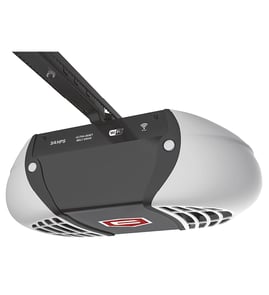




How do I know what model my garage door opener is?
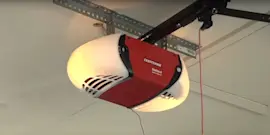
Your Craftsman garage door opener’s model number is printed on a label on the motor unit (the power head mounted to the ceiling). For model 13953977SRT, you’ll typically find it under the light lens cover or under the main front cover; the exact label location is shown in the 13953977SRT owner's manual.
Where to look on the opener
Check these common label locations on Craftsman openers like 13953977SRT:
- Under the light lens cover (near the light bulb area)
- Under the front cover on the motor unit
- On the side of the motor unit housing near the wiring terminals
- On the back panel near the hanging brackets
- On the rail near the motor unit (less common)
What the label usually includes
The label often lists more than just the model number. Look for:
- Model number (example: 13953977SRT)
- Serial number
- Electrical rating (volts/amps)
- Date code or manufacturing code
- FCC/IC information (common on openers with remotes)
Quick ID checklist (before you order parts)
Use this checklist so you match the correct Craftsman parts diagram and manual:
- Confirm the model number is exactly the same (letters and numbers)
- Write down the serial number too (helpful for revisions)
- Note whether your opener uses a chain or belt rail
- Check whether you have safety reversing sensors installed and aligned
Common locations by opener style
| Opener style | Most common model label location |
|---|---|
| Ceiling-mounted chain/belt drive | Under the light lens cover or front cover |
| Wall-mount/jackshaft | Under the front cover |
| One-light vs two-light motor unit | Under one of the light covers (often the one opposite the controls/antenna) |
Why it matters
Craftsman opener parts, remotes, and programming steps can vary by model revision. Using the exact model number helps ensure you get the right instructions for programming remotes, aligning safety sensors, and identifying the correct motor unit and rail assembly parts.
Last updated: February 2026
How to find out garage door opener type?
For the Craftsman 13953977SRT garage door opener, the most reliable way to identify your opener type is to confirm the door style (sectional vs one-piece), the power requirements (120V, 60 Hz), and the control system features (wall control, remote, keyless entry) listed in the owner's manual.
Quick ways to identify your opener type
Use these checks before you buy parts or start troubleshooting:
- Door type: sectional door (multiple panels) or one-piece door (single solid panel)
- Drive system clues: look for a chain or belt along the rail (common on Craftsman openers)
- Controls: wall-mounted door control button, handheld remote, and optional keyless entry
- Safety reversing sensors: photo eyes near the floor on both sides of the door opening
- Power: confirm the opener is supplied by 120V, 60 Hz power
Where to confirm it in the documentation
The manual walks you through identifying the door type and planning the installation, which is the same information you use to classify the opener setup.
| What you’re identifying | What to look for | Why it matters |
|---|---|---|
| Door style | Sectional vs one-piece | Affects setup, travel limits, and hardware needs |
| Safety sensor setup | Sensors installed and aligned | Required for safe closing and proper operation |
| Control method | Remote, wall control, keyless entry | Helps match programming steps and troubleshooting |
Why it matters
When the opener type is identified correctly, we can match the right troubleshooting steps (like force and travel checks) and avoid unsafe adjustments. For example, if the door binds, sticks, or is out of balance, the manual directs you to stop using force adjustments and have the door system serviced.
Next step if you’re identifying it for troubleshooting
If your opener is flashing lights or showing a diagnostic pattern, use the model-appropriate troubleshooting charts in our Craftsman error codes guide to narrow it down quickly.
Last updated: February 2026
Can you get a universal remote for an old garage door opener?
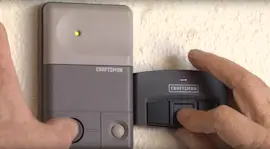
Yes. For a Craftsman garage door opener model 13953977SRT, you can use a compatible universal remote as long as it can learn the opener’s Security+ code. You can also add additional remotes by programming them to the opener using the motor unit’s LEARN button.
What works best for older openers
Most “universal” remotes work in one of these ways; the right choice depends on what the remote supports.
- Security+ compatible remote: programs directly to the opener using the LEARN button
- Universal remote with brand/programming support: follows a code or learn procedure
- Keyless entry keypad (if you prefer no handheld remote)
- External receiver kit (used when you cannot match the opener’s radio system)
For model 13953977SRT, the manual confirms it supports up to 8 Security+ remote controls and 1 Security+ keyless entry system. See the owner's manual for the exact programming steps and button locations.
How to program a new remote (LEARN button method)
Use this when your new remote is compatible with the opener.
- Press and release the LEARN button on the motor unit (the indicator light stays on about 30 seconds).
- Within 30 seconds, press and hold the button on the remote you want to use.
- Release when the opener lights blink (or you hear clicks); the remote is learned.
Quick reference table
| Task | What you do | What to expect |
|---|---|---|
| Add a remote | Tap LEARN, then press remote button | Lights blink or clicks confirm programming |
| Remove a lost remote | Erase all codes, then reprogram the remotes you still have | Old remotes stop working |
| Add a keypad | Tap LEARN, enter a 4-digit PIN, press ENTER | Lights blink to confirm |
If you lost a remote and want it disabled
Erasing the opener’s memory is the cleanest way to deactivate a missing remote.
- Press and hold the LEARN button until the indicator light goes out (about 6 seconds)
- Reprogram each remote you still want to use
- Reprogram the keypad PIN if you use keyless entry
Why it matters
Older openers can still be secure and convenient, but the remote must match the opener’s radio system. Programming correctly prevents “random” non-operation and helps keep lost remotes from opening the door.
Related help: Craftsman error codes.
Last updated: February 2026
How do I know what garage door opener is compatible?
For a Craftsman 13953977SRT garage door opener, compatibility is determined by the opener’s radio system (learn-button programming and rolling-code type), not the door itself. We match remotes, keypads, and controls by confirming the opener model number and then following the programming steps in the owner's manual.
What to check first (fast compatibility checklist)
- Confirm the opener model number on the motor unit: 13953977SRT
- Verify it uses a learn button (the manual shows learn-button programming)
- Decide what you’re trying to add: remote, wireless keypad, wall control, or smart controller
- Check how many devices you need; this opener supports up to 8 remotes and 1 keyless entry
- If you’re replacing a remote/keypad, plan to erase and reprogram if you do not know who has access
What “compatible” means for this model
Your 13953977SRT uses a Security+ style rolling code system (the code changes each use). That means compatible accessories must be able to learn to the opener’s receiver using the learn button, then be programmed within the learn window.
Typical compatible accessory types
| Accessory you want | What must match | What you do on the opener |
|---|---|---|
| Handheld remote | Security+ learn-button system | Press learn, then press remote button to pair |
| Wireless keypad | Keyless entry that programs to learn button | Press learn, enter PIN, press ENTER |
| Additional opener remote buttons | Multi-function Security+ remote | Program each button to each opener |
Programming and re-sync steps that confirm compatibility
If the accessory is compatible, it will successfully program using the learn button steps.
- To add a device: press and release the learn button, then complete the accessory steps within about 30 seconds
- To erase all devices (good when replacing lost remotes): press and hold learn until the indicator light goes out (about 6 seconds), then reprogram what you want to keep
- After programming, test open/close and confirm the safety reversing sensors are aligned (a misaligned sensor can prevent closing from a remote)
Why it matters
Using the correct compatible remote or keypad keeps your opener secure (rolling codes) and prevents “works sometimes” issues that come from mismatched radio systems or incomplete programming.
For more help identifying and interpreting Craftsman opener signals and flashes, use our Craftsman error codes guide.
Last updated: February 2026
What are the common problems with Craftsman garage door openers?
Common problems on the Craftsman 13953977SRT garage door opener are power and control issues (no response from wall control or remote), remote range problems, lights that will not turn on or off, and door-travel problems caused by a locked, frozen, or out-of-balance door. Our owner's manual troubleshooting steps cover these symptoms and the fastest checks.
Most common symptoms and what they usually mean
- Opener does nothing (wall control and remote): outlet has no power, breaker/fuse tripped, wall switch controls the outlet, motor overload protector tripped (wait about 15 minutes)
- Remote works but wall control does not: door control wiring issue, staple short, broken bell wire, or faulty wall control
- Wall control works but remote does not: lock feature enabled, remote needs to be programmed, remote battery is weak
- Short remote range: antenna not hanging down fully, interference from metal door or foil-backed insulation
- Motor hums briefly then stops: door lock engaged, springs out of balance or broken (do not increase force)
- Door moves on its own: stuck remote button, shorted wall-control wiring, memory needs to be cleared and remotes reprogrammed
Quick checks we recommend first (safe, no disassembly)
- Plug a lamp into the opener outlet to confirm power at the receptacle.
- Make sure all manual door locks are disabled.
- Check for ice, snow, or debris binding the bottom of the door.
- Verify the opener antenna is fully extended downward.
- If the motor recently ran repeatedly, wait 15 minutes for the overload protector to reset.
Troubleshooting guide by symptom
| Symptom | Most likely cause | What to do next |
|---|---|---|
| No operation from wall control or remote | No power or overload tripped | Check outlet, breaker/fuse; wait 15 minutes |
| Remote works, wall control does not | Wall control or wiring fault | Inspect wiring; test terminals per manual |
| Wall control works, remote does not | Lock feature on or remote not programmed | Turn off lock; reprogram remote |
| Motor hums then stops | Door locked or door out of balance | Disable lock; test door balance manually |
Why it matters
Most “opener problems” are actually door or control issues. A door that is locked, frozen, or out of balance can make the opener strain, hum, or stop; correcting the underlying cause prevents repeated overload trips and premature wear.
Related help
- Use Craftsman error codes to interpret flashing-light patterns and speed up diagnosis.
Last updated: February 2026