


How to find riding lawn mower model number?
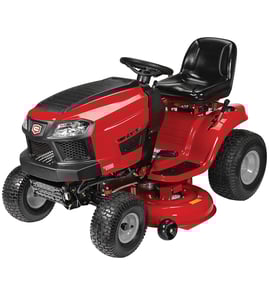
On a Craftsman riding mower like model 917253645, the model number is printed on an ID label or tag mounted to the frame or deck area. Check common label spots first (seat area and frame rails), then confirm the exact number before ordering parts.
- Under the seat (seat pan or seat bracket area)
- Rear of the frame, between the rear wheels
- Left or right frame rail near the engine compartment
- On or near the cutting deck (often on the rear-left side of the deck)
- Near the starter housing or engine shroud area
- Wipe dirt and grass off the label; use a flashlight to read faded print
- Copy the full model number exactly (for example, 917253645)
- Look for a separate product number or serial number; do not use those for parts lookup
- If the label is missing, check for a stamped number on the frame near the seat or rear hitch area
| What you see on the tag | What it means | Use it for parts? |
|---|---|---|
| Model number | Identifies the exact mower configuration | Yes |
| Serial number | Identifies your specific unit | No |
| Product number | Internal manufacturing identifier | Sometimes (model is best) |
Craftsman riding mowers can use different belts, blades, idlers, and hardware depending on the exact model. Matching the model number prevents ordering the wrong deck belt, blade, or pulley parts.
If you are ordering common deck-drive parts after you find the model number, a frequent wear item is the belt 582924901.
Last updated: January 2026
What riding mower has the least problems?
If you want a riding mower with the fewest problems, we recommend focusing on proven reliability, strong dealer support, and simple, well-maintained drivetrains. For a Craftsman 917253645 44" rotary lawn mower, long-term dependability usually comes down to maintenance and using correct-fit replacement parts.
- Engine and transmission reputation: hydrostatic drives are convenient; gear drives are simpler and often cheaper to maintain.
- Deck design and belt routing: fewer idlers and cleaner routing usually means fewer belt issues.
- Parts availability: common wear parts (belts, idlers, blades, hardware) should be easy to source.
- Service access: easy oil changes, air filter access, and deck removal reduce skipped maintenance.
- Owner maintenance habits: clean deck, correct tire pressure, and regular lubrication prevent many failures.
| Symptom | Most common cause | Typical fix |
|---|---|---|
| Deck won’t engage or slips | Worn belt or glazed pulleys | Replace deck belt, inspect idlers |
| Squealing or burning smell | Idler bearing drag, misrouted belt | Replace idler, verify routing |
| Uneven cut | Dull/bent blade, deck buildup | Sharpen/replace blade, clean deck |
| Excess vibration | Damaged blade or loose hardware | Replace blade, tighten fasteners |
For deck-drive issues on this model, the idler 532102403 and the belt 582924901 are two of the most common wear items to check first.
Choosing a mower with “least problems” is really about minimizing downtime during mowing season. A reliable platform plus routine upkeep (belt condition, blade sharpness, and tight hardware) prevents most no-start, no-cut, and poor-cut complaints.
- Change engine oil on schedule and keep the cooling fins clear
- Replace/clean the air filter regularly
- Keep the deck clean underneath to prevent rust and poor airflow
- Inspect belts for cracks, glazing, and stretching
- Grease service points and check for loose nuts and washers
Last updated: January 2026
What year was the Craftsman 917253645 made?
Craftsman model 917253645 does not have a single “made year” tied to the model number alone; this model series was typically produced across multiple production runs. To pinpoint the exact year for your mower, we use the product date code from the ID tag (not the parts list).
Check the ID tag on the frame (commonly under the seat, on the rear fender pan, or near the engine). Look for a date code or serial number and record it exactly.
- Locate the ID tag and write down the full model and serial
- Look for a stamped or printed date code (sometimes month and year)
- If the engine has its own tag, record that engine model and code too
- Compare the tag info to the parts you have installed (deck, belt routing decals, etc.)
- Use the tag details when ordering parts so you get the correct revisions
Even without the exact date, these details help narrow the production window for a Craftsman 44 inch rotary lawn mower:
| Clue | What it tells us |
|---|---|
| Deck size (44 inch) | Confirms the deck family and common belt/blade setups |
| Part revisions | Later revisions often swap hardware sizes or idler styles |
| Decals and labels | Safety and routing decals can change between runs |
A common example is the deck drive system; if you are matching belt and idler components, confirming the exact configuration matters.
The “year” affects parts compatibility because Craftsman riding mowers often had mid-run changes (belt length, idler style, fasteners). Verifying the ID tag date code helps ensure you order the right belt, blade, and hardware the first time.
If you are troubleshooting a deck drive issue while you check the ID tag, the idler 532102403 and belt 582924901 are two model-matched parts that commonly relate to blade engagement and deck belt routing.
Last updated: January 2026