Installation guide
 Owner’s manual
 Error Codes




Are wall ovens hardwired or plug-in?
Whirlpool electric built-in wall ovens like model GBS307PDS9 are designed to be hardwired (direct-wired) to a junction box, not plugged into a standard receptacle. The installation instructions describe connecting the oven cable to a U.L.-listed conduit connector at the junction box and making the required wire connections per local code (see the installation guide).
What “hardwired” means for this oven
A hardwired wall oven connects to your home’s electrical supply through a junction box using the oven’s conduit and wiring. During installation, power is shut off, the junction box cover is removed, and the oven cable is secured with a listed conduit connector.
Key points we follow from the installation steps:
- Turn off power at the breaker before touching wiring.
- Route the oven conduit to an approved junction box.
- Use a U.L.-listed conduit connector to secure the oven cable.
- Match conductors (typically black to black, red to red, white to neutral) as required.
- Ground the oven correctly (bonding rules depend on local code and wiring system).
- Replace the junction box cover after connections are complete.
Typical wiring setups you may see
Local electrical codes determine whether neutral and ground can be bonded in certain situations. The instructions outline different connection methods depending on what your local code permits and whether you have a 4-wire system.
| Home wiring situation | What changes | What stays the same |
|---|---|---|
| Code permits bonding neutral and cabinet ground | Neutral and ground may be connected together in the junction box | Oven still direct-wires to a junction box |
| Code does not permit bonding neutral and cabinet ground | Neutral and ground must be separated and connected to their proper conductors | Oven still direct-wires to a junction box |
| 4-wire electrical system | Neutral and ground are kept separate | Oven still direct-wires to a junction box |
Why it matters
A wall oven draws high current and must be grounded correctly. Hardwiring to a junction box helps ensure a secure connection, proper strain relief at the conduit connector, and code-compliant grounding, which reduces the risk of electrical shock or overheating.
Last updated: February 2026
How do I know what model my Whirlpool oven is?
Your Whirlpool oven’s model number is printed on the model and serial number rating plate. On the Whirlpool GBS307PDS9 built-in electric wall oven, we typically find that plate on the right mounting rail inside the oven area; check with the door open and a flashlight, then match the full model number exactly in your paperwork and parts list (see the GBS307PDS9 owner's manual).
Where to look on a Whirlpool wall oven
Use these quick checks in order:
- Open the upper oven door and look along the right side mounting rail (rating plate location for this style).
- Check the oven frame/door jamb area around the opening.
- Look near the top of the oven cavity on built-in models.
- If you have a double oven, check both doors/frames; some designs place the plate with the upper oven door area.
- Wipe grease and dust off the plate so every character is readable.
How to read the model number correctly
Model numbers must match character-for-character; that is what ensures the right Whirlpool parts fit.
- Copy the full model number (example: GBS307PDS9) exactly as shown.
- Record the serial number too; it can help narrow production variations.
- Avoid using partial numbers (like “GBS307”) when ordering parts.
| What you see | What it means | What to do next |
|---|---|---|
| Model number (GBS307PDS9) | Identifies the exact oven design | Use it to select diagrams and parts |
| Serial number | Identifies production run/date | Keep it for service and part matching |
| Rating plate location | Where the ID label is mounted | Photograph it for reference |
Why it matters for parts and troubleshooting
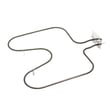
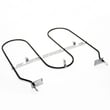
We use the model number to match the correct wiring layout, door parts, and heating components. For example, common wall-oven repairs like replacing a heating element or door seal depend on the exact model; parts such as the bake element WPW10207397 and door gasket W11675844 are model-specific.
Last updated: February 2026
What is the lifespan of a whirlpool stove?
A Whirlpool stove typically lasts 10 to 15 years. For your Whirlpool GBS307PDS9 electric built-in oven, consistent cleaning, avoiding overheating events, and fixing heating or door-seal problems early are the most reliable ways to reach the full service life listed in the GBS307PDS9 owner's manual.
Typical lifespan by type
Most cooking appliances fall into a predictable range when they are installed correctly and used normally.
| Appliance type | Typical lifespan | What usually ends it first |
|---|---|---|
| Electric range (freestanding) | 10 to 15 years | Bake/broil element wear, control failures |
| Electric wall oven (built-in) | 10 to 15 years | Heating circuit issues, door heat leaks |
| Gas range (freestanding) | 15 years | Ignition and valve wear |
What makes a Whirlpool stove last longer
These habits reduce stress on the bake element, wiring, and door components.
- Keep spills off the oven floor; baked-on spills trap heat and can shorten element life.
- Let the oven cool before wiping; rapid temperature changes can stress door glass.
- Confirm the door closes tightly; heat leaks make the oven run longer per cycle.
- Use the right rack position; blocking airflow can cause uneven heating and longer bake times.
- Address weak heating early; a struggling element can overwork other components.
Parts that commonly affect “end of life” symptoms
If the oven still powers on but performance drops, these are common repair points for the GBS307PDS9.
- Uneven or slow baking: inspect the bake element WPW10207397
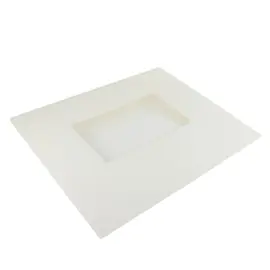
- Heat escaping around the door: inspect the door gasket W11675844
- Door not closing smoothly: inspect the door hinge WP9760574
Why it matters
A stove that is nearing the end of its lifespan often shows up as longer preheat times, temperature swings, or excessive heat around the door. Fixing a worn heating part or a leaking door seal early helps protect the control area and wiring from extra heat stress.
Last updated: February 2026
Why did my Whirlpool wall oven stop working?
If your Whirlpool wall oven model GBS307PDS9 stopped working, the most common causes are a power supply problem (tripped breaker or blown house fuse), a control issue (display shows "Err" or the oven cancels because START/ENTER was not pressed), or a failed heating component such as the bake element. Use the owner's manual to confirm control settings and error-display behavior.
Quick checks we recommend first
- Make sure the oven has power: check the double-pole breaker and any house fuses.
- If the display shows "Err", press UPPER OFF or LOWER OFF (or OFF/CANCEL on single-oven models) and re-enter the setting.
- If you see "START?", press START/ENTER within 5 seconds of selecting a function so the oven does not cancel.
- If the oven was just turned off, the cooling fan may keep running until the oven cools; that is normal.
- If the oven is in or just finished self-clean, the door can stay locked until temperatures drop.
What failed symptoms usually point to
| Symptom | Most likely cause | What to do next |
|---|---|---|
| No display, no response | No power to oven | Reset breaker fully OFF then ON; verify supply wiring per the installation guide |
| Display works, but no heat | Failed heating element or control issue | Test bake operation; inspect and ohm-test the bake element WPW10207397 |
| Oven cancels settings | START/ENTER not pressed in time | Reprogram and press START/ENTER promptly; watch for “START?” |
| “Err” on display | Invalid pad press or keypad issue | Clear with OFF/CANCEL or UPPER OFF/LOWER OFF; retry entry |
Why it matters
A wall oven that “stops working” can be a simple control-entry issue (like "Err" or "START?") or a true component failure (like a burned-out bake element). Checking the easy items first prevents unnecessary part replacement and gets you back to baking faster.
If you suspect a part failure
- Bake element: look for blistering, cracks, or a spot that looks burned through; replace with the bake element WPW10207397 if it fails a continuity test.
- Door latch/lock behavior: after self-clean, wait for cooling; forced opening can damage door hardware.
- Wiring connections: if you find heat damage or loose terminals, repair with proper high-temp materials and safe practices.
Last updated: February 2026