Owner’s manual


How to find part number on Whirlpool dryer?
On your Whirlpool dryer model WED8300SW1, we find the correct part number by first locating the model and serial number label on the dryer, then using that model number to look up the exact parts list. The label is typically found around the door opening area.
Check these common label locations first (most Whirlpool dryers use one of these):
- Open the dryer door and look along the door opening frame
- Check the top right area near the door switch
- Look on the inside of the door (edge or inner panel)
- Check the rear panel if you do not see it at the door opening
Once you find the label, write down the complete model number and serial number exactly as shown (for this page, the model is WED8300SW1). For diagrams and model label details, use the WED8300SW1 owner's manual.
After you have the model number, match the part by name and location in the diagrams, then confirm the part number/ID.
- Search parts by the full model number: WED8300SW1
- Use the exploded-view diagram to identify the part’s position
- Match the part description to your symptom (noise, no heat, no start)
- Confirm any variations (color, revision, or kit vs single part)
- Order using the listed part identifier to avoid mix-ups
| Symptom | Common part to check | Example part on this model page |
|---|---|---|
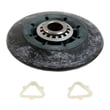
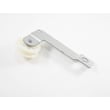
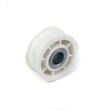
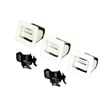
| Squealing or thumping | Drum support rollers, idler pulley | Support WPW10314173, dryer idler pulley 279640 |
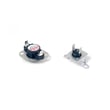
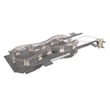
| No heat or weak heat | Heating circuit components | Dryer heating element WP8544771, dryer thermal cut-off fuse kit 279973 |
Whirlpool often uses similar-looking parts across many dryer series, so using the exact model number from the label prevents ordering a part that fits a different version of the dryer.
Last updated: February 2026
What are common dryer part failures?
On the Whirlpool WED8300SW1 dryer, the most common part failures involve heating, drum support and drive components, and airflow safety devices. These problems typically show up as no heat, long dry times, squealing or thumping noises, or the dryer shutting off from overheating; our WED8300SW1 owner’s manual covers key care and troubleshooting steps.
- No heat or weak heat: failed heating circuit parts such as the dryer heating element, thermal cut-off, or temperature sensing parts
- Dryer runs but takes too long: restricted venting, clogged lint screen, or poor airflow through the cabinet and exhaust
- Squealing, grinding, or thumping: worn drum support rollers, idler pulley wear, or a damaged blower wheel
- Won’t start or stops mid-cycle: power supply issues, door latch problems, or motor and control-related faults
- Overheating symptoms: lint buildup inside the cabinet or venting problems that trip safety devices
- Clean the lint screen every load (a blocked screen increases drying time and can cause overheating).
- Check the exhaust venting for clogs and confirm you are using 4-inch vent material.
- Listen for noise clues (coins or small items can get between the drum and cabinet and mimic a failing roller).
- Verify power (many electric dryers use two breakers or fuses; one side can trip and cause heat issues).
- If the dryer was unused for a while, a brief thump at startup can be normal for the first minutes.
| Symptom | Likely area | Example part for this model |
|---|---|---|
| No heat | Heating circuit | Dryer heating element WP8544771 |
| Shuts off, no heat | Safety cut-off | Dryer thermal cut-off fuse kit 279973 |
| Squeals, drum hard to turn | Drum support/drive | Dryer idler pulley 279640 |
| Loud rumble | Drum support | Support WPW10314173 |
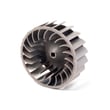
| Poor airflow, loud whoosh | Air movement | Dryer blower wheel WP697772 |
Most “dryer failures” start as airflow and lint problems. Poor venting raises temperatures, increases dry time, and can damage heating and safety components. Keeping airflow clear often prevents repeat breakdowns.
Last updated: February 2026
What does F1 mean on a whirlpool dryer?
On a Whirlpool dryer such as model WED8300SW1, an F1 code indicates an electronic control problem (a service-level fault). The dryer may stop mid-cycle or not start; resetting power can clear a one-time glitch, but repeated F1 points to a control issue.
- Unplug the dryer (or switch off the breaker) for 2 minutes.
- Restore power and try a timed cycle.
- If the code returns, stop using the dryer until the cause is corrected.
- Check for a recent power interruption; some Whirlpool dryers also show PF for power failure.
- If the display shows other F- service codes, treat them the same way.
For model-specific troubleshooting and any diagnostic steps, follow the WED8300SW1 owner's manual.
F1 is commonly triggered by a failure in the electronic control system, such as:
- Control board internal fault
- Stuck or failing user interface inputs
- Loose or oxidized wiring connection at the control
- Power quality issues (surges, repeated outages)
| What you see | What it usually means | What to try |
|---|---|---|
| F1 appears and dryer stops | Control detected a fault | Power reset, then retest |
| F1 returns quickly after reset | Persistent control problem | Plan for service/repair |
| Multiple F- codes appear | Service-level electronic fault | Use manual guidance, then service |
If F1 repeats after a reset, we typically focus on the control and its connections.
- Take a clear photo of wire locations before moving anything.
- Inspect harness plugs for a loose fit or heat discoloration.
- If the dryer also has heat or cycling issues, test temperature-sensing components; a failing sensor can contribute to abnormal operation.
- Dryer thermistor WP8577274 (temperature sensing)
- Dryer thermal cut-off fuse kit 279973 (overheat protection)
An F1 code is the dryer telling you it cannot reliably manage the cycle. Addressing it promptly helps prevent repeated shutdowns, overheating conditions, and unnecessary wear on components like the drive motor and heating circuit.
Last updated: February 2026
What is the capacity of the wed8300sw1?
The Whirlpool WED8300SW1 electric dryer has a 6.7 cu. ft. capacity, which is a full-size 27-inch class drum designed for everyday family loads. For cycle details and feature operation, use the WED8300SW1 owner's manual.
A 6.7 cu. ft. drum is sized for typical mixed loads and bulky items without overpacking.
- Handles most everyday loads (towels, jeans, mixed fabrics) in one cycle
- Dries bulky items better when you keep the drum about 2/3 full
- Helps sensor cycles work correctly because items can tumble freely
- Reduces wrinkling compared with tightly packed loads
| Load type | Typical fit in a 6.7 cu. ft. dryer | Best practice |
|---|---|---|
| Everyday mixed load | Yes | Do not pack tight; allow tumbling space |
| Towels | Yes | Shake out towels before loading |
| Comforter | Often (depends on fill) | Dry alone; stop and reposition mid-cycle |
| Small loads | Yes | Use timed dry or lower heat if needed |
Capacity affects drying performance. When the drum is overloaded, airflow drops and clothes tumble less, so drying times increase and automatic sensor cycles can end too soon or run too long.
If the dryer tumbles poorly or makes thumping noises, drum support and drive components can affect how well loads move through the drum.
Last updated: February 2026
What's the average lifespan of a whirlpool dryer?
Most Whirlpool dryers, including model WED8300SW1, typically last 10 to 15 years with normal household use. Regular maintenance (especially lint and vent cleaning) and timely replacement of wear parts can push real-world life closer to the high end of that range.
- Vent airflow: restricted venting makes the dryer run hotter and longer
- Lint buildup: lint in the cabinet and exhaust increases heat stress on components
- Load habits: frequent overloading strains the drive system and drum supports
- Usage volume: multiple loads per day shortens life compared to a few loads per week
- Wear parts: rollers, idler pulley, and belt wear gradually and can be renewed
The WED8300SW1 manual calls out periodic lint removal beyond the lint screen.
| Task | How often | Why it matters |
|---|---|---|
| Clean lint screen | Every load | Keeps airflow strong and drying times normal |
| Clean exhaust vent run | About every 2 years (more with heavy use) | Prevents long dry times and overheating |
| Clean lint from inside dryer cabinet | About every 2 years (qualified service) | Reduces heat buildup and protects wiring/components |
If the dryer still heats but gets noisy, squeals, thumps, or struggles to tumble, renewing the drum support and belt-drive wear items often restores smooth operation.
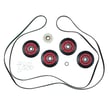
- Dryer repair kit 4392067 (common wear-item refresh)
- Support WPW10314173 (drum support roller)
- Dryer idler pulley 279640 (belt tension and smooth tumbling)
A dryer that takes longer to dry or runs hotter than normal wears out the heating system, motor, and controls faster. Keeping venting clear and replacing wear parts early is the simplest way to get the full 10 to 15 years from a Whirlpool dryer.
For model-specific care and cleaning intervals, follow the WED8300SW1 owner's manual.
Last updated: February 2026