Installation guide
 Owner’s manual
 Error Codes

What are the advantages of bottom mount refrigerators?
A bottom-mount refrigerator like the Frigidaire FPBS2777RF6 keeps fresh-food shelves at eye and waist level, so you reach everyday items with less bending. It also supports wide drawers and freezer baskets that can fully open when the unit is positioned and leveled correctly (see the FPBS2777RF6 owner's manual).
Key advantages you will notice day to day
- Easier access to fresh food: the refrigerator section is on top, where you use it most.
- Better drawer usability: wide crisper drawers and freezer baskets are easier to pull out and organize.
- Improved door and drawer clearance: when installed with proper spacing, doors and baskets can open fully.
- More consistent performance: leveling helps doors close tightly, which supports stable temperatures and efficiency.
- Flexible storage: modular door bins and multiple drawers make it easier to customize storage.
Installation and clearance benefits (what matters for this layout)
Bottom-mount designs work best when you plan for airflow and swing space. For the FPBS2777RF6, typical guidance includes leaving clearance around the cabinet and placing the refrigerator so drawers and baskets can fully open.
| What to plan for | Typical target | Why it helps |
|---|---|---|
| Side and top clearance | 3/8 inch | Helps airflow and prevents rubbing |
| Rear clearance | 1 inch | Supports ventilation and easier hookups |
| Leveling | Doors close tightly | Reduces warm air leaks and moisture |
Why it matters
Most households open the fresh-food doors far more than the freezer. With a bottom freezer, we keep the most-used items higher up, reduce strain on your back, and help the refrigerator run efficiently when doors seal properly.
Last updated: January 2026
What is the most common problem with a Frigidaire refrigerator?
For the Frigidaire FPBS2777RF6 bottom-mount refrigerator, the most common problem we see is a cooling complaint (warm fresh food section, soft ice, or temperature swings). In many cases, the root cause is airflow restriction, a door not sealing tightly, or a fan or sensor issue rather than a sealed-system failure.
Most common symptoms customers report
- Fresh food section is warm but freezer seems OK
- Freezer is too warm and ice production slows or stops
- Frost buildup, moisture, or sweating around doors
- Loud fan noise, rattling, or intermittent humming
- Ice maker or dispenser performance problems
Quick checks that solve many “cooling problem” calls
Start with these basics before replacing parts:
- Confirm doors close fully and gaskets seal on all sides; the installation checklist calls out proper door sealing and leveling.
- Make sure the refrigerator is level and slightly tilted back (front higher than back) so doors self-close.
- Avoid blocking air vents with food packages.
- Set controls to normal recommended settings and give temperatures 24 hours to stabilize.
- If the unit was just installed or moved, remove internal shipping materials and allow time for normal operation.
| What you notice | Most likely area to check first | Typical next step |
|---|---|---|
| Warm fresh food, freezer OK | Airflow from freezer to fresh food | Check vents, listen for fan operation |
| Warm freezer, no ice | Cooling airflow and ice maker supply | Verify ice maker is on and water supply is open |
| Moisture between doors | Door alignment or gasket seal | Level unit, inspect gasket contact |
| Fan noise or vibration | Fan blade or motor area | Inspect for ice/debris, check for wobble |
When it points to a part
If basic checks do not help, these parts commonly relate to the symptoms above:
- Refrigerator temperature sensor 240597220 (temperature feedback issues and swings)
- Refrigerator condenser fan motor 242018301 (poor heat removal, warm cabinet)
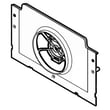
- Refrigerator evaporator fan blade 5308000010 (airflow noise or reduced circulation)
- Refrigerator ice maker 243297613 (no ice after confirming water supply and settings)
- Frigidaire refrigerator freezer door gasket (gray) 5304537408 (air leaks, frost, moisture)
Why it matters
Cooling problems often start as an airflow or sealing issue; fixing that early protects food, improves ice production, and reduces compressor run time and energy use.
For model-specific operating guidance (controls, normal sounds, and “before you call” checks), use the FPBS2777RF6 owner's manual.
Last updated: January 2026
How to fix a Frigidaire bottom ice maker?
On the Frigidaire FPBS2777RF6 bottom-mount refrigerator, most “bottom (freezer) ice maker” issues are caused by the ice maker being off (arm up), a closed or kinked water supply, a mis-seated or clogged water filter, or ice clumped in the bin after a power outage. Follow the steps below; see the FPBS2777RF6 owner's manual for model-specific details.
Quick checks that fix most no-ice problems
- Make sure the freezer ice maker is on; the wire signal arm must be down.
- Confirm the shutoff valve is fully open and the refrigerator is connected to the water line.
- Straighten any kinks or pinches in the supply line.
- Reseat the filter; if it is old or clogged, replace it.
- Set the freezer to 0°F for best ice production.
- If ice melted and refroze into a block, loosen with warm water (never use sharp tools).
Clean the ice maker and bin (safe reset)
- Turn off the ice maker.
- Remove the ice bin.
- Wash with mild detergent, rinse, and dry completely.
- Reinstall the bin and turn the ice maker back on.
What the symptoms usually mean
| Symptom | Most likely cause | Best next step |
|---|---|---|
| No ice at all | Arm up, valve closed, kinked line | Arm down, open valve, straighten line |
| Slow production | Freezer too warm, restricted filter | Set 0°F, replace filter |
| Clumped ice in bin | Melt/refreeze after outage | Remove bin, warm-water loosen, dry bin |
When a part is the next step
If the ice maker is on and the freezer is cold but the mold never fills with water, the water inlet valve can be the cause; for this model, see the refrigerator water inlet valve assembly 242253002.
Why it matters
The ice maker needs steady water flow and a cold freezer. A kinked line, a poorly seated filter, or clumped ice can stop ice production even when the ice maker itself is working.
Last updated: January 2026