Installation guide
 Owner’s manual
 Error Codes




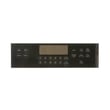

How to get GE oven out of lock mode?
To take a GE JT3000SF1SS wall oven out of lock mode, press and hold Lock Controls for 3 seconds to toggle the control lock off (the lock indicator should clear). Cancel/Off still works even when the controls are locked. See the steps in the JT3000SF1SS owner's manual.
Quick unlock steps
- Press and hold Lock Controls for 3 seconds.
- Wait for the beep or for the lock icon/LOC indicator to turn off.
- Press Cancel/Off once to clear any pending cooking cycle.
- Try a simple function (like Bake) to confirm the keypad responds.
If the oven still seems “locked”
Sometimes the oven is not in control lock; it is in a mode that locks the door.
- Self Clean or Steam Clean just started: the door locks during the cycle and you cannot open it until the cycle ends.
- Recently ended a clean cycle: the door can stay locked until the oven cools.
- Power interruption: the control can act unresponsive until it is reset.
What to do
- Let the oven cool completely if it was cleaning.
- Press Cancel/Off to stop a cycle.
- If needed, turn the oven off at the breaker for 1 minute, then restore power and try Lock Controls again.
Control lock vs. door lock (what’s different?)
| What you see | What it usually means | What works |
|---|---|---|
| Keypad won’t respond, lock indicator on | Control lock is on | Hold Lock Controls 3 seconds |
| Door won’t open during cleaning | Door lock is engaged | Wait for cycle end and cool-down |
| You can cancel but not start cooking | Control lock or special mode | Cancel, then unlock controls |
Why it matters
Control lock prevents accidental keypad presses (especially around kids and cleaning), while clean modes lock the door for safety. Knowing which “lock” is active helps you avoid forcing the door or misdiagnosing a control problem.
Last updated: January 2026
How long do GE wall ovens last?
Most GE wall ovens, including model JT3000SF1SS, typically last 12 to 15 years with normal household use. Lifespan depends most on heat exposure over time, how often you run high-heat modes (broil, self-clean), and whether airflow and door sealing stay in good shape; see the JT3000SF1SS owner’s manual for care and operating guidance.
What affects wall oven lifespan the most
- Self-clean frequency: high heat stresses wiring, sensors, and control components.
- Cooling airflow: blocked vents or a weak cooling fan can overheat internal parts.
- Door seal condition: heat leaks make the oven work harder and can affect temperature stability.
- Electrical supply quality: repeated power surges can shorten control life.
- Cleaning habits: harsh chemicals on the control area can damage finishes and labels.
Signs your oven is nearing end-of-life (or needs a key repair)
- Takes much longer to preheat than it used to
- Temperature swings or underbaking even after calibration
- Cooling fan runs excessively long or sounds rough
- Error codes or intermittent control issues
- Door does not close tightly or you feel heat escaping around the edges
Quick part checks that often restore performance
| Symptom | Commonly involved part | What it does |
|---|---|---|
| Bakes too hot or too cold | Wall oven temperature sensor WB21X10165 | Reports oven temperature to the control |
| Excessive heat around cabinet or long fan run time | Wall oven cooling fan assembly WB26T10066 | Moves air to protect internal components |
| Heat leaking, uneven baking | Wall oven door seal WB35X32825 | Keeps heat in and stabilizes temperature |
Why it matters
A wall oven that is running hot, leaking heat, or not cooling correctly can shorten the life of the control and wiring. Catching issues early often turns a “replacement decision” into a straightforward repair.
Last updated: January 2026
How much does a 30 inch wall oven weigh?
A 30-inch single electric wall oven like the GE JT3000SF1SS typically weighs about 140 to 200 lb. For installation planning, we focus on the cabinet support requirement: the cutout platform, runners, or braces must be built to safely carry the oven’s load per the JT3000SF1SS installation guide.
What we can use as a reliable weight target for installation
Even when the exact shipping weight varies by configuration and packaging, the installation requirement gives you a dependable planning number.
Use these practical targets:
- Plan for 200 lb capacity for a single wall oven cutout support.
- Use solid, level runners or braces if the cabinet has no solid bottom.
- Keep the support flush with the sides of the cutout so the oven sits square.
- Confirm your cutout dimensions and electrical junction box location before lifting the oven into place.
Support requirement vs. actual oven weight
The installation guide specifies what the cabinet structure must support.
| Installation scenario | Support requirement | What it means for you |
|---|---|---|
| Single wall oven (30-inch class) | 200 lb (91 kg) | Build the base to hold at least this much |
| Double wall oven | 375 lb (170 kg) | Heavier unit; stronger cabinet support needed |
Why it matters
Wall ovens are lifted and held in position while being secured to the cabinet. If the cutout base is underbuilt, the oven can shift out of level, stress the trim and mounting points, and create door alignment and heat sealing problems.
Quick tips before you measure or reinforce the cabinet
- Measure the cabinet opening and depth; many 30-inch cutouts call for about 23-1/2 in minimum depth.
- Verify the oven is hard-wired (direct-wired) to an approved junction box (no plug and receptacle).
- If the cutout has visible gaps or blemishes after install, use wood shims under runners to level and cover.
- For exact model-specific handling notes and cutout details, follow the JT3000SF1SS installation guide and the JT3000SF1SS owner’s manual.
Last updated: January 2026
What size breaker and wire for 20 amp wall oven?
For a GE JT3000SF1SS electric wall oven on a 20-amp dedicated circuit, we use a 20-amp breaker with 12 AWG copper conductors. This oven must be hard-wired (direct-wired) into an approved junction box, not plugged into a receptacle; confirm the exact circuit requirement in the JT3000SF1SS installation guide.
How to confirm you really need a 20-amp circuit
The installation instructions size the dedicated circuit by the oven’s kilowatt (kW) rating and supply voltage (240V vs 208V). Use the rating label on the oven frame (often visible with the door open) and match it to the circuit-size table in the installation instructions.
- Find the oven’s kW rating on the model/serial tag
- Identify your supply voltage (most homes are 240V; some condos are 208V)
- Use the dedicated circuit size table in the installation instructions
- Verify local electrical code requirements before wiring
- Plan for a junction box location that allows the conduit and strain relief to fit correctly
Typical circuit sizing (from the installation guide table)
| Oven kW rating (240V) | Oven kW rating (208V) | Dedicated circuit size |
|---|---|---|
| < 4.8 kW | < 4.1 kW | 20 amp |
| 4.9 to 7.2 kW | 4.2 to 6.2 kW | 30 amp |
| 7.3 to 9.6 kW | 6.3 to 8.3 kW | 40 amp |
| 9.7 to 12.0 kW | 8.4 to 10.4 kW | 50 amp |
Wire size guidance for a 20-amp oven circuit
For a 20-amp branch circuit, 12 AWG copper is the standard conductor size used in residential wiring. If your run is unusually long, voltage drop can become a concern; in that case, upsizing conductors is a common best practice.
- 20 amp breaker: typically paired with 12 AWG copper
- Use a dedicated circuit (no other loads on the breaker)
- Use proper strain relief and approved wire connectors in the junction box
- Follow 4-conductor requirements where applicable (new construction and some code jurisdictions)
Why it matters
Correct breaker and wire sizing helps prevent nuisance tripping, overheating at connections, and poor oven performance during preheat and baking. It also ensures the hard-wired junction box connection is safe and code-compliant for the JT3000SF1SS.
Last updated: January 2026