Installation guide
 Owner’s manual
 Error Codes




Is Frigidaire Gallery high end?
Frigidaire Gallery is not a luxury, high-end line; it is a strong mid-range tier with upgraded styling and features compared to basic Frigidaire models. For your Frigidaire side-by-side refrigerator model FFHS2611PFCA, Gallery typically means more feature-focused design without the premium price of true luxury brands.
How Frigidaire lines usually compare
Frigidaire generally positions its refrigerator families like this:
- Frigidaire (base line): practical features, value-focused
- Frigidaire Gallery: mid-range upgrades (design, convenience features)
- Frigidaire Professional: premium tier within the Frigidaire brand
| Line | Typical positioning | What you usually get |
|---|---|---|
| Frigidaire | Entry to mid | Core cooling, simpler controls |
| Frigidaire Gallery | Mid-range | More convenience features, upgraded look |
| Frigidaire Professional | Premium (not luxury) | Higher-end finishes, more advanced feature sets |
What “high end” means in refrigerator shopping
“High end” usually refers to luxury brands and built-in designs, very high price points, and specialized features. Frigidaire Gallery competes more directly with mainstream mid-range models from brands like GE and Whirlpool.
Why it matters
Knowing the tier helps set expectations for repair and maintenance. Gallery models often add features like ice and water dispensing and filtration, so keeping up with routine items (like the water filter) helps performance and taste.
Helpful model-specific resources
- Use the FFHS2611PFCA owner’s manual for feature descriptions, normal operating sounds, and care guidance.
- If you are troubleshooting display or performance issues, check Frigidaire refrigerator error codes.
Last updated: February 2026
How wide is a 25.6 cubic foot refrigerator?
Most 25.6 cu. ft. side-by-side refrigerators measure about 36 inches wide. For your Frigidaire FFHS2611PFCA, confirm the exact cabinet width and required clearances in the FFHS2611PFCA installation guide before you measure doorways or plan a tight fit.
Typical width and what to plan for
Even when the cabinet is roughly 36 inches wide, the real-world space you need can be larger because of doors, handles, and airflow.
- Typical cabinet width: ~35 7/8 to 36 inches
- Plan for door swing: doors need room to fully open for drawers and freezer baskets
- Installation clearance: allow 3/8 inch on sides and top and 1 inch at the rear for airflow and connections
- Moving into the home: if an entrance is tight, removing refrigerator doors is a common option
- Don’t forget depth: depth and handle projection often cause more “fit” problems than width
Quick sizing checklist (before delivery)
Use this checklist to avoid surprises:
- Measure the narrowest doorway on the path to the kitchen
- Measure hallway turns and stair landings (if applicable)
- Measure the opening width at the cabinet or enclosure
- Confirm you have the recommended side/top and rear clearances
- Verify you can open both doors fully once installed
Common width scenarios
| Scenario | What it usually means | What we recommend |
|---|---|---|
| “36-inch refrigerator” | Nominal class size | Expect about 36 inches cabinet width; verify exact spec in the guide |
| Tight enclosure (exact 36 inches) | No tolerance for variation | Leave extra space or adjust cabinetry to avoid rubbing and vibration |
| Narrow doorway | Unit may not pass through assembled | Plan for door removal and protect floors during moving |
Why it matters
A refrigerator that is even slightly too wide (or installed without clearance) can reduce air circulation, make doors hard to open, and complicate water line and electrical access. Planning for clearance and door swing prevents installation headaches.
Last updated: February 2026
What does PF mean on a Frigidaire?
On a Frigidaire FFHS2611PFCA refrigerator, PF typically indicates a power failure or power interruption. The control detected that power was lost and then restored; once power is stable, the refrigerator usually returns to normal operation after you acknowledge the message or reset the display per the FFHS2611PFCA owner's manual.
What to do first (quick checks)
- Confirm the refrigerator is plugged in firmly and the outlet has power.
- Check your home breaker or GFCI outlet and reset if tripped.
- Make sure the temperature controls are set (not turned off).
- Verify the water filter is fully seated and flush in the housing (some models can act up if the filter is not seated correctly).
- If the display is flashing or showing a code, note it before resetting.
Clear PF and stabilize operation
Most Frigidaire side-by-side models clear PF by acknowledging the alert on the control panel or by cycling power.
| Step | What you do | What you’re checking |
|---|---|---|
| 1 | Press the alarm/reset key (if equipped) | Confirms the alert was acknowledged |
| 2 | Unplug for 5 minutes, then plug back in | Resets the electronic control after a power event |
| 3 | Wait 24 hours for temps to stabilize | Confirms cooling returns to normal |
If PF keeps coming back
Repeated PF messages usually point to an unstable power supply or a loose connection.
- Try a different outlet on a dedicated circuit (no extension cord).
- Check that the cord and plug fit tightly.
- If the refrigerator is running but the display keeps flashing, the control may be detecting a performance issue; follow the troubleshooting steps in the FFHS2611PFCA installation guide.
- If you also see other codes, use our Frigidaire refrigerator error codes reference to narrow the cause.
Why it matters
A single PF event is normal after an outage. Frequent PF alerts can lead to temperature swings that affect food safety, ice production, and compressor run time.
Last updated: February 2026
Which are the best side-by-side refrigerators?
The “best” side-by-side refrigerator is the one that fits your kitchen opening, holds temperature steadily, and matches your must-haves (ice and water, filtration, noise level, and reliability). If you already own a Frigidaire FFHS2611PFCA, the best value is usually keeping it running efficiently with correct setup and timely part replacement using the FFHS2611PFCA owner's manual.
How we recommend choosing the best side-by-side
Use these practical criteria to compare models across brands like Frigidaire, GE, Whirlpool, and Samsung:
- Fit and clearances: confirm width, depth, and door swing; allow airflow clearance (many side-by-sides need about 3/8 inch at sides/top and 1 inch at the rear).
- Temperature performance: look for stable fresh food temps near 37°F and freezer near 0°F.
- Ice and water system: consider dispenser style, ice output, and filter availability.
- Energy use and noise: quieter compressors and efficient fans matter in open kitchens.
- Serviceability: check parts availability for common wear items (filters, ice maker, door gaskets).
Quick comparison checklist (what “best” means for most homes)
| Priority | What to look for | Why it matters |
|---|---|---|
| Kitchen fit | Door clearance and ventilation space | Prevents poor cooling and door interference |
| Food preservation | Even temps, good airflow | Reduces spoilage and freezer burn |
| Water quality | Easy filter changes | Better taste and fewer dispenser issues |
| Long-term cost | Common parts are easy to replace | Lower repair downtime and cost |
If you own FFHS2611PFCA: upgrades that improve day-to-day performance
These are the most common “quality of life” items customers replace on this model:
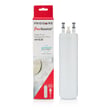
- Replace the water filter on schedule using the refrigerator water filter WF3CB.
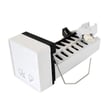
- If ice production stops or gets inconsistent, consider the refrigerator ice maker 241798231.
- If doors do not seal tightly, inspect gaskets and level the cabinet so doors close and seal correctly.
- Keep airflow paths clear inside the compartments; avoid blocking vents.
Why it matters
Side-by-side refrigerators depend on proper airflow, door sealing, and a stable water supply to cool correctly and make ice reliably. Even a highly rated model can perform poorly if it is not leveled, has restricted ventilation, or has an overdue filter.
Last updated: February 2026
What is the most common problem with a Frigidaire refrigerator?
The most common issue we see with Frigidaire refrigerators like model FFHS2611PFCA is a cooling complaint: temperatures drift warmer than expected, often tied to airflow restrictions (dirty condenser coils, weak evaporator fan airflow) or defrost-related frost buildup that blocks air movement.
Most common symptoms customers notice
- Freezer stays cold but fresh food section warms up
- Refrigerator runs a lot (compressor cycles frequently)
- Frost or ice buildup in the freezer that reduces airflow
- Temperature display flashes or seems unstable
- Ice maker or water dispenser performance drops
Quick checks that solve many “not cooling” calls
Start with these basics before replacing parts; they address the most frequent root causes.
- Confirm doors seal fully and close without bouncing
- Clean the condenser coils (a dirty condenser can cause long run times)
- Make sure the water filter is fully seated and flush in the housing
- Verify the unit is level and the toe grille is properly attached
- Check that vents inside the refrigerator are not blocked by food packages
| What you observe | Most likely area to check | Common next step |
|---|---|---|
| Fresh food warm, freezer OK | Airflow/evaporator area | Inspect evaporator fan operation and frost buildup |
| Runs a lot, temps struggle | Condenser/door seal | Clean coils; inspect gaskets |
| Display flashing | Control sensing a problem | Follow troubleshooting steps in the guide |
Parts that are commonly involved
If basic checks do not restore normal temperatures, these model-matched parts are often involved in cooling and airflow complaints:
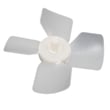
- Refrigerator evaporator motor 242077705 (moves cold air through the compartments)
- Refrigerator air damper control assembly 242303001 (controls airflow into the fresh food section)
- Refrigerator defrost bi-metal thermostat 5303918214 (helps manage defrost cycling and prevents heavy frost)
Why it matters
A refrigerator can still “sound normal” while airflow is restricted; when cold air cannot circulate, the freezer may stay acceptable while the fresh food section warms. Keeping coils clean and seals tight reduces run time, stabilizes temperatures, and helps prevent frost-related airflow problems.
For model-specific operating expectations and troubleshooting steps, use the FFHS2611PFCA owner's manual.
Last updated: February 2026