 Installation guide
 Owner’s manual




How much to replace a dishwasher element?
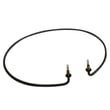
For Kenmore dishwasher model 58714013417B, replacing the heating element typically costs $150 to $400 total (part plus labor). If you do it yourself, you usually pay just the part cost, and for this model the heating element is listed as frigidaire dishwasher heating element 154825001.
Costs vary by location and whether the dishwasher is hardwired or plugged in, but these ranges are common.
- Heating element part: typically $50 to $120
- Service call and labor: typically $100 to $300
- Extra parts (as needed): element nuts, seals, or wiring repairs
- Total installed cost: typically $150 to $400
| Replacement type | What you pay for | Typical total cost |
|---|---|---|
| DIY replacement | Part only | $50 to $120 |
| Pro replacement | Part + labor | $150 to $400 |
If the element failed because of another issue, the repair can cost more.
- Burned or loose wiring at the heater terminals
- Leaks that damaged electrical connections
- Mineral buildup from hard water causing repeated heater failures
- A control or thermostat issue that is not powering the heater
The use and care information for this dishwasher warns not to touch the heating element during or immediately after use. We also recommend disconnecting power before servicing.
- Turn off the breaker (and verify the dishwasher is off)
- Let the heating element cool completely
- Shut off the water supply if you will pull the dishwasher out
- Follow the step-by-step access and wiring notes in the 58714013417B owner's manual
A working heating element helps the dishwasher heat water and improves drying performance (especially when using heated dry with rinse aid). A weak or failed element often shows up as poor drying, cooler wash performance, or cycles that do not clean well.
Last updated: January 2026
What are the common problems with Kenmore dishwashers?
For Kenmore dishwasher model 58714013417B, the most common problems are poor cleaning, not draining, not filling, leaks, and weak drying. These issues usually trace back to loading and detergent choices, water supply conditions (pressure and temperature), or a worn/failed part such as a pump, inlet valve, latch, or heating circuit. See the 58714013417B owner's manual for model-specific checks.
- Dishwasher does not drain: kinked/clogged drain hose, disposer knockout plug not removed, drain pump issue
- Dishwasher will not fill: water supply off, stuck overfill protector (float), inlet valve problem
- Food soils left on dishes: blocked spray arms, incorrect loading (nesting), low water temperature, hard water, old detergent
- Leaking: door seal wear, loose hose connections, overfilling from float/valve issues
- Poor drying or long cycle times: heating delay, heating element problem, rinse aid or loading issues
- Confirm the door closes fully and latches; a mis-latch can stop a cycle midstream.
- Verify the water supply is on and household water pressure is 20 to 120 psi.
- Run hot water at the sink until it is hot; incoming water should be about 120°F (49°C).
- Make sure dishes are loaded so nothing blocks spray arms from rotating.
- If connected to a disposer, confirm the disposer is empty and the inlet knockout plug was removed.
| Symptom | Common part to inspect | Part example for this model |
|---|---|---|
| Won’t drain | Drain pump, drain hose | Drain pump a A00126401, dishwasher drain hose 807117001 |
| Won’t fill/low water | Water inlet valve, float switch | Dishwasher water inlet valve 807047901, dishwasher float switch 154773201 |
| Not drying | Heating element and hardware | Frigidaire dishwasher heating element 154825001, dishwasher heating element nut 154106202 |
Catching the root cause early prevents repeat wash failures, reduces odor from standing water, and helps avoid leaks that can damage flooring. Many “bad dishwasher” complaints are actually water temperature, pressure, or loading issues.
Last updated: January 2026
Where is the filter on a Kenmore quiet guard dishwasher?
On Kenmore dishwasher model 58714013417B, the filter is inside the tub at the bottom, next to the spray arm or spray tower assembly under the lower rack. You access it by removing the lower rack and looking in the bottom center area shown in the 58714013417B owner's manual.
- Turn the dishwasher off and open the door.
- Pull the lower rack out to expose the tub floor.
- Look at the bottom center of the tub near the spray arm or spray tower.
- Identify the filter area on the tub floor (the manual labels it “FILTER”).
- Let the heating element cool before reaching in to remove debris.
Even on “Quiet Guard” labeled Kenmore dishwashers, the filter area needs routine cleaning to prevent clogs, odors, and poor washing.
- Remove visible food and debris by hand.
- Rinse removable screens or baskets (if equipped) under warm water.
- Use a soft brush for stuck-on residue.
- Wipe the surrounding sump area with a damp cloth.
- Reinstall the filter parts so they sit flat and secure.
| Cleaning frequency | Best for | What you will notice if overdue |
|---|---|---|
| Weekly | Heavy use, no pre-rinsing | Grit on dishes, odor |
| Monthly | Typical household use | Film on glassware, reduced cleaning |
| As needed | After broken glass or heavy soil loads | Poor draining, debris in tub |
- Spray arm/tower: clear blocked holes so water circulates.
- Overfill protector (float): confirm it moves freely in the left front corner.
- Drain performance: standing water after cycles points to a clog in the sump or drain path.
A clean filter area keeps wash water moving properly and helps the dishwasher drain fully, which improves cleaning results and reduces strain on the pump and motor.
Last updated: January 2026





