Owner’s manual
 Error Codes



What is the most common problem with Samsung refrigerators?
The most common issues we see on Samsung refrigerators like model RF23HTEDBSR are cooling problems and ice maker problems. Cooling trouble is often tied to airflow restrictions (frost buildup), defrost system faults, or a bad temperature sensor; ice issues are commonly caused by water supply or ice path problems.
Most common symptoms customers notice
- Fresh food section gets warm but freezer seems OK
- Freezer warms up or temperatures swing
- Heavy frost or ice buildup on the evaporator cover
- Ice maker stops producing ice or makes small/hollow cubes
- Water leaking inside the refrigerator or pooling under drawers
- Noisy fan sounds (especially after the door closes)
What to check first (fast, no tools)
- Confirm the temperature settings and give the unit 24 hours to stabilize.
- Make sure vents are not blocked by food packages.
- Check door seals for gaps and confirm doors fully close.
- If ice is the issue, confirm the water supply valve is fully open and the dispenser flow is steady.
- Replace the water filter if it is overdue; a restricted filter can reduce water flow to the ice maker.
Common causes and related parts for RF23HTEDBSR
| Problem area | What typically fails | Part on this model that often relates |
|---|---|---|
| Temperature control | Sensor reads wrong temp, causing poor cooling | Refrigerator temperature sensor DA32-10104N |
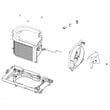
| Defrost and airflow | Frost blocks airflow across the evaporator | Refrigerator defrost heater DA47-00244U |
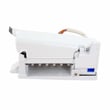
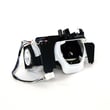
| Ice production | Ice maker stops cycling or jams | Refrigerator ice maker DA97-13718A |
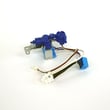
| Water supply | Low flow to ice maker/dispenser | Refrigerator water inlet valve DA62-04027A |
| Filtration | Filter restriction reduces flow and cube quality | Refrigerator water filter DA29-00019A |
Why it matters
Cooling and ice maker problems can look separate, but they often share root causes like restricted airflow, low water flow, or incorrect temperature feedback. Fixing the underlying cause protects food quality, prevents repeat icing, and reduces strain on the compressor.
Helpful references for troubleshooting
- Use the RF23HTEDBSR owner's manual for control settings, recommended temperatures, and feature-specific checks.
- For ice maker diagnosis steps, follow why your Samsung fridge stopped making ice and how to fix it.
If you need to order parts for RF23HTEDBSR, use the parts list for this model or search by model number on Sears PartsDirect.
Last updated: February 2026
What's the lifespan of a bottom freezer fridge?
A bottom-freezer refrigerator typically lasts 15 to 20 years with normal household use and basic maintenance. For your Samsung RF23HTEDBSR, keeping airflow clear, temperatures stable, and the water system maintained helps you reach the upper end of that range; see the RF23HTEDBSR owner's manual for model-specific care guidance.
Typical lifespan and what affects it
Most bottom-mount and French door refrigerators land in the same general life range, but real-world lifespan depends on usage and upkeep.
- Compressor run time (hot kitchens and frequent door openings shorten life)
- Condenser cleanliness (dust buildup raises operating stress)
- Door seal condition (air leaks force longer run cycles)
- Ice maker and dispenser use (more moving parts, more wear)
- Water quality and filter changes (reduces valve and ice maker issues)
Maintenance that extends life (high impact)
These steps reduce strain on key components like the compressor, condenser fan, and evaporator system.
- Keep vents inside the fresh food and freezer sections unblocked
- Set temps to common targets: 37°F fresh food, 0°F freezer
- Clean dust from the condenser area periodically (unplug first)
- Confirm doors close fully; avoid overloading door bins
- Replace the water filter on schedule; use the correct filter for this model such as refrigerator water filter DA29-00019A
Quick expectations by component
| Component | Typical issue window | What you notice |
|---|---|---|
| Water filter | Months | Slow water flow, taste/odor changes |
| Ice maker | Years | No ice, small cubes, jams |
| Temperature sensing/airflow | Years | Warm spots, temp swings |
| Sealed system (compressor/evaporator) | Many years | Poor cooling, long run times |
Why it matters
Knowing the 15 to 20 year lifespan helps you decide whether to maintain, repair, or plan ahead. Small fixes (air leaks, airflow restrictions, overdue filter changes) often prevent bigger failures by keeping the cooling system from running harder than necessary.
Last updated: February 2026
How do I find the model number on my RF23HTEDBSR?
For your Samsung refrigerator, the model number is printed on the appliance data label; on RF23HTEDBSR units it is typically inside the fresh food compartment on a side wall or near the ceiling. Match the full model and version (if shown) before ordering parts.
Where to look on the refrigerator
Check these common label locations first:
- Inside the refrigerator section on the left or right side wall (near the crisper area)
- On the ceiling of the fresh food compartment near the light housing
- Along the door frame (hinge side) when you open the right door
- Behind the lower kick plate or near the front bottom edge (less common)
What to write down (so parts fit)
Samsung labels often include multiple identifiers. Record these exactly:
- Model number (example: RF23HTEDBSR)
- Version or revision code (often shown after a slash or as a separate “ver.” line)
- Serial number (helpful for confirming production range)
- Electrical ratings (optional, but useful for service)
Quick ID checklist
| Label item | Why it matters |
|---|---|
| Model number | Ensures diagrams and parts lists match your refrigerator |
| Version/revision | Prevents ordering a similar-looking part that does not fit |
| Serial number | Helps narrow down compatible assemblies |
Why it matters
Samsung refrigerators can have small design changes across versions; using the exact model and version keeps you aligned with the correct parts list and diagrams. For label examples and model identification notes, use the owner's manual.
Last updated: March 2026