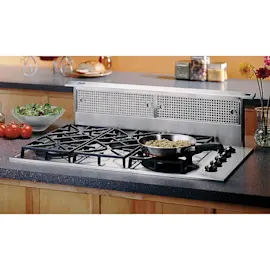
Installation guide
 Owner’s manual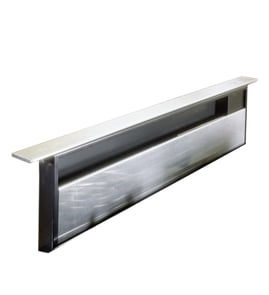

Are downdraft range hoods effective?
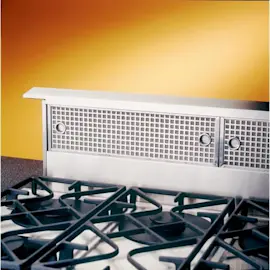
Downdraft ventilation can be effective for everyday cooking, especially when you want a low-profile look, but it is typically less effective than an overhead hood for capturing smoke and steam that naturally rise. With the Dacor RV46 raised vent, performance depends heavily on using an approved blower, proper ducting to the outdoors, and minimizing cross-drafts.
What “effective” means for a downdraft
Downdrafts work best when they can pull air across the cooking surface quickly and send it outside through a well-designed duct run.
They are a good fit when you:
- Want ventilation without an overhead canopy (island or sightline concerns)
- Do mostly low to medium smoke cooking (simmering, sautéing)
- Can vent outdoors with short, smooth metal ductwork
- Use the vent consistently at higher heat settings
They struggle more when you:
- Do high-smoke cooking often (searing, wok cooking)
- Have strong cross-drafts (open windows, HVAC vents, ceiling fans)
- Need long duct runs with multiple elbows or tight turns
RV46-SPECIFIC factors that make the biggest difference
The RV series installation instructions call out several items that directly impact capture and airflow.
- Use only approved Dacor blowers for RV series raised vents
- Vent the fan to the outdoors (not into walls, ceilings, attics, crawl spaces, or garages)
- Use metal ductwork (avoid flexible duct)
- Reduce transitions and elbows; two 45° turns are better than one 90°
- Avoid “back-to-back” elbows; keep straight duct between elbows when possible
- Do not install more than one blower
See the RV46 installation guide for blower compatibility and duct design tips.
Approved blower options (what to expect)
These are the approved blower models listed for RV series raised vents.
| Blower model | Approx. rating (CFM) | Typical use case |
|---|---|---|
| CABP3 | 600 | Most standard kitchens |
| ILHSF8 | 600 | Remote/in-line style setups |
| ILHSF10 | 1100 | Higher-demand cooking |
| REMP3 | 600 | Remote blower applications |
| REMP16 | 1000 | Higher-demand remote setups |
Why it matters
Downdraft systems rely on airflow and capture at the cooktop level. If ducting is restrictive or the kitchen has strong competing air currents, smoke and steam can escape before the vent can pull them in, even with a powerful blower.
Last updated: January 2026
Can you use a downdraft vent with a range?
Using a downdraft vent with a range is typically not a good fit; for the Dacor RV46 raised vent, it’s intended to be used only with approved Dacor cooktops, and the installation layout and cabinet depth requirements usually conflict with a range/oven chassis.
What’s compatible with the Dacor RV46
The RV46 is designed as a cooktop downdraft system and relies on a specific installation configuration.
- Use the RV46 only with approved Dacor cooktops (cooktop instructions determine suitability).
- Plan for the downdraft housing and duct path; a range’s oven cavity commonly occupies the same space.
- The RV46 does not include its own blower; it must be paired with an approved externally mounted blower.
- The vent can be configured for bottom or side exhaust, depending on the blower setup.
For model-specific requirements and clearances, follow the RV46 installation guide.
Why ranges usually don’t work with downdrafts
A freestanding or slide-in range combines a cooktop and oven in one chassis. That chassis typically blocks the space a downdraft needs behind or under the cooking surface.
| Setup | Typical result with a downdraft | Why |
|---|---|---|
| Cooktop over base cabinet | Works when planned for | Cabinet can be built around the downdraft box and ducting |
| Range (cooktop + oven) | Usually impractical | Oven cavity and rear structure conflict with downdraft housing and duct route |
If you are trying to solve a ventilation problem
These steps help you decide the right path before buying parts or modifying cabinets:
- Confirm whether your cooking appliance is a cooktop or a range.
- Check the duct route for the shortest, most direct path to the outside.
- Avoid reducing duct size along the run; increases are acceptable.
- Make sure the blower choice matches the planned duct length and configuration.
- If you’re rebuilding the vent path, inspect internal air passages for damage; a warped or leaking plenum can reduce capture.
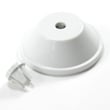
If you’re diagnosing poor airflow inside the downdraft assembly, the plenum 27440 is one of the internal components that can affect how air is directed through the vent.
Why it matters
Downdraft performance depends heavily on physical space, duct routing, and blower selection. If the downdraft cannot sit where it’s designed to, you can end up with weak capture, excess smoke in the kitchen, and costly cabinet rework.
Last updated: January 2026
How does a downdraft ventilation system work?
A Dacor downdraft ventilation system like model RV46 pulls cooking smoke, steam, and odors downward across the cooktop surface into an intake, then moves that air through ductwork (or a filtered recirculation setup, if configured) using a blower.
What’s happening when you turn it on
When you press the UP/DOWN control, the raised vent lifts into position and the blower should start drawing air. You can then select a speed (LOW, MED, HIGH) to match what you’re cooking. For RV46 setup and operation details, use the RV46 installation guide.
- The vent rises to create an intake slot near the cooking surface
- The blower creates suction that captures fumes at the source
- Air travels through the plenum and exhaust path
- Ductwork routes air out of the home (most common)
- Filters must be installed before operation to protect the blower and capture grease
Venting path options (why duct planning matters)
RV46 installations can be configured to exhaust through the bottom or through a side, depending on cabinet layout and duct routing. Best performance comes from the shortest, most direct duct run with the fewest elbows.
| Configuration choice | Typical use case | Key consideration |
|---|---|---|
| Bottom exhaust | Duct drops into floor or toe-kick area | Leave room for elbow and duct clearance |
| Side exhaust | Duct runs inside cabinet to wall exit | Avoid tight turns that restrict airflow |
Parts that support airflow and fit
If airflow seems weak or the vent is noisy, inspect for obstructions, loose mounting, or misalignment in the intake and exhaust path. The plenum 27440 is one of the components that helps channel air through the vent assembly.
- Keep the intake area clear of utensils and debris
- Confirm the vent cap does not catch on the cooktop when lowering
- Check duct joints for leaks and secure connections
- Avoid reducing duct size; increasing size over the run is acceptable
Why it matters
Downdraft systems rely on capture efficiency at the cooktop and low-resistance ducting. Good duct layout and clean filters directly affect how well RV46 removes smoke and odors and how hard the blower has to work.
Last updated: January 2026