 Error Codes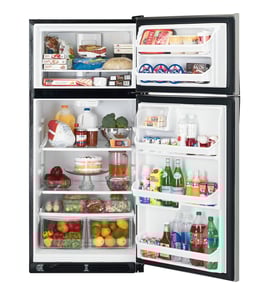
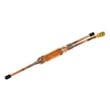


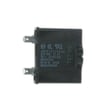



What are the advantages of a top mount fridge?
A top-mount refrigerator like the Hotpoint HTS16GBRFRWW is a practical, budget-friendly layout that typically gives you strong fresh-food capacity, simple organization, and straightforward service access compared with many bottom-freezer designs.
Key advantages of a top-mount refrigerator
- More usable fresh-food space for the same overall footprint (common in many top-mount designs).
- Lower purchase and repair costs in many cases because the design is simpler.
- Easy access to everyday items in the refrigerator section (which most people use most).
- Fewer complex features on many models, which can mean fewer failure points.
- Good airflow and cooling performance when vents are kept clear.
How it compares to other common layouts
| Layout | Best for | Common tradeoff |
|---|---|---|
| Top-mount (freezer on top) | Value, simplicity, fresh-food space | Freezer items are higher up; fridge shelves can be lower |
| Bottom-freezer | Frequent freezer use, less bending for fridge | Often higher cost; more complex drawer hardware |
| Side-by-side | Narrow door swing, equal access | Narrower shelves for wide items (pizza boxes, platters) |
Why it matters
Choosing a top-mount layout can reduce long-term hassle: fewer specialty parts (like complex drawer slides) and a simpler cooling system often make troubleshooting and maintenance more straightforward.
Maintenance tips to keep the advantages
- Keep food packages from blocking air vents between the freezer and refrigerator.
- Clean dust from the condenser area periodically to help efficiency.
- Replace a burned-out light promptly so you can see spills and avoid odors.
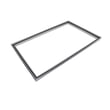
- If doors do not seal well, check for gaps, warping, or debris on the gasket.
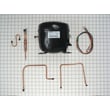
Helpful parts for common top-mount needs
Last updated: January 2026
What is the difference between top mount and bottom mount refrigerators?
A top-mount refrigerator (like the Hotpoint HTS16GBRFRWW) has the freezer on top and the fresh-food section below; a bottom-mount flips that layout. The biggest day-to-day difference is ergonomics: bottom-mount designs put refrigerated items at eye level, while top-mount designs typically cost less and use a simpler layout.
Quick comparison
| Feature | Top mount (freezer on top) | Bottom mount (freezer on bottom) |
|---|---|---|
| Most-used items | Fresh food is lower | Fresh food is higher |
| Freezer access | Easier to reach | Often requires bending or pulling a drawer |
| Typical layout | Swing freezer door | Pull-out freezer drawer or lower door |
| Common value | Usually lower purchase cost | Often higher purchase cost |
What you will notice in daily use
- Fresh-food access: Bottom-mount models reduce bending for milk, produce, and leftovers.
- Freezer organization: Bottom-mount drawers can hold bulky items well, but small items can stack and get buried.
- Space and fit: Both styles come in similar overall sizes; interior shelf and bin layouts vary by model.
- Maintenance: Both styles rely on the same core systems (compressor, condenser fan, evaporator fan, defrost system).
Why it matters
Choosing between top mount and bottom mount is mostly about how you use your refrigerator. If you open the fresh-food section far more than the freezer, a bottom-mount can feel more convenient. If you want a straightforward, proven layout, a top-mount like the HTS16GBRFRWW is a practical choice.
Related part note for this model
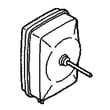
If you are comparing styles because of cooling performance or noise, the airflow parts matter more than freezer position. On the HTS16GBRFRWW, the evaporator fan motor is a key component for circulating cold air through the compartments; see refrigerator ac/dc motor WR60X31522.
Last updated: January 2026
Is the HTS16GBRFRWW garage ready?
The Hotpoint HTS16GBRFRWW top-mount refrigerator is not considered “garage ready” in the way dedicated garage-rated models are; it is designed to run in typical indoor room temperatures. In an unheated or very hot garage, cooling performance can become inconsistent.
What “garage ready” means (and why it matters)
A garage-ready refrigerator is built and tested to maintain safe temperatures across a wider ambient range than a standard kitchen refrigerator.
Why it matters
If the garage gets too cold or too hot, the refrigerator may:
- Run less often and let fresh-food temperatures rise
- Struggle to keep the freezer cold during heat
- Develop frost or moisture issues from longer run times
Temperature guidance we use for standard top-mount refrigerators
Most standard top-mount refrigerators are intended for controlled indoor environments.
| Location | Typical ambient conditions | Expected performance |
|---|---|---|
| Kitchen/indoors | Steady, moderate temps | Normal cooling and defrost operation |
| Garage (unheated) | Cold swings | Fresh-food temps can rise; freezer may fluctuate |
| Garage (hot) | High heat | Longer run times; weaker cooling; higher energy use |
What to do if you must use HTS16GBRFRWW in a garage
Use these steps to reduce temperature problems:
- Place the unit where it is protected from direct sun and wind
- Leave proper airflow space behind and above the cabinet
- Set the freezer and fresh-food controls slightly colder, then monitor with thermometers
- Keep the condenser area clean so heat can dissipate
- If the unit stops cooling well, check the condenser fan and evaporator fan operation
If you suspect a fan problem, common related parts for this model include the refrigerator condenser fan motor WR60X10168 and the refrigerator ac/dc motor WR60X31522.
Quick troubleshooting checks (before replacing parts)
- Verify the outlet has steady power and the cord is not damaged
- Confirm the condenser fan runs when the compressor runs
- Listen for the evaporator fan in the freezer section
- Check door gaskets for gaps that let warm air in
Last updated: January 2026
What number should my Hotpoint fridge freezer be set at?
For your Hotpoint HTS16GBRFRWW top-mount refrigerator, we recommend starting with the temperature control set around 3 (mid-setting), then adjusting after 24 hours. In most kitchens, that setting keeps the fresh food section near 37°F and the freezer near 0°F.
Recommended starting points
- Set the refrigerator control to 3 (middle)
- If your model has a separate freezer control, start it at 3 as well
- Wait 24 hours between adjustments so temperatures can stabilize
- Adjust by one number at a time
How to know if you should turn it up or down
Use food condition and a thermometer reading (best) to guide changes.
- Turn colder (higher number) if milk spoils quickly, soft ice cream, or fridge is above ~40°F
- Turn warmer (lower number) if produce freezes, drinks slush, or fridge is below ~34°F
- If the freezer is warm but the fridge is OK, check for blocked vents and heavy frost on the back wall
- If both sections are warm, check airflow and condenser cleanliness first
Quick temperature targets (what we aim for)
| Compartment | Target temperature | What it prevents |
|---|---|---|
| Fresh food (fridge) | ~37°F | Food spoiling too fast |
| Freezer | ~0°F | Soft ice cream, thawing |
Why it matters
A mid-setting is usually the best balance of cooling and humidity control. Setting the dial too cold can freeze produce and increase frost buildup; too warm can shorten food life and make ice cream soft.
If temperatures still will not hold
If the dial setting does not change temperatures much, a cooling or airflow part may be involved. Common suspects include the evaporator fan motor and defrost system components.
- Listen for the evaporator fan running when the compressor is on
- Check for heavy frost on the freezer back panel (defrost issue)
- Make sure the door gaskets seal all the way around
Helpful parts often used in these fixes include the refrigerator ac/dc motor WR60X31522 and the refrigerator defrost heater WR51X10038.
Last updated: January 2026





