Owner’s manual
 Error Codes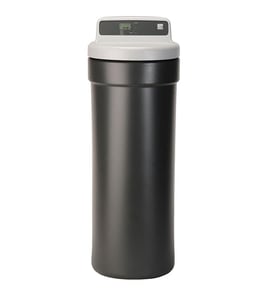
Can you service a water softener yourself?
Yes. We service a GE GXSF30V00 water softener ourselves for routine maintenance like adding salt, clearing salt bridges, cleaning the brine tank, checking for leaks, and starting a manual recharge cycle. For electrical error codes or internal valve issues, follow the diagnostic steps in the owner's manual and use the built-in bypass to keep water running.
What you can safely do yourself
- Refill the brine tank with the correct salt and keep the salt hole cover in place except when servicing.
- Break up a salt bridge (hard crust) and remove salt mush or sludge from the brine tank.
- Run a manual recharge (regeneration) cycle to restore softening performance.
- Check for leaks at inlet/outlet clips and plumbing connections.
- Use the bypass valve to isolate the softener during troubleshooting.
Basic service steps (good for most “no soft water” complaints)
- Confirm the unit is in Service (not bypass) and has power (24V external power supply).
- Check salt level and condition; remove bridging or mush.
- Start a manual recharge and verify you get strong drain flow during backwash and rinse.
- Inspect the drain hose for kinks or restrictions.
- After any plumbing work, purge air and re-check for leaks.
When it is more than routine maintenance
If the display shows an error code or “Err,” the manual’s electronic diagnostics point to wiring or an electrical fault. A practical DIY first step is to unplug the transformer, check for loose wiring connections under the control cover, then restore power and see if the code returns.
| Symptom | What it usually means | Best next step |
|---|---|---|
| Hard water returns quickly | Salt issue, settings, or recharge not completing | Clean brine tank; run manual recharge |
| Slow or no drain flow in backwash/rinse | Restricted drain line or internal restriction | Check hose and fittings; re-test recharge |
| Error code or “Err” | Electrical/wiring problem detected | Follow diagnostics in the manual; reset power |
Why it matters
Regular DIY service keeps the resin bed recharging properly (fill, brining, rinse, backwash cycles) and prevents common failures like brine draw problems, drain restrictions, and leak damage.
For code lookups and quick meaning, use our GE error codes reference alongside the owner's manual.
Last updated: February 2026
What is the life expectancy of a GE water softener?
A GE water softener like model GXSF30V00 typically lasts 10 to 15 years. Actual lifespan depends most on your water quality (iron and chlorine), correct settings (hardness level), and routine maintenance such as keeping salt in the brine tank and cleaning the resin when needed.
Typical lifespan and what affects it
Most water softeners reach the end of their useful life because the resin bed and moving valve components wear out or get fouled by iron and sediment.
- Water chemistry: Chlorine above about 2 ppm can shorten resin life.
- Iron in water: High iron can foul resin and cause poor softening.
- Water pressure and flow: Excess pressure can stress seals; low flow can affect performance.
- Maintenance habits: Regular salt use and periodic resin cleaning extend life.
- Installation quality: Proper drain routing and plumbing connections reduce leaks and valve issues.
For model-specific operating limits and maintenance steps, use the owner's manual.
Maintenance that extends life (especially with iron or chlorine)
If you have iron in your water, keeping the resin clean is one of the biggest lifespan boosters.
- Keep the brine tank from running out of salt.
- Use the correct salt type recommended in the manual.
- If iron is present, clean the resin bed on a schedule (many homes benefit from about every 6 months).
- If water looks cloudy from sediment, consider an upstream sediment filter.
- If household pressure is high, use a pressure-reducing valve to protect the softener.
Quick “repair vs. replace” guide
| What you’re seeing | More likely a repair | More likely replacement |
|---|---|---|
| No soft water but unit regenerates | Yes (settings, venturi/nozzle, valve motor) | Sometimes |
| Frequent error codes or stuck in a cycle | Yes (switch/motor/control) | Sometimes |
| Persistent leaks from valve/tank area | Sometimes | Often if older |
| Unit is 10 to 15+ years old with multiple issues | Sometimes | Yes |
If you’re troubleshooting electronic or cycle problems, our GE error codes guide helps narrow down the failure.
Why it matters
A softener near the end of its lifespan can waste salt and water, regenerate too often, and still leave hard-water symptoms (spotting, scale, soap not lathering). Planning replacement around the 10 to 15-year mark helps avoid sudden loss of soft water.
Last updated: February 2026
How do I find the model number on my GXSF30V00?
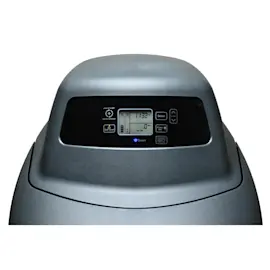
For the GE GXSF30V00 water softener, lift the salt cover (top cover) and look on the rim below the control panel; the rating decal there lists the model and serial numbers. This is the quickest way to confirm the exact model for parts and troubleshooting.
Where to look (exact location)
- Lift the cover on top of the unit (the salt cover).
- Look on the rim directly below the control panel.
- Find the rating decal; it lists Model # and Serial #.
- Write both numbers down before ordering parts or checking error codes.
What the model number looks like
On this series, the decal often shows the model family as GXSF30V; your full model is GXSF30V00. Use the full model number when searching diagrams and parts.
| What you see | What to use for parts lookup | Why |
|---|---|---|
| GXSF30V | GXSF30V00 | The suffix identifies the exact version |
| Serial number | Keep for your records | Helps match production details |
Why it matters
Using the exact model number helps us match the correct water softener parts, programming steps, and specifications (like rated capacity and service flow) for your GE unit.
Helpful reference
- Use the [GXSF30V00 owner’s manual] to confirm the label location and record the model and serial numbers.
Last updated: March 2026