Owner’s manual
 View engine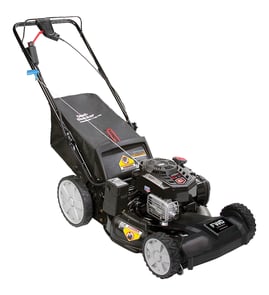


Should I use 87 or 91 gas for lawn mower?
For the Craftsman 917374054 gas walk-behind mower, we recommend using fresh regular unleaded gasoline (87 octane). Higher octane (like 91) does not add power or improve cutting performance in this type of small engine; fuel freshness and proper storage matter more. For fuel and storage guidance, follow the 917374054 owner's manual.
- Use fresh, clean, regular unleaded 87 octane.
- Avoid using old gas (especially fuel that has sat for weeks or months).
- Be cautious with alcohol-blended fuels; they can attract moisture and cause fuel separation during storage.
- Never pour engine or carburetor cleaner into the fuel tank; it can cause permanent damage.
- If the mower will sit 30 days or longer, empty the tank and run the engine until the carburetor is dry.
| Fuel choice | What you get | Best use case |
|---|---|---|
| 87 octane (regular) | Correct everyday fuel for small engines | Normal mowing and weekly use |
| 91 octane (premium) | No performance benefit in typical mower engines | Only if it is the freshest fuel available |
- Buy gas in smaller amounts so it gets used quickly.
- If storing for 30+ days, drain the tank and run it dry.
- Store fuel in an approved container and keep it sealed.
- Keep the mower clean so the engine runs cooler and lasts longer.
Most mower starting and running issues come from stale fuel and storage-related fuel system problems, not from using 87 instead of 91. Using the right fuel practices helps protect the carburetor, fuel lines, and overall engine life.
Last updated: January 2026
How to find Craftsman model number?
On the Craftsman walk-behind mower model 917374054, the model number is printed on the mower’s identification sticker; you’ll typically find that sticker on the back of the mower deck, between the lower handle mounts. Use the exact model number to match the correct parts list and owner documentation.
Check these common label locations first (starting with the most likely):
- Back of the deck, between the lower handle mounts (most common on this Craftsman)
- Rear of the deck near the discharge opening or rear door area
- Side of the deck near a wheel height adjuster bracket
- On the handle support area close to the deck
If the sticker is dirty or faded, wipe it with a damp rag and mild soap, then dry it and re-check.
Record the information exactly as shown on the sticker.
- Model number (example format: 917.374054 or 917374054)
- Serial number (used to confirm production run and correct fit)
- Engine information (often listed separately on the engine shroud)
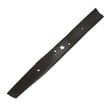
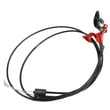
Using the correct model number prevents ordering the wrong blade, drive parts, or handle components. For example, parts like the cable assembly 587326601 and the husqvarna lawn mower 22-inch deck 3-in-1 blade 532421825 must match the mower’s exact configuration.
| What you’re looking for | What it’s used for | Example on this mower |
|---|---|---|
| Model number | Matches the correct parts diagrams and lists | 917374054 |
| Serial number | Confirms the correct version within a model | Varies by unit |
| Engine model/type | Helps with engine-specific tune-up parts | Briggs & Stratton 675 Series |
For diagrams and the official identification details, use the 917374054 owner’s manual.
Last updated: January 2026
What is the most dependable lawn mower brand?
For long-term dependability, we recommend choosing a brand with strong parts support and a proven service history; Craftsman is a dependable choice for owners of the Craftsman 917374054 because routine-wear items (like blades, wheels, and drive parts) are widely available and the mower is designed for regular maintenance per the Craftsman 917374054 owner's manual.
Dependability is less about a single “best” brand and more about how consistently the mower starts, cuts, and drives over years of normal use.
Key factors we use to judge dependability:
- Easy access to common replacement parts (blade, wheels, cables)
- Straightforward maintenance schedule (oil, air filter, spark plug)
- Durable cutting system and deck design
- Reliable self-propel/drive components (if equipped)
- Clear operating and safety instructions
If you are comparing Craftsman to other popular brands (Toro, Honda, Husqvarna, Troy-Bilt, Greenworks), focus on these decision points:
| What you care about most | What to prioritize | Why it helps reliability |
|---|---|---|
| Easy DIY upkeep | Common, in-stock wear parts | Faster repairs, less downtime |
| Consistent cut quality | Correct blade type and sharpness | Reduces strain on engine and drive |
| Self-propel performance | Drive cable, wheels, transmission condition | Prevents “won’t move” complaints |
| Long storage periods | Fuel care and winterizing routine | Prevents hard-start issues |
For the Craftsman 917374054, we commonly see owners maintain dependability by keeping key wear items in good shape, such as the husqvarna lawn mower 22-inch deck 3-in-1 blade 532421825 and drive-related components.
A “dependable” mower is one you can keep running with predictable maintenance. Following the maintenance schedule and using O.E.M. replacement parts helps protect performance and reduces repeat failures over the life of the mower.
Last updated: January 2026
What are the common problems with Craftsman lawn mowers?
On the Craftsman 917374054 walk-behind mower, the most common problems are no-start conditions, loss of power, poor cut quality, excessive vibration, and drive issues. These usually trace back to fuel quality, ignition parts, airflow restrictions, blade condition, or grass buildup under the deck; our 917374054 owner's manual troubleshooting chart covers the most frequent causes.
- Won’t start: stale fuel, dirty air filter, spark plug or wire issue, control bar not held to the handle
- Loss of power: heavy grass load, dirty air filter, grass buildup under the deck, too much engine oil
- Poor cut or uneven cut: worn or bent blade, uneven wheel height settings, deck packed with clippings
- Excessive vibration: loose blade hardware, bent blade, damaged blade adapter, bent crankshaft
- Hard to push or self-propel slows: drive system wear, wheel/gear wear, grass buildup increasing drag
- Drain old gas and refill with fresh, clean gasoline.
- Inspect and replace the spark plug if it’s fouled or worn.
- Check the air filter and replace it if dirty.
- Tip the mower safely (spark plug wire disconnected) and clean packed grass from under the deck.
- Inspect the blade for bends, cracks, or heavy nicks; replace if damaged.
| Problem you notice | Part to inspect | What to look for |
|---|---|---|
| Ragged cut, missed strips | Husqvarna lawn mower 22-inch deck 3-in-1 blade 532421825 | Dull edge, bends, chips |
| Vibration after hitting debris | Blade mounting hardware | Loose fastener, damaged adapter |
| Clippings blowing out the side | Lawn mower clipping deflector 532426129 | Cracks, missing shield, poor coverage |
A dull or loose blade and a deck packed with wet clippings make the engine work harder, which can cause loss of power, stalling, and premature wear. Keeping the blade sharp and the underside clean also improves bagging and mulching performance.
For step-by-step symptom charts (no-start, loss of power, vibration, hard-to-pull rope), use the troubleshooting section in the 917374054 owner's manual.
Last updated: January 2026