Owner’s manual
 Error Codes


How to realign bottom freezer door?
To realign the bottom freezer door (drawer) on your Whirlpool GX2FHDXVY05, adjust the door alignment at the hinges so the refrigerator door bottom lines up evenly with the top of the freezer drawer, then tighten the hinge screws. Use the steps and diagrams in the owner's manual for the exact hinge locations.
Quick alignment checklist (what we do first)
- Make sure the refrigerator is level front-to-back and side-to-side; leveling issues show up as uneven door gaps.
- Fully close the freezer drawer and check the gap across the top edge.
- Inspect the drawer glides for anything blocking travel (ice, packaging, a shifted basket).
- Confirm the door gaskets are seated all the way around; a rolled gasket can mimic misalignment.
- Tighten any loose hinge or drawer-front mounting screws you can access.
Hinge alignment method (matches the manual’s approach)
The manual’s alignment target is simple: the bottom of the refrigerator door should align with the top of the freezer drawer.
- Support the door/drawer front while you work (do not rely on gasket magnets to hold alignment).
- Loosen the appropriate hinge screws slightly (do not remove them).
- Shift the door position until the edges line up evenly.
- Tighten all hinge screws securely.
If the drawer front looks crooked (common causes)
| Symptom | Most likely cause | What to do |
|---|---|---|
| One side higher | Unit not level | Re-level the cabinet, then recheck gaps |
| Drawer won’t close flush | Glide obstruction or ice buildup | Clear obstruction, defrost if needed |
| Gap changes after closing | Loose mounting screws | Tighten screws, then recheck alignment |
Why it matters
A properly aligned freezer drawer helps the door gasket seal evenly, which prevents warm air leaks, frost buildup, and temperature swings that can affect ice production and food preservation.
Last updated: February 2026
How long to let a refrigerator sit after laying it down?
If you laid your Whirlpool GX2FHDXVY05 refrigerator down on its side, let it sit upright for 24 hours before plugging it in. That wait time lets compressor oil drain back where it belongs, which helps prevent hard starting, noisy operation, and cooling problems after the move.
Recommended wait time (based on how it was moved)
- Laid fully on its side: wait 24 hours upright
- Tilted only briefly (for a doorway or dolly): wait 4 to 6 hours upright
- Transported upright the whole time: you can plug it in once it is in place and stable
For moving and setup precautions specific to this model, follow the owner's manual.
What to do before you plug it back in
- Set the refrigerator upright in its final spot.
- Leave space behind the cabinet for airflow (most installations use about 1 inch).
- Make sure the unit is level so doors seal correctly.
- Plug into a grounded outlet (avoid extension cords).
- After power is restored, allow 24 hours to cool completely before loading it with food.
Quick reference table
| How it was handled | Upright wait time before power | Why |
|---|---|---|
| On its side | 24 hours | Oil can migrate into the sealed system |
| Briefly tilted | 4 to 6 hours | Oil shift is usually minor |
| Kept upright | 0 hours | Oil stays in the compressor |
Why it matters
When a refrigerator is laid down, compressor oil can move into the refrigerant lines. Powering up too soon can cause poor lubrication at startup, which can lead to overheating, loud compressor noise, or reduced cooling performance.
Last updated: February 2026
What's the average lifespan of a Whirlpool refrigerator?
Most Whirlpool refrigerators, including the Whirlpool GX2FHDXVY05 bottom-mount style, typically last about 10 to 15 years with normal use and basic maintenance; many run closer to 15 to 20 years when kept clean, properly leveled, and well ventilated.
Typical lifespan and what affects it
A refrigerator’s life is mostly driven by compressor run time, airflow, and door-seal condition.
- Maintenance and cleaning (condenser area, door gaskets, drain system)
- Room temperature and ventilation (tight cabinets and dusty areas shorten life)
- Door openings and loading habits (warm air and overpacking increase run time)
- Water and ice system upkeep (filters, inlet valve, ice maker)
- Power quality (frequent outages or surges add stress to controls and compressor)
Quick “life-extending” checklist for GX2FHDXVY05
Use these habits to reduce wear on the sealed system and fans:
- Keep vents inside the refrigerator and freezer unblocked.
- Clean dust from the condenser area regularly.
- Make sure doors close easily and seals fully contact the cabinet.
- Fix water leaks quickly to prevent corrosion and ice buildup.
- Keep temperatures steady (avoid frequent warm-to-cold swings).
Common wear items vs. major components
This table helps set expectations for what usually fails first.
| Component type | What you may notice | Typical outcome |
|---|---|---|
| Wear/maintenance items | Leaks, weak ice production, warm spots | Repair often restores performance |
| Airflow parts (fans) | Noisy operation, poor cooling in one section | Repair is usually straightforward |
| Major cooling system | Not cooling, long run times, clicking | Higher-cost repair decision |
Parts that often come up as the unit ages
If symptoms point to a specific failure, these are common replacements for this model:
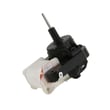
- Refrigerator evaporator fan motor WPW10128551 (warm fridge, noisy fan, weak airflow)
- Refrigerator condenser fan motor W11613295 (hot cabinet sides, poor cooling, loud rear fan)
- Refrigerator water inlet valve assembly WP2315576 (no ice, slow fill, leaking at valve)
Why it matters
Knowing the typical 10 to 15 year average helps you decide whether to maintain, repair, or plan ahead. Simple airflow and seal maintenance can reduce compressor strain and keep your Whirlpool refrigerator running longer.
For model-specific care and maintenance intervals, follow the owner's manual.
Last updated: February 2026
What is the most common problem with Whirlpool refrigerators?
The most common Whirlpool refrigerator problem is a cooling complaint (too warm, temperature swings, or running too long). On the Whirlpool GX2FHDXVY05 bottom-mount, the usual causes are airflow and defrost issues, dirty condenser coils, or a fan or control problem; ice maker and noise concerns are also common. See the owner's manual troubleshooting section for model-specific checks.
Most common symptoms and what they usually point to
- Refrigerator too warm: restricted airflow, evaporator frost buildup, or a weak evaporator fan
- Freezer cold but fresh food warm: poor air circulation from the freezer to the refrigerator section
- Runs constantly: warm room, frequent door openings, dirty coils, or temperature control issues
- No ice or slow ice: water supply issue or a failing ice maker or inlet valve
- Unusual noises: often normal operating sounds (fans, refrigerant flow, defrost water sizzling)
Quick checks we recommend first (GX2FHDXVY05)
- Confirm the unit has power and the controls are turned on.
- If it is a new install or recently moved, allow 24 hours to cool completely.
- Make sure doors are closing fully and not being held open by bins or food packages.
- Listen for fan operation; a failed evaporator fan can cause warm temperatures.
- If ice production is the issue, verify the household water supply is on and the line is not kinked.
Parts that commonly solve these problems
If troubleshooting points to a failed component, these model-compatible parts are common fixes:
| Problem area | What fails | Example part for GX2FHDXVY05 |
|---|---|---|
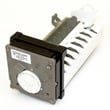
| Ice maker not working | Ice maker module | Refrigerator ice maker D7824706Q |
| No water to ice maker | Water inlet valve | Refrigerator water inlet valve assembly WP2315576 |
| Warm temps, poor airflow | Evaporator fan motor | Refrigerator evaporator fan motor WPW10128551 |
| Defrost frost buildup | Defrost heater | Refrigerator defrost heater WP12729128 |
| Erratic temps or controls | Electronic control | Refrigerator electronic control WPW10503278 |
Why it matters
Cooling and airflow problems can spoil food quickly and make the compressor run longer than necessary. Addressing basic airflow, door sealing, and defrost issues early helps stabilize temperatures and reduces wear on major components.
Last updated: February 2026