Installation guide
 Owner’s manual
 Error Codes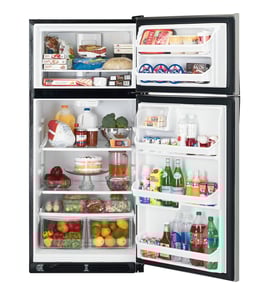


What is the upper part of a fridge called?
On the Frigidaire FRT17B3AW8 top-mount refrigerator, the upper section is the freezer compartment. It’s the coldest area of the appliance, designed to keep foods frozen and to help cold air circulate down to the fresh food (refrigerator) section; see the FRT17B3AW8 owner’s manual.
What the freezer compartment does
- Keeps food at freezing temperatures for long-term storage
- Helps cool the refrigerator section by supplying cold air
- Provides space for ice trays (and on some models, an optional ice maker)
- Includes shelves/door bins for organizing frozen items
Freezer vs. refrigerator section (quick comparison)
| Section | Typical purpose | Typical temperature range |
|---|---|---|
| Freezer (upper) | Long-term frozen storage | 0°F to 5°F |
| Refrigerator (lower) | Fresh food storage | 34°F to 40°F |
Tips that prevent temperature problems
We see the best performance when you follow a few basics that apply to this style of Frigidaire top-mount refrigerator:
- Leave space between packages so cold air can circulate
- Avoid overloading the freezer door with hard-to-freeze items (like ice cream)
- Keep the refrigerator level so doors close tightly
- Do not block the toe grille; airflow is essential for proper operation
- Use the temperature control settings recommended in the FRT17B3AW8 owner’s manual
Why it matters
Knowing the upper section is the freezer compartment helps with troubleshooting. If frozen foods soften or the refrigerator section warms up, the issue often relates to airflow, door sealing, or cooling system performance rather than just a control setting.
Last updated: January 2026
What are the disadvantages of a top mount fridge?
A top-mount refrigerator like the Frigidaire FRT17B3AW8 is reliable and simple, but its main disadvantages are less convenient fresh-food access (you bend more), fewer premium organization features, and fewer built-in dispenser options compared with many bottom-freezer designs.
Common disadvantages (what most owners notice)
- Fresh-food items sit lower: you reach down more often for produce, drinks, and leftovers.
- Freezer is at eye level: great for frozen foods, but it pushes the refrigerator section down.
- Fewer “premium” storage features: many top-mounts have simpler bins and shelves.
- Less common to have external ice and water: many top-mount models are built without door dispensers.
- Door swing clearance matters: if the hinge side is near a wall, you may need extra space to open the door wider.
What you can do to reduce the downsides
We recommend these practical setup steps for FRT17B3AW8-STYLE top-mount units:
- Keep everyday items on the upper refrigerator shelves to reduce bending.
- Use door bins for frequently grabbed items; adjustable bins can be repositioned for better access.
- Confirm the refrigerator is level and the doors close smoothly to prevent warm-air leaks.
- Follow the clearance guidance so airflow is not restricted (especially around the toe grille area).
- If your kitchen layout is tight, consider reversing the door swing when it improves access.
Quick comparison: top mount vs bottom freezer
| Feature | Top mount (like FRT17B3AW8) | Bottom freezer |
|---|---|---|
| Fresh-food access | Lower, more bending | Higher, easier access |
| Freezer access | Higher, easier access | Lower, more bending |
| Typical features | Simpler storage options | Often more organization |
| Dispensers | Less common | More common |
Why it matters
Most “disadvantages” come down to daily ergonomics and kitchen fit. If you use fresh food more than frozen, the lower refrigerator section can feel less convenient; if you use frozen food often, the top freezer can be a plus.
For door swing, leveling, and placement clearances specific to this model, use the FRT17B3AW8 owner’s manual.
Last updated: January 2026
What is the most common problem with a Frigidaire refrigerator?
The most common problem we see on Frigidaire refrigerators like model FRT17B3AW8 is a cooling complaint (too warm in the fresh food section or freezer). In many cases, the fix starts with basic checks: power, control settings, airflow, and door sealing, then moves to fan and defrost components if needed.
Quick checks that solve many “not cooling” calls
- Make sure the plug is fully seated in the outlet (a loose plug can stop cooling).
- Confirm the temperature controls are not set to “0” (that stops the compressor).
- Allow 24 hours after changing settings for temperatures to stabilize.
- Listen for the evaporator fan; if airflow is weak, cooling suffers.
- Check that doors close tightly and gaskets seal all the way around.
Common causes and what you typically notice
| Symptom | Likely cause | What to check first |
|---|---|---|
| Fridge warm, freezer OK | Airflow/damper issue | Vents blocked by food, damper operation |
| Both sections warm | Power/control/defrost issue | Control set to “0”, defrost cycle, airflow |
| Frost buildup, warming over time | Defrost problem | Defrost thermostat and heater circuit |
| No interior light | Bulb or stuck switch | Bulb, then press/release door switch |
Parts that often come up in cooling repairs
If basic checks do not restore normal temperatures, these model-compatible parts are commonly involved:
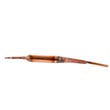
- Refrigerator defrost bi-metal thermostat 5303918202 (defrost protection and temperature sensing in the defrost circuit)
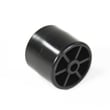
- Refrigerator evaporator fan blade 5308000010 (moves cold air through the freezer and into the refrigerator section)
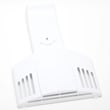
- Refrigerator air damper 241542001 (controls cold-air flow into the fresh food compartment)
Why it matters
Cooling issues can look like a “bad compressor,” but many problems are simpler: a control set to “0,” restricted airflow, or a defrost failure that slowly blocks the evaporator with frost. Starting with the basics prevents unnecessary parts replacement.
Model-specific reference
For control locations, door switch location, and the manufacturer troubleshooting list for FRT17B3AW8, use the FRT17B3AW8 owner’s manual.
Last updated: January 2026
Which is better, top mount or bottom mount refrigerator?
A top-mount refrigerator like the Frigidaire FRT17B3AW8 is usually the better pick when you want simple, reliable cooling with strong energy efficiency and lower repair costs; a bottom-mount is usually better when you want fresh-food items at eye level and easier access to the refrigerator section.
Quick comparison (what most homeowners notice)
| Feature | Top mount (freezer on top) | Bottom mount (freezer on bottom) |
|---|---|---|
| Everyday access | Freezer is easiest to reach | Fresh food is easiest to reach |
| Typical cost | Lower purchase and repair cost | Higher purchase and repair cost |
| Organization | Simpler layout | Often more drawers and zones |
| Energy use | Often very efficient | Varies by design and features |
How to choose for your kitchen and habits
- Choose top mount if you use the freezer often, want fewer complex features, or want a value-focused refrigerator.
- Choose bottom mount if you cook frequently and want produce, dairy, and leftovers at eye level.
- If your refrigerator sits next to a wall, plan for door swing clearance; hinge-side placement can require extra space.
- Plan for ventilation space; most installations need clearance at the sides/top and behind for airflow.
- If you want an ice maker, confirm you have a nearby water supply and the correct hookup parts.
Why it matters
The “better” style is the one that matches how you reach for food every day. Top-mount designs typically stay straightforward (fewer moving parts and simpler airflow paths), while bottom-mount designs prioritize convenience for fresh-food access.
Model-specific tip for FRT17B3AW8 owners
For installation basics like clearances, leveling, and door reversal guidance, follow the steps in the FRT17B3AW8 owner’s manual. If you are planning a new install or moving the refrigerator, use the FRT17B3AW8 installation guide to confirm airflow and placement requirements.
Last updated: January 2026