Owner’s manual
 Error Codes


How do I tell what model my Kenmore dryer is?
Your Kenmore dryer’s model number is printed on the appliance ID label; for Kenmore dryers it’s most often inside the door opening on the front panel, and it will look similar to 110.8756_ (your model is 11087561601). Use that exact number to match parts, wiring, and troubleshooting steps in the 11087561601 owner's manual.
Where to look for the model number label
Check these common Kenmore dryer label locations first:
- Inside the dryer door opening (front panel area)
- On the back panel of the dryer cabinet
- Around the lint screen housing area (near the top opening)
- On the door frame or inner front panel near the drum opening
What the model number looks like (and why it matters)
Kenmore model numbers are numeric and often start with a prefix like 110.; that prefix helps identify the manufacturing source and ensures you get the correct Kenmore-compatible parts and diagrams.
Quick examples
| What you see on the label | What it tells you | What to do next |
|---|---|---|
| 110.8756_ / 110.8757_ / 110.8758_ | Kenmore 110-series family | Match the full model to the parts list and manual |
| 11087561601 | Exact model identifier | Use it when ordering parts and checking specs |
Tips to avoid ordering the wrong part
- Copy the full model number exactly (include every digit)
- If there’s a series of similar models (like 110.8756_ vs 110.8856_), match the full number, not just the first few digits
- Use the model number when looking up maintenance steps such as lint screen cleaning and venting checks in the manual
Why it matters
The model number ties your dryer to the correct Kenmore wiring, venting requirements, and component designs (like the heating circuit and drum support system). That accuracy prevents returns and speeds up repairs.
Last updated: February 2026
How do I troubleshoot my 11087561601?
To troubleshoot your Kenmore dryer model 11087561601, start with the symptom (won’t start, no heat, long dry times, noise) and check the basics first: power, door switch, airflow, and cycle settings. Then move to likely parts in the heating and drive systems.
Quick checks first (most fixes start here)
Use the diagnostic and operating guidance in the 11087561601 owner's manual, then:
- Confirm the dryer is getting proper power; reset the breaker if needed
- Make sure the door fully closes and the latch engages
- Clean the lint screen and verify strong airflow at the outside vent
- Try a timed dry cycle to rule out sensor-cycle issues
- Listen for motor hum, drum movement, or unusual scraping
Troubleshoot by symptom
Dryer won’t start
- Check power at the outlet and the house breaker
- Verify the door is closing firmly
- If the motor hums but drum won’t turn, inspect belt and idler system
Dryer runs but won’t heat
- Check airflow first; restricted venting can trip safety cutoffs
- If airflow is good, test the heating circuit components
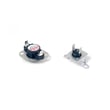
- A common repair is replacing the safety cutoff set: dryer thermal cut-off fuse kit 279973
Takes too long to dry
- Clean/shorten the vent run and remove lint blockages
- Inspect the blower for damage or looseness: dryer blower wheel WP697772
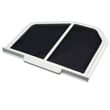
- Confirm the lint screen is not coated with residue (wash it)
Squealing, thumping, or scraping
- Noise during rotation usually points to drum support wear or idler wear
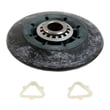
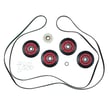
- A bundled fix for multiple wear items is: dryer repair kit 4392067
What to test and what it means
| What you observe | Most likely area | What to do next |
|---|---|---|
| No drum movement, motor runs | Drive system | Inspect idler and belt path; check pulley alignment |
| Heat cuts in and out | Overheating/airflow | Clean venting; check thermal cutoff/thermistor |
| Clothes overdry or underdry on auto cycles | Moisture sensing | Clean sensor bars; try timed dry for comparison |
Why it matters
Troubleshooting in the right order prevents repeat failures. For example, replacing a thermal cutoff without fixing a clogged vent often leads to the same no-heat problem returning.
Last updated: March 2026
What is the average lifespan of 11087561601?
The average lifespan of a Kenmore dryer like model 11087561601 is about 13 years with normal household use and good airflow. Regular lint removal and vent cleaning are the biggest factors in reaching (or beating) that lifespan.
What affects lifespan the most
- Vent restriction (long dry times, overheating, blown thermal fuse)
- Lint buildup inside the cabinet or blower housing
- Overloading (extra strain on the drive motor, belt, and drum support)
- Heat stress from poor airflow (wears the heating system and safety thermostats)
- Wear parts aging out (idler pulley, drum seal, blower wheel)
Maintenance that adds years
Use the care and cleaning steps in the 11087561601 owner's manual and follow this routine:
- Clean the lint screen every load; wash and dry it monthly to remove fabric softener film
- Check airflow at the outside vent hood; it should be strong and steady
- Clean the vent duct at least once per year (more often with heavy use)
- Keep loads balanced; avoid drying heavy items with light items
- Stop using the dryer if you smell burning or notice repeated overheating
Common “end-of-life” symptoms and likely wear points
| Symptom | What it often points to | Example part on this model page |
|---|---|---|
| Squealing or thumping | Drum support wear, idler wear | Dryer repair kit 4392067 |
| Long dry times | Airflow restriction, blower issue | Dryer blower wheel WP697772 |
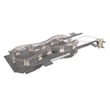
| No heat | Heating circuit or safety cutoffs | Dryer heating element WP8544771 |
Why it matters
A dryer that runs hot or takes too long to dry does more than waste energy; it accelerates wear on the heating system and can trip safety devices like thermal cutoffs. Good airflow protects the dryer and your clothes.
Last updated: March 2026