Owner’s manual

Is Maytag MED6630HW1 stackable?
Yes. The Maytag MED6630HW1 dryer is designed to be stackable when you install it with the correct Maytag stack kit, which lets the dryer sit securely on top of a compatible washer (instead of side-by-side placement).
What you need to stack it safely
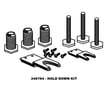
Use the dryer only with the manufacturer-approved stacking hardware listed for this model in the MED6630HW1 owner's manual.
- Use a Maytag stack kit made for your washer and dryer pairing
- Place the dryer on top of the washer (never the other way around)
- Keep the floor level and the washer stable before stacking
- Confirm you have enough overhead clearance for the stacked height
- Do not stack using improvised brackets, straps, or wood framing
Quick placement options
| Setup | Space needed | Best for |
|---|---|---|
| Side-by-side | Wider footprint | Easy access to controls and lint screen |
| Stacked (with stack kit) | Smaller footprint | Tight laundry closets and alcoves |
Why it matters
Stacking saves floor space, but it also changes vibration and airflow conditions. Using the correct stack kit helps keep the MED6630HW1 stable, reduces noise and movement, and prevents cabinet or control damage over time.
Last updated: January 2026
What is the average lifespan of a Maytag washing machine?
Maytag washing machines typically last 10 to 13 years with normal household use. Even though this page is for the Maytag dryer model MED6630HW1, that washer lifespan range is the standard expectation for modern Maytag washers when they are installed correctly and maintained consistently.
Typical lifespan (what to expect)
Most Maytag washers land in this range:
| Washer type | Typical lifespan | What shortens it fastest |
|---|---|---|
| Top-load (agitator or impeller) | 10 to 13 years | Overloading, unbalanced loads |
| Front-load | 10 to 13 years | Poor drainage, door seal neglect |
| High-use household (large family) | 8 to 11 years | Heavy daily cycles, skipped maintenance |
How to help your Maytag washer last longer
These habits reduce wear on the drive system, bearings, and suspension:
- Keep loads to the recommended size; avoid packing the tub tight.
- Use the correct detergent type and amount (especially HE detergent in HE machines).
- Level the washer to prevent vibration and premature suspension wear.
- Leave the lid or door ajar between loads to reduce odor and moisture damage.
- Clean the dispenser areas and run a periodic cleaning cycle.
- Fix small issues early (leaks, grinding noises, slow drain) before they damage other parts.
Quick “repair or replace” guideline
Use this simple rule to decide when a repair makes sense:
- Under 5 years old: repairs are usually worth it.
- 5 to 10 years old: repair if the issue is isolated (pump, belt, lid lock).
- Over 10 years old: replace if the repair is major (transmission, tub bearings, control board).
Why it matters
A washer’s lifespan is driven less by the brand name and more by load size, vibration control, water quality, and maintenance. Keeping the machine level and avoiding overloads are the two biggest ways we see customers extend service life.
For Maytag laundry care and maintenance guidance that also applies across many Maytag models, follow the care and use recommendations in the MED6630HW1 owner’s manual.
Last updated: January 2026
What is the most common problem with the Maytag dryer?
For the Maytag MED6630HW1 dryer, the most common problems we see are no heat or long dry times caused by restricted airflow (lint buildup, blocked venting, or a blocked outlet grille) and no-start conditions tied to power/door/start issues. These problems often show up as overheating, loud operation, or weak exhaust airflow.
Most common symptoms and what they usually mean
- Dryer runs but clothes stay damp: vent system restricted, lint screen clogged, or outlet grille blocked
- Dryer takes too long to dry: vent too long or too many turns, crushed duct, weak airflow at the outside hood
- Dryer will not start: door not fully closed, START/PAUSE not held long enough, or a tripped breaker (many dryers use two)
- Loud humming or increased noise: load packed too tightly or exhaust vent blocked
- Intermittent drying on sensor cycles: dryer not level or sensor area not being contacted by the load
Quick checks we recommend first (fast, high-impact)
- Clean the lint screen and confirm the lint screen area is seated correctly.
- Run the dryer 5 to 10 minutes and check airflow at the outside exhaust hood.
- Inspect the vent path for kinks, lint buildup, or excessive length and elbows.
- Check the air outlet grille just inside the door (behind the lint screen) for a stuck fabric softener sheet.
- For a no-start issue, confirm the door is fully closed and press and hold START/PAUSE until the “3-2-1” countdown completes.
Parts that commonly get involved when airflow or heat problems persist
If airflow is good but heating or cycling issues continue, these parts are common suspects:
| Symptom | Common part involved | Example part for MED6630HW1 |
|---|---|---|
| No heat or weak heat | Heating circuit component | Dryer heating element WP3387747 |
| Overheats then stops heating | Safety device opens | Thermal fuse W10909685 |
| Poor temperature control | Sensor feedback issue | Dryer thermistor WP8577274 |
Why it matters
Restricted venting is the root cause behind many “won’t dry” and “overheats” complaints. Good airflow helps the MED6630HW1 dry faster, run quieter, and reduces stress on heating and safety components.
For model-specific operating and troubleshooting steps (including airflow checks and common display messages), use the MED6630HW1 owner’s manual.
Last updated: January 2026