Installation guide
 Owner’s manual
 Error Codes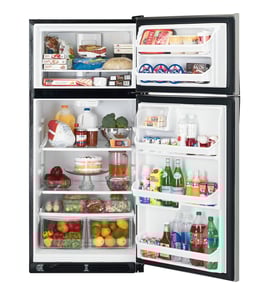



What are the disadvantages of a top mount fridge?
A top-mount refrigerator like the Frigidaire FFTR1814TW4 puts the freezer on top and the fresh-food section below; the main disadvantages are more bending to reach everyday items, fewer premium organization features, and fewer built-in dispenser options compared with many bottom-freezer designs. For model-specific features and setup details, use the FFTR1814TW4 owner's manual.
Common drawbacks (what you will notice day to day)
- Fresh-food access is lower: you typically bend more to reach produce drawers and lower shelves.
- Less “grab-and-go” ergonomics: the most-used items are often not at eye level.
- Organization can be simpler: many top-mounts rely on basic shelves and bins rather than wide pantry drawers.
- Fewer exterior features: many top-mount models do not include through-the-door ice or water.
- Freezer space can feel tighter: top freezers often have less convenient storage for bulky items.
What to check on your FFTR1814TW4 before deciding
Use the FFTR1814TW4 installation guide and your manual to confirm how your kitchen layout will affect usability.
| Item to evaluate | What to look for | Why it matters |
|---|---|---|
| Door swing clearance | Hinge side near a wall may need extra space | Prevents door from hitting walls and improves access |
| Venting and airflow | Keep the toe grille area clear | Helps cooling performance and efficiency |
| Installation clearances | Typical guidance includes small side/top clearance and rear clearance | Reduces heat buildup and noise |
| Water supply needs (if equipped) | Cold water line access and proper pressure | Avoids ice maker or leak issues |
Why it matters
Most households open the fresh-food door far more than the freezer. With a top-mount design, that means more reaching and bending over time, especially if you store produce and drinks on lower shelves.
Last updated: February 2026
How to tell if a refrigerator will fit?
To tell if a refrigerator will fit, we measure the opening (width, height, depth) and compare it to the refrigerator’s dimensions, then add the required ventilation clearances. For the Frigidaire FFTR1814TW4, plan for 3/8 inch on the sides and top and 1 inch behind per the FFTR1814TW4 installation guide.
What to measure (and how)
Measure in inches with a tape measure; take each measurement in at least 2 to 3 spots because walls and cabinets are often out of square.
- Opening width: left cabinet wall to right cabinet wall (also check the front trim)
- Opening height: floor to the lowest cabinet or soffit point
- Opening depth: back wall to the front edge of cabinets or counters
- Door swing space: room for doors to open without hitting a wall (hinge side needs extra space)
- Pathway clearance: doorways, hallways, and tight turns from entry to kitchen
Clearance requirements for FFTR1814TW4
These clearances help airflow and make installation easier.
| Location around refrigerator | Minimum clearance |
|---|---|
| Sides | 3/8 inch |
| Top | 3/8 inch |
| Rear | 1 inch |
Also keep the toe grille area clear; blocking it reduces air circulation.
Quick fit checklist before you buy
- Confirm the refrigerator dimensions in the FFTR1814TW4 owner’s manual
- Add the clearances above to your opening measurements
- Check the hinge side against a wall; allow extra room so the handle and door can open wider
- Verify the floor is level and can support a fully loaded refrigerator
- If the unit is larger than an entrance, plan to remove an entrance door or remove refrigerator doors (as outlined in the manual)
Why it matters
A refrigerator that is too tight can run hotter, cool poorly, and have doors that do not seal well. Proper clearances and leveling help the compressor maintain safe temperatures and help doors close and seal correctly.
Last updated: February 2026
What is the upper part of a fridge called?
On the Frigidaire FFTR1814TW4 top-mount refrigerator, the upper compartment is called the freezer. It is the section designed to keep food frozen, and it typically houses the cold-air source that helps cool the fresh food compartment below.
What the freezer does (and what you will see up top)
In a top-mount refrigerator like the FFTR1814TW4, the freezer compartment is built to maintain freezing temperatures and support overall cooling performance.
Common freezer features include:
- A freezer door with a gasket that seals cold air in
- Shelves or bins for frozen food storage
- An air outlet or ducting that helps move cold air to the refrigerator section
- Temperature controls (often located in the fresh food section on many models)
- Optional ice maker components on some configurations
Quick terminology guide
Here are the most common names customers use for the “upper part” of a fridge:
| What you call it | Common name | What it means |
|---|---|---|
| Upper part | Freezer compartment | The section intended for frozen storage |
| Lower part | Fresh food compartment | The refrigerator section for chilled (not frozen) food |
| Door seal | Door gasket | The flexible seal that prevents air leaks |
Why it matters
Using the right term helps you find the correct diagrams, parts, and instructions faster, especially when you are troubleshooting frost buildup, warm temperatures, or a door that will not seal properly.
Helpful model-specific tip
If you are planning to move the refrigerator or need extra clearance to open the freezer door wider, follow the spacing and positioning guidance in the FFTR1814TW4 installation guide. Proper clearance and leveling help the freezer door close and seal correctly.
Last updated: February 2026
What are the disadvantages of a double door refrigerator?
Double-door refrigerators (French door and side-by-side styles) typically cost more than a top-mount like the Frigidaire FFTR1814TW4, and they can trade off usable space and convenience depending on the layout (narrower shelves, less flexible freezer storage, and more door-swing clearance needs).
Common disadvantages by style
- Higher purchase and repair cost: More features (ice makers, dispensers, extra doors) usually mean more components to maintain.
- More clearance needed: Wider cabinets and door swing can be a problem in tight kitchens; clearance guidance in the FFTR1814TW4 installation guide is a good reference point for planning space.
- Freezer organization trade-offs: Pull-out freezer drawers can make it harder to see and reach items at the bottom.
- Side-by-side limitations: Narrow freezer and fresh-food compartments can make it tough to store wide items (pizza boxes, party trays).
- Potentially higher energy use: Many double-door models are larger and may include features that add electrical load.
Quick comparison: double-door vs top-mount
| Feature | Double-door (French door / side-by-side) | Top-mount (like FFTR1814TW4) |
|---|---|---|
| Upfront cost | Typically higher | Typically lower |
| Freezer access | Drawer or narrow side section | Full-width top freezer |
| Space needs | Often wider; more door clearance | Often easier fit in smaller spaces |
| Storage for wide items | Side-by-side can be restrictive | Often more flexible shelf width |
What to consider before choosing
- Measure the opening and plan for airflow clearance (sides/top and rear) and door swing.
- Think about what you store most: frozen bulk items, wide platters, tall bottles.
- Decide if you truly need features like through-the-door ice and water.
- Plan for proper temperature conditions; very hot or cold rooms can affect cooling performance.
Why it matters
Choosing the right door style affects day-to-day usability (how you load groceries, reach frozen foods, and fit the refrigerator in your space) and long-term ownership cost (more features usually means more parts that can wear).
Last updated: February 2026
Is top mounted refrigerator better than bottom mounted?
A top-mount refrigerator like the Frigidaire FFTR1814TW4 is better when you want lower upfront cost, strong energy efficiency, and easy access to the freezer; a bottom-mount is better when you want fresh-food items at eye level and less bending. The “better” choice depends on how your household uses the refrigerator most.
Quick comparison: top-mount vs bottom-mount
| Feature | Top-mount (freezer on top) | Bottom-mount (freezer on bottom) |
|---|---|---|
| Fresh-food access | More bending for produce and drinks | Easier access to everyday items |
| Freezer access | Easier (at chest to eye level) | More bending or drawer pull-out |
| Energy use (typical) | Often lower | Often slightly higher |
| Price (typical) | Often lower | Often higher |
| Storage style | Simple shelves and bins | More drawers and organization |
When a top-mount is the better pick
We typically recommend a top-mount refrigerator when these priorities matter most:
- You use the freezer frequently (frozen meals, ice, bulk items)
- You want a straightforward layout with fewer moving drawer parts
- You want efficient operation and simpler maintenance
- You have a tighter installation space and want easier door swing planning
- You want a design that is easy to level for good door sealing (important for temperature stability)
For model-specific setup details like leveling and required clearances, follow the FFTR1814TW4 owner’s manual and the FFTR1814TW4 installation guide.
When a bottom-mount is the better pick
A bottom-mount refrigerator usually fits best when:
- You access fresh food far more than frozen food
- You want produce, dairy, and drinks closer to eye level
- You prefer pull-out freezer drawers for organization
- You are trying to reduce bending for everyday items
Why it matters (performance and food preservation)
Door sealing, airflow, and proper leveling affect both styles. If the cabinet is not level or the doors do not seal, you can see temperature swings, moisture issues, and higher run time. The FFTR1814TW4 guidance calls for small installation clearances and a slight front-to-back tilt so doors close and seal properly.
Last updated: February 2026
What's the life expectancy of a Frigidaire refrigerator?
Most Frigidaire refrigerators, including top-mount models like FFTR1814TW4, last 10 to 15 years. With steady care (good airflow, clean condenser area, tight door seals, correct temperatures), it’s common to reach the high end of that range.
Typical lifespan and what affects it
A refrigerator’s service life depends most on compressor run time, heat removal, and how well the doors seal.
- 10 to 15 years is the normal expectation for a modern refrigerator
- Heavy use, hot kitchens, and poor ventilation shorten life
- Weak door gaskets and frequent door opening increase run time
- Dust buildup around the condenser area raises operating temperatures
- Power surges and repeated outages can stress the compressor and controls
For model-specific care and cleaning guidance, follow the maintenance schedule in the FFTR1814TW4 owner's manual.
Quick maintenance checklist (best ROI)
These steps help your FFTR1814TW4 cool efficiently and reduce wear on the sealed system.
- Keep refrigerator at about 37°F and freezer at about 0°F
- Leave space for airflow around the cabinet (especially the back and bottom)
- Clean spills and odors promptly; keep odorous foods covered
- Confirm doors close on their own and don’t pop back open
- Inspect gaskets for gaps, tears, or hardened sections
If you’re troubleshooting performance issues that can shorten lifespan, use the FFTR1814TW4 installation guide to confirm proper setup and clearances.
Common “end-of-life” symptoms vs. fixable issues
| Symptom | Often fixable? | Common next step |
|---|---|---|
| Warm fridge, freezer OK | Yes | Check airflow, evaporator fan operation, frost buildup |
| Frost/ice buildup on back wall | Yes | Check defrost system components |
| Door won’t seal, moisture inside | Yes | Replace gasket and realign door |
| Loud clicking, won’t start cooling | Sometimes | Check start components, capacitor, compressor health |
Why it matters
A refrigerator that runs longer to hold temperature uses more energy and wears out key components faster (compressor, fans, defrost parts). Simple upkeep keeps temperatures stable, protects food, and extends the usable life of your Frigidaire top-mount refrigerator.
Last updated: February 2026
What is the most common problem with Frigidaire refrigerators?
The most common Frigidaire refrigerator problem is not cooling properly (fresh food section warm, freezer not holding temperature, or both). On the Frigidaire FFTR1814TW4 top-mount refrigerator, the fastest first checks are airflow, frost buildup, and basic power and control settings in the FFTR1814TW4 owner's manual.
Most common symptoms we see (and what they usually point to)
- Refrigerator warm, freezer cold: restricted airflow (blocked vents, overpacked shelves) or evaporator frost buildup
- Both sections warm: power issue, control set to “0”, condenser airflow problem, or sealed-system/compressor issue
- Freezer has heavy frost: defrost system problem (heater, thermostat, or airflow restriction)
- Runs constantly: door not sealing, warm room conditions, dirty condenser area, or frequent door openings
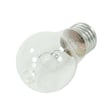
- Light not working: bulb or door switch issue (often simple)
Quick checks you can do in 10 minutes
- Confirm controls are not set to “0” and allow 24 hours after any adjustment for temperatures to stabilize.
- Check door sealing: close a dollar bill in the gasket; it should resist being pulled out.
- Look for frost on the freezer back wall: heavy frost usually means a defrost or airflow issue.
- Make sure vents are not blocked by food packages.
- Verify power: plug fully seated, breaker not tripped, and outlet working.
Common causes and likely fixes (at-a-glance)
| Symptom | Most likely cause | What to do first |
|---|---|---|
| Fresh food warm, freezer OK | Airflow restriction or frost on evaporator | Clear vents; check for frost buildup |
| Heavy frost in freezer | Defrost system issue | Inspect defrost components; plan a defrost repair |
| Warm temps in both sections | Condenser airflow or cooling system issue | Clean airflow path; listen for fans/compressor |
| Runs all the time | Door leak or warm air infiltration | Inspect/reshape gasket; level unit |
Parts that commonly relate to cooling and frost issues
If you confirm heavy frost or poor cooling, these model-matched parts are often involved:
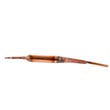
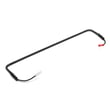
- Refrigerator defrost heater 242044008 (melts frost off the evaporator during defrost)
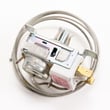
- Refrigerator defrost bi-metal thermostat 5303918634 (helps control defrost heating)
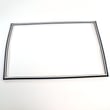
- Frigidaire refrigerator door gasket (white) 242193206 (prevents warm air leaks that drive long run times)
Why it matters
Cooling complaints usually start as an airflow or frost issue; catching it early helps protect food, reduces energy use, and prevents the compressor from running nonstop.
Last updated: February 2026