Owner’s manual
 Error Codes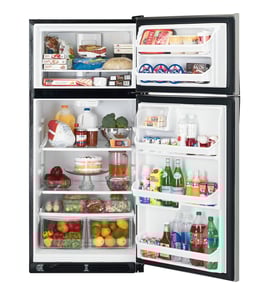





What are the most commonly replaced parts in a refrigerator?
In a GE top-mount refrigerator like model GTS18GSNDRSS, the most commonly replaced parts are the ones that wear out from daily use or get affected by airflow, frost, and water supply issues: door gaskets, fan motors, ice maker parts, water inlet valves, and shelves or drawer components. Use the GTS18GSNDRSS owner's manual for model-specific care and safety steps before servicing.
These are the parts we see replaced most often across top-mount refrigerators:
- Door gasket: stops warm air leaks that cause sweating, frost, and long run times
- Evaporator fan motor: moves cold air through the fresh food section and freezer
- Condenser fan parts: helps remove heat from the sealed system
- Ice maker assembly (if equipped): common wear item when ice production slows or stops
- Water inlet valve (if equipped): controls water flow to the ice maker and dispenser
- Shelves, rails, drawers, and covers: crack or break from impact or heavy loads
Here are examples of high-frequency replacement parts available for this model:
| Symptom | Likely part to check | Example part for GTS18GSNDRSS |
|---|---|---|
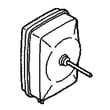
| Warm fridge, freezer OK, or noisy airflow | Evaporator fan motor | Evaporator fan motor WR60X31522 |
| Door not sealing, moisture or frost buildup | Door gasket | Refrigerator door gasket (black) WR14X27235 |
| Ice maker not filling with water | Water inlet valve | Refrigerator water inlet valve WR57X32213 |
Before replacing anything, we recommend these quick checks:
- Unplug the refrigerator before inspection or repair (power cannot be shut off at the control).
- Look for ice buildup on the back freezer panel (points to a defrost or airflow issue).
- Check for door seal gaps using a paper-strip test around the perimeter.
- Clean dust from the condenser area and confirm the fan spins freely.
- For water and ice issues, confirm the shutoff valve is open and the supply line is not kinked.
Replacing the right wear part early (like a gasket or fan motor) helps your GE GTS18GSNDRSS hold temperature, reduce frost and odors, and prevent the compressor from running longer than necessary.
Last updated: February 2026
Can I replace fridge parts myself?
Yes, for a GE GTS18GSNDRSS top-mount refrigerator, we can replace many non-sealed-system parts ourselves (shelves, door gasket, door switch, ice maker) if we unplug the refrigerator first and reinstall every panel before powering back on. Sealed-system and refrigerant work belongs with a qualified service professional.
These repairs are typically straightforward with basic hand tools and careful handling.
- Replace door bins, rails, and shelves (no wiring involved)
- Replace a door gasket to improve sealing and reduce frost
- Replace a door switch if the light or fan behavior is inconsistent
- Replace an ice maker assembly if it stops cycling (use caution around moving parts)
- Replace an evaporator fan motor if you are comfortable removing interior panels
For model-specific disassembly notes and safety steps, follow the GTS18GSNDRSS owner's manual.
The manual calls out that repairs must be performed by a qualified service professional, and anything involving refrigerant or high-voltage components is not a DIY job.
- Sealed-system repairs (compressor, evaporator, condenser, drier)
- Refrigerant handling or brazing/soldering
- Electrical diagnosis beyond simple part swaps
We use these steps to reduce the risk of shock, injury, and repeat failures.
- Unplug the refrigerator (controls do not fully disconnect power)
- Protect wiring when removing panels; do not pinch or cut harnesses
- Replace all parts and panels before plugging back in
- Avoid extension cords, adapters, and damaged power cords
- If your unit has an ice maker, keep hands away from the ejector/heater while plugged in
| Symptom | Likely DIY part | Example part for this model |
|---|---|---|
| Door not sealing, moisture/frost | Door gasket | Refrigerator door gasket (black) WR14X27235 |
| Light issues or fan stops when door “seems” closed | Door switch | Refrigerator door switch WR23X31507 |
| Warm fridge, noisy or stalled airflow | Evaporator fan motor | Evaporator fan motor WR60X31522 |
DIY repairs can restore cooling performance, reduce energy use, and prevent food spoilage. The key is choosing the right part by model number (GTS18GSNDRSS) and following the unplug-and-reassemble safety steps so the refrigerator runs correctly after the repair.
Last updated: February 2026
What is the most common problem with a GE refrigerator?
The most common GE refrigerator problem is a cooling issue: the fresh food section gets warm, temperatures swing, or the freezer cools but the refrigerator does not. On the GE GTS18GSNDRSS top-mount refrigerator, the most frequent causes are restricted airflow, dirty condenser coils, or a failing evaporator fan.
- Make sure air vents inside both compartments are not blocked by food packages.
- Set controls to a normal mid-range setting and give the unit 24 hours to stabilize.
- Clean dust and pet hair from the condenser coil area (unplug first).
- Confirm the doors close fully and the gasket seals all the way around.
- Listen for the evaporator fan running when the compressor is on (often heard from the freezer area).
If airflow is weak or you hear squealing, grinding, or intermittent fan noise, the evaporator fan system is a top suspect.
| Symptom | Most likely area | What it affects |
|---|---|---|
| Freezer cold, fridge warm | Airflow from freezer to fresh food | Refrigerator section temperature |
| Warm temps in both sections | Condenser airflow or sealed system | Overall cooling capacity |
| Frost buildup, poor airflow | Evaporator area/air passages | Air circulation and defrost performance |
For this model, a common replacement is the evaporator fan motor WR60X31522.
Cooling problems can spoil food quickly and also make the compressor run longer than normal. Fixing airflow issues early (coil cleaning, clearing vents, restoring fan operation, and maintaining door seals) helps the GE GTS18GSNDRSS cool evenly and run more efficiently.
- Keep door gaskets clean and dry; regular cleaning helps gaskets last longer.
- If you need to move the refrigerator to clean or service it, pull it straight out and push it straight back in to avoid floor damage.
For control locations, care steps, and troubleshooting guidance specific to your refrigerator, use the GTS18GSNDRSS owner's manual.
Last updated: February 2026
Where can I buy discontinued refrigerator parts?
For your GE GTS18GSNDRSS top-mount refrigerator, the most reliable way to buy discontinued parts is to search by the exact part number and confirm any listed substitutes; if new OEM stock is gone, used or refurbished parts are the next best option. Use the GTS18GSNDRSS owner's manual to verify the correct part and follow safe service guidance.
- Search by the exact part number (not just the model number) across major parts sellers.
- Check local appliance parts counters; they often have access to old stock and approved substitutions.
- Ask a qualified service professional to source parts through distributor channels.
- Use used appliance parts sellers for cosmetic items (shelves, bins, rails, doors).
- Shop large marketplaces for new-old-stock or pulled parts; confirm return policy and condition.
- Match by part number first; then confirm the part’s location and function.
- Compare photos, mounting points, and connectors (especially for electrical parts).
- If a substitute is offered, confirm it is listed as a replacement for your original number.
- For safety, unplug the refrigerator before any inspection or repair.
| Part type | Best source | What to verify |
|---|---|---|
| Electrical (switches, motors) | New OEM or verified replacement | Connector match, return policy |
| Cooling system components | Technician-supplied | Correct match, professional installation |
| Shelves, rails, drawers | Used or new-old-stock | Color/finish, mounting points |
Discontinued parts are commonly mis-listed online. Confirming the exact part number and fit for GE GTS18GSNDRSS prevents ordering the wrong component and reduces the risk of unsafe repairs.
Last updated: February 2026