 Installation guide
 Owner’s manual


What is the life expectancy of an Amana washing machine?
Most Amana top-load washers like model NTW5640TQ0 last about 10 years with normal household use. You can often extend service life with routine care (cleaning, correct loading, and hose replacement) and by addressing early symptoms such as poor draining or no spin.
Typical lifespan and what affects it
A washer’s life depends more on use and maintenance than the brand name alone.
- Load size and frequency: frequent heavy loads shorten life.
- Water quality: hard water speeds up buildup and wear.
- Ventilation and cleaning: reduces odor-causing bacteria and mold.
- Installation quality: correct drain height and stable leveling reduce strain.
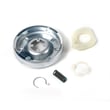
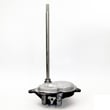
- Wear parts: lid switch, drain pump, coupling, and clutch are common service items.
Maintenance that adds years (high impact)
The NTW5640TQ0 care guidance in the NTW5640TQ0 owner’s manual includes cleaning the interior with a hot cycle mixture and replacing inlet hoses on a schedule.
- Clean the washer interior periodically to reduce residue and odors.
- Wipe spills (detergent, bleach) off the cabinet to prevent corrosion.
- Replace water inlet hoses every 5 years; inspect for bulges, kinks, cuts, wear, or leaks.
- Avoid chronic overloading; it stresses the drive system and suspension.
- If storing in freezing conditions, winterize as outlined in the manual.
Quick “repair vs. replace” guide
If the washer is near end-of-life, a single failed part can still be a smart repair when the tub and transmission area are sound.
| Symptom | Common cause | Typical fix type |
|---|---|---|
| Won’t drain or spin | Drain restriction or pump issue | Hose check; pump replacement |
| Won’t agitate/spin with lid closed | Lid switch not sensing closed lid | Switch replacement |
| Agitates poorly | Worn agitator dogs | Small mechanical repair |
| Loud during spin, poor spin | Coupling/clutch/gearcase wear | Medium to major repair |
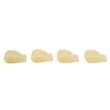
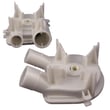
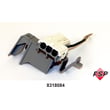
Model-matched parts we commonly see for these issues include the washer drain pump WP3363394, washer lid switch assembly WP8318084, and agitator dog 80040.
Why it matters
Knowing the typical 10-year lifespan helps you plan: basic maintenance (especially hose replacement and cleaning) prevents leaks, odors, and strain that can shorten the washer’s usable life.
Last updated: February 2026
How to tell if a washer agitator is broken?
On the Amana NTW5640TQ0 washer, a “broken agitator” is usually worn internal drive parts: the agitator may feel loose, only move one direction, or fail to move clothes through the water. We confirm it by checking agitation performance and inspecting the agitator’s internal splines and dogs.
Quick checks you can do safely
- Unplug the washer before touching the agitator.
- With the tub empty, try rotating the top portion of the agitator by hand: it should “ratchet” (turn more freely one way and catch the other way).
- Run a small load on a normal cycle and watch for weak or no back-and-forth agitation.
- Check for loud clicking, grinding, or a burning-rubber smell during agitation.
- Look for plastic shavings under the agitator cap or in the basket.
What’s normal vs. what’s not
Your NTW5640TQ0 owner’s manual notes that the top of the agitator can be loose or move in only one direction and still be normal. The key is whether clothes are actually being rolled and cleaned.
| Symptom | Most likely cause | What to check next |
|---|---|---|
| Top spins easily both directions and clothes stay in place | Worn agitator dogs | Inspect/replace agitator dog 80040 |
| Agitator wobbles, lifts, or slips on the shaft | Worn splines or loose fastener | Check washer agitator bolt WP358237 and splines |
| No agitation but motor runs | Drive coupling or gear case issue | Inspect coupling, clutch, gear case |
Parts that commonly fix weak agitation
These are frequent wear items on direct-drive style top-load washers:
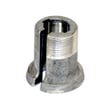
- Agitator dog 80040 (common when the top portion freewheels)
- Washer agitator bolt WP358237 (if the agitator is loose)
- Coupling, clutch, or gear case components (if agitation is completely lost)
Why it matters
A worn agitator drive can leave clothes dirty, cause tangling, and increase strain on the drive system. Catching it early often keeps the repair limited to small parts instead of larger drive components.
Last updated: February 2026
How much does it cost to fix an Amana washing machine?
For an Amana top-load washer like model NTW5640TQ0, most professional repairs typically land in the $250 to $490 range once you factor in the service call, labor, and the specific part that failed. Costs rise when the repair involves major drive components or multiple parts.
What usually drives the price
Repair cost is mostly a mix of diagnosis time, labor rate in your area, and which component is being replaced.
Common cost drivers include:
- Service call/diagnostic fee (often applied toward the repair)
- Labor time (simple access vs. deep tear-down)
- Part type (switch/valve vs. motor/gear case)
- Secondary damage (leaks causing corrosion, worn couplers, etc.)
- Installation setup issues (leveling, hose condition, drain setup)
Typical repair examples for NTW5640TQ0
These examples reflect common top-load washer repairs and the parts frequently involved.
| Symptom | Likely repair area | Example part for this model | Typical complexity |
|---|---|---|---|
| Won’t drain or leaves water in tub | Drain system | Washer drain pump WP3363394 | Medium |
| Won’t spin or stops when lid opens | Safety interlock | Washer lid switch assembly WP8318084 | Low to medium |
| Won’t fill or fills slowly | Water supply/valve | Washer water inlet valve WP8578343 | Medium |
| Agitates poorly or makes clicking | Agitator drive | Agitator dog 80040 | Low |
DIY checks that can lower the final bill
We recommend doing these quick checks before scheduling service; they can prevent paying for a repair that is really an installation or supply issue.
- Confirm both water faucets are fully open and hoses are not kinked
- Check for inlet hose leaks; replace hoses that are bulging, cracked, or leaking
- Make sure the washer is level to reduce vibration and premature wear
- Verify the lid closes firmly (a misaligned lid can mimic a switch failure)
- If the washer won’t stop or start correctly, review timer operation steps in the NTW5640TQ0 owner’s manual
Why it matters
A washer that is out of level or running with worn hoses can develop bigger problems (excessive vibration, leaks, and drive wear). The installation instructions also recommend replacing inlet hoses after 5 years to reduce the risk of hose failure.
Last updated: February 2026
Who makes Amana top load washers?
Amana top load washers (including model NTW5640TQ0) are made by Whirlpool Corporation. Amana is a brand name used on washers and other appliances that are manufactured within Whirlpool’s family of brands.
What this means for parts and service
Because NTW5640TQ0 is an Amana washer built by Whirlpool, many replacement parts and repair procedures follow common Whirlpool-built top-load washer designs.
- Use the model number NTW5640TQ0 when looking up parts to ensure the correct fit.
- Follow the safety and operating instructions in the NTW5640TQ0 owner's manual.
- For installation requirements (power, water pressure, spacing), use the NTW5640TQ0 installation guide.
- If the washer will not agitate or spin, check lid-closure operation; the washer will not agitate or spin with the lid open.
- When troubleshooting, start with basics: correct cycle, balanced load, and proper water temperature.
Quick brand and manufacturing overview
| What you see on the washer | What it indicates | Why it matters |
|---|---|---|
| Amana | Brand name on the product | Determines styling, features, and model numbering |
| Whirlpool-built design | Common internal platform | Helps match compatible parts and repair steps |
Why it matters
Knowing Whirlpool manufactures Amana top load washers helps you troubleshoot smarter and choose the right replacement parts (for example, common wear items like a lid switch assembly, drain pump, or drive components) for your exact NTW5640TQ0 configuration.
Last updated: February 2026
Do Amana washers have a filter to clean?
Amana washers vary by design: many front-load models have a drain pump filter you clean periodically, while top-load models like Amana NTW5640TQ0 typically do not have a customer-accessible “lint filter” to remove and rinse. For routine care steps specific to your washer, follow the NTW5640TQ0 owner's manual.
What you should clean on NTW5640TQ0 (regular maintenance)
Keeping the tub, dispensers, and water flow paths clean prevents odors, residue, and performance issues.
- Wipe up detergent or bleach spills on the cabinet with a soft, damp cloth
- Clean the washer interior using a hot cycle with a cleaning mixture (per the manual)
- Rinse the liquid fabric softener dispenser (if your unit has one)
- Check fill hoses for kinks and make sure hot and cold are connected correctly
- Leave the lid open between loads when possible to help reduce odor
If you suspect a “filter-type” clog (symptoms and likely causes)
A top-load washer can still clog, but it is usually in the drain pump or hoses, not a removable filter.
| Symptom | Most common cause | What to check first |
|---|---|---|
| Won’t drain or drains slowly | Coin/sock debris in pump or drain hose restriction | Drain hose routing and pump area |
| Won’t spin | Lid switch not sensing closed lid | Lid closes firmly; lid switch operation |
| Leaves water in tub | Pump not moving water | Pump for blockage or failure |
If the washer will not drain, the drain pump is a common service part on this model family; see washer drain pump WP3363394.
Why it matters
A clean washer drains and rinses better, which helps prevent musty odors, reduces detergent buildup, and lowers the chance of a no-drain/no-spin situation that can stop a load mid-cycle.
Last updated: February 2026





