Owner’s manual
 Error Codes





What is the life expectancy of a LG oven?
Most LG ovens, including the LG LSE4611ST electric range, typically last 12 to 15 years with normal household use. Regular cleaning, good airflow around the range, and addressing small issues early (like temperature drift or a noisy fan) help you reach that lifespan.
What affects how long an LG electric range lasts?
- Heat stress on electronics: Control boards and touch panels wear faster with frequent high-heat use.
- Cleaning habits: Using gentler cleaning methods more often reduces long-term wear.
- Ventilation and cooling: Blocked vents or a failing cooling fan can shorten component life.
- Power quality: Surges and repeated breaker trips can damage boards and wiring.
- Timely repairs: Replacing a failing sensor or thermostat early can prevent bigger failures.
EasyClean® vs Self Clean: longevity impact
Your LSE4611ST includes EasyClean® and Self Clean. EasyClean® uses water and low heat for light soils, while Self Clean uses very high heat for heavy buildup. Using EasyClean® for routine cleanup reduces the need for frequent high-heat self-clean cycles, which helps protect wiring, door components, and electronic controls (details and steps are in the LSE4611ST owner's manual).
| Cleaning option | Best for | Heat level | Typical effect on wear |
|---|---|---|---|
| EasyClean® | Light, fresh spills | Low | Lower stress on components |
| Self Clean | Heavy, baked-on soil | Very high | Higher stress on door and electronics |
Parts that commonly determine “end of life” (and what they do)
If the range is otherwise in good shape, these repairs often restore performance:
- Oven temperature sensor: If baking temps are inaccurate, check the LG range oven temperature sensor EBG61305805.
- Safety thermostat: If the oven overheats or shuts down from heat protection, inspect the range safety thermostat 6930W1A003X.
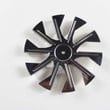
- Convection fan motor: If convection is loud or not circulating air, consider the range convection fan motor EAU62343001.
Why it matters
Knowing the 12 to 15 year lifespan helps you decide whether to repair or replace. If your LSE4611ST is under about 10 years old, fixing a sensor, thermostat, or fan is often the most cost-effective path; beyond that, repeated control or wiring issues can shift the value toward replacement.
Last updated: February 2026
What are the common problems with LSE4611ST?
Common LG LSE4611ST electric range problems usually fall into a few buckets: the oven not heating or heating unevenly, surface elements not working correctly, temperature accuracy issues, and control or display quirks (such as a flashing clock). We use the LSE4611ST owner's manual to match symptoms to the right checks and parts.
Most common symptoms we see
- Oven will not heat in Bake or Broil (or takes an unusually long time to preheat)
- Oven temperature seems off (food undercooks or overcooks)
- Convection fan issues (no fan sound, poor convection performance)
- Surface element not heating or only one ring works on a dual element
- Hot surface indicator stays on after the cooktop is cool
- Clock display flashes or timing features do not work until the clock is set
Quick checks before replacing parts
- Confirm the range has proper power (many electric ranges need full 240 VAC to heat correctly).
- Verify the cooking mode and settings; the clock must be set for some timed functions.
- For cooktop issues, confirm the correct knob position and that the knob is seated correctly.
- If the clock colon flashes, reset the clock (the manual notes this behavior and how to stop it).
Parts that commonly solve these problems
| Symptom | Likely system | Part to consider (if diagnosis points there) |
|---|---|---|
| Oven temp inaccurate | Temperature sensing | LG range oven temperature sensor EBG61305805 |
| Convection not working well | Air circulation | Range convection fan motor EAU62343001 |
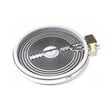
| Dual element not heating correctly | Surface heating | LG range dual radiant element MEE62385201 |
| Burner control erratic | Infinite switch/control | LG range surface element control switch EBF62174907 |
Why it matters
Catching the symptom category first (oven heat, temperature sensing, convection airflow, or surface element control) prevents unnecessary part swaps and gets your LG electric range back to safe, consistent cooking performance faster.
Last updated: February 2026
How do I reset my LG electric stove?
To reset your LG electric range model LSE4611ST, do a hard reset by turning the range circuit breaker OFF for 1 minute, then turning it back ON. After power is restored, reset the clock if it’s flashing (a common sign of a power interruption); see the LSE4611ST owner’s manual.
Quick reset steps (most common)
- Turn OFF the range breaker (or unplug the cord if accessible).
- Wait 60 seconds.
- Restore power.
- If the clock colon is flashing, press and hold Cook Time for 3 seconds and set the time.
- Test Bake and one surface element to confirm normal operation.
If the reset doesn’t fix the problem
A reset clears many control glitches, but it won’t correct a failed sensor, control, or heating component. Use this checklist to narrow it down:
- Oven not heating or heats incorrectly: check the oven temperature sensor and wiring.
- Convection issues: the fan cycling on and off can be normal during convection cooking.
- Surface element not heating: the element or its control switch may be the cause.
- Display or keypad acting erratic: power control or relay control boards can be involved.
Common parts related to “reset” symptoms
| Symptom after reset | Most likely area | Example part for LSE4611ST |
|---|---|---|
| Oven temperature swings, under/overheats | Temperature sensing | Range oven temperature sensor EBG61305805 |
| One burner won’t heat or won’t regulate | Surface control | Range surface element control switch EBF62174907 |
| Convection fan concerns | Fan motor (or normal cycling) | Range convection fan motor EAU62343001 |
Why it matters
Resetting restores the control to a known good state after a power interruption. If the clock keeps flashing or heating problems continue, the issue is usually a component (sensor, switch, element, or control board) rather than a setting.
Last updated: February 2026
What model is my LG range?
Your LG range model number is printed on the appliance’s ID label; once you find it, match that number exactly (for this parts page, the model is LSE4611ST). We use the model number to pull the correct LG electric range parts list and the right instructions in the LSE4611ST owner's manual.
Where to find the model number label
Check these common locations on LG electric ranges:
- Along the oven door frame (open the oven door and look around the frame)
- On the lower drawer frame area (pull the drawer out and look along the frame)
- Behind the control panel area (visible from the front on some models)
- On the back panel of the range (easier to see with a flashlight)
How to read it correctly (and why it matters)
Write the model number exactly as shown on the label (letters and numbers). A single character difference can change the cooktop element style, control board, or wiring harness used.
Quick checklist
- Use the model number (not just the brand name LG)
- Copy it character-for-character
- Also record the serial number (helpful for production variations)
What you can do once you have the model number
Use the model number to choose the correct troubleshooting steps and replacement parts.
| If your label shows | What it means for parts |
|---|---|
| LSE4611ST | This is the correct model for this page |
| A different LSE#### model | Parts may look similar but can be different |
| Missing or unreadable label | Use the manual’s label-location guidance and compare key parts visually |
Common part mismatches caused by using the wrong model
These are frequent “looks right but doesn’t fit” situations:
- Ordering the wrong cooktop element size (example: range radiant surface element, 9-in MEE62385101)
- Getting a surface element switch that does not match the knob or wiring (example: LG range surface element control switch EBF62174907)
- Choosing the wrong oven sensor style (example: LG range oven temperature sensor EBG61305805)
Why it matters
The model number ties your LG range to the correct wiring diagram, control settings, and compatible parts, which prevents repeat failures and returns.
Last updated: February 2026