Owner’s manual
 Error Codes



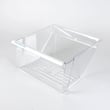
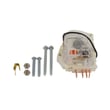
Why is EveryDrop filter so expensive?
EveryDrop style refrigerator water filters often cost more because they are built and tested to meet specific filtration and safety performance standards, and they are designed to fit and seal correctly in the filter housing. For Whirlpool ED2CHQXKQ05, our ED2CHQXKQ05 owner's manual also calls out NSF/ANSI 42 and 53 performance and a regular replacement interval.
What you are paying for
- Certified contaminant reduction: Filters that meet NSF/ANSI 42 and 53 are tested for specific reductions (not just taste and odor).
- Consistent fit and sealing: A precise fit helps prevent bypass leaks that can reduce filtration and cause dispenser issues.
- Filter media and build quality: Higher-grade carbon blocks and internal components typically cost more.
- Ongoing compliance and labeling: Certification testing, audits, and traceability add cost.
- Planned replacement cycle: Many OEM style filters are priced around a 6 to 9 month change interval.
What the ED2CHQXKQ05 manual says about filter replacement
The manual indicates the system is tested to NSF/ANSI 42 and 53 and recommends changing the cartridge at least every 6 to 9 months (depending on usage and water quality). It also describes a filter indicator that changes color as filter life is used.
Quick reference table
| Item | Typical expectation | Why it affects cost |
|---|---|---|
| Certification (NSF/ANSI) | 42 (taste/odor) and 53 (health-related) | More testing and tighter performance targets |
| Fit and seal | Model-specific | Reduces leaks and unfiltered bypass |
| Replacement interval | 6 to 9 months | Cost is spread over months of use |
How to keep filter costs under control
- Replace on schedule; an overdue filter can restrict flow and make the dispenser work harder.
- If water flow slows, try purging air and flushing the new filter after installation; trapped air can mimic a “bad filter.”
- Use the correct filter type for your housing; forcing a near-match can cause leaks.
- If you are troubleshooting dispenser performance, check related components such as the refrigerator water tube W10823511 for kinks or freezing.
Why it matters
A higher-priced filter is usually tied to verified contaminant reduction and a reliable seal. That protects water quality and helps prevent common side-by-side issues like slow dispensing, odd taste, and ice maker fill problems.
For step-by-step replacement and flushing tips, use how to replace the water filter in a Whirlpool refrigerator.
Last updated: February 2026
What is the biggest problem in a Whirlpool refrigerator?
The biggest problem we see in Whirlpool refrigerators like model ED2CHQXKQ05 is loss of cooling (fresh food warms up, freezer temperature rises, or temperatures swing). Cooling problems often trace back to airflow restrictions, a defrost system issue, or a fan or control component that is not doing its job; the ice maker and dispenser can also act up when cooling or water supply is marginal.
Most common causes to check first
- Dirty condenser coils reducing heat removal
- Evaporator frost buildup from a defrost problem
- Evaporator fan not moving cold air through the compartments
- Blocked air vents from overpacked shelves
- Door not sealing, causing warm air leaks and excess frost
- Temperature control issues (thermostat or related controls)
Quick troubleshooting steps (in order)
- Confirm temperatures: set freezer near 0°F and refrigerator near 37°F; allow 24 hours to stabilize.
- Listen for fans: you should typically hear airflow when the doors are closed.
- Check for frost on the back freezer panel: heavy frost points to a defrost system problem.
- Inspect door sealing: look for gaps, torn gasket areas, or doors that do not self-close.
- Clean airflow paths: clear vents and avoid blocking the return air passages.
- If water and ice are also weak: verify household water supply is within the range listed in the owner's manual.
Parts that commonly relate to these symptoms on ED2CHQXKQ05
| Symptom | What it often indicates | Example part on this model |
|---|---|---|
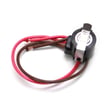
| Warm fridge/freezer, frost buildup | Defrost system not clearing ice | Refrigerator defrost timer W10822278, refrigerator defrost bi-metal WPW10225581 |
| Warm temps, poor airflow | Fan or airflow component issue | Refrigerator evaporator fan blade WP2169142 |
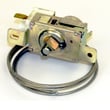
| Temps swing or won’t regulate | Temperature control problem | Refrigerator thermostat WP2198202 |
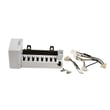
| Ice maker not producing | Ice maker issue or marginal cooling/water | Ice maker assembly - refrigerator ice maker by Whirlpool 4317943 |
Why it matters
Cooling problems do not just affect food safety; they also drive secondary failures like ice maker stoppages, excess frost, and water leaks from ice melt. Fixing airflow and defrost issues early helps protect the compressor and keeps the refrigerator running efficiently.
Last updated: February 2026
What's the average lifespan of a Whirlpool refrigerator?
Most Whirlpool refrigerators last about 14 years on average. For a Whirlpool ED2CHQXKQ05 side-by-side refrigerator, good airflow, clean condenser coils, correct temperatures, and quick repairs typically help you reach (or beat) that lifespan; many units run 10 to 15 years.
Typical lifespan range (what to expect)
In normal single-family household use, these are realistic expectations for a Whirlpool side-by-side:
- Average: ~14 years
- Common range: 10 to 15 years
- Long life with strong maintenance: 15 to 20 years
| What you do | What it helps prevent | What it protects |
|---|---|---|
| Clean condenser area regularly | Overheating, poor cooling | Compressor and condenser fan motor |
| Keep doors sealing and aligned | Frost, warm temps, long run times | Evaporator performance and food temps |
| Replace failed cooling/defrost parts promptly | Ice buildup, warm freezer/fridge | Evaporator airflow and defrost system |
| Use correct water supply conditions (if plumbed) | Leaks, weak dispensing, ice issues | Water system components |
Maintenance that extends life the most
We see the biggest lifespan gains when you focus on these basics:
- Keep the condenser area clean and unobstructed (especially if you have pets)
- Set stable temps (avoid frequent dial changes)
- Don’t overload shelves; leave space for air circulation
- Confirm doors close fully every time (no gaps at the gasket)
- Address unusual noises early (fan blade rubbing, clicking, buzzing)
Parts that commonly affect “end of life” symptoms
If your refrigerator is warm, noisy, or icing up, these parts often determine whether it’s a quick fix or a bigger repair:
- Defrost control components such as the refrigerator defrost timer W10822278
- Temperature control such as the refrigerator thermostat WP2198202
- Ice production components such as the ice maker assembly 4317943
Why it matters
A refrigerator near the end of its typical lifespan often shows up as longer run times, temperature swings, frost buildup, or repeated ice maker and dispenser problems. Catching airflow and defrost issues early can reduce strain on the sealed system and help the unit last longer.
For model-specific operating and care guidance, follow the owner's manual.
Last updated: February 2026