Error Codes



How to reset KitchenAid cooktop?
To reset the cooktop on your KitchenAid electric freestanding range model KFEG500EWH3, we recommend doing a hard power reset at the breaker: turn the range circuit breaker OFF for 1 minute, then turn it back ON and confirm normal operation.
Quick reset steps (breaker reset)
- Turn all surface element knobs to OFF.
- Turn OFF the range circuit breaker (or both breakers if your home uses a double breaker).
- Wait 1 full minute.
- Turn the breaker ON.
- Watch the display and try a burner for about 1 minute to confirm the issue is cleared.
If the cooktop still will not work after the reset
A reset clears many temporary control glitches, but it will not fix a failed heating circuit. Check these common causes:
- Control lock is enabled (look for a lock indicator and try unlocking).
- A surface element is not heating due to a failed switch or element.
- A loose or overheated power connection at the terminal block.
- A wiring issue under the cooktop.
Common parts involved (when a burner will not heat)
| Symptom | Most likely area | Example part for KFEG500EWH3 |
|---|---|---|
| One burner dead, others OK | Element or switch | Range radiant surface element W11171119 |
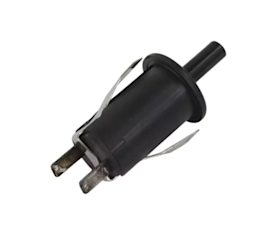
| Burner heats only on high or cycles oddly | Infinite switch | Range infinite switch W10917724 |
| Range intermittently loses power | Power connection | Range terminal block WPW10245259 |
Why it matters
A breaker reset restores power to the electronic controls and can clear a stuck keypad or temporary error condition. If the problem returns quickly, focusing on the surface element circuit (switch, element, wiring, or terminal block) prevents repeat shutdowns and uneven cooking.
Last updated: January 2026
What is the life expectancy of a KitchenAid range?
A KitchenAid electric range like model KFEG500EWH3 typically lasts 13 to 15 years with normal household use. Keeping the cooktop and oven clean, avoiding unnecessary high-heat cycles, and replacing wear parts early helps you reach (or beat) that lifespan.
Typical lifespan and what affects it
Most freestanding electric ranges fall into a similar life range; the biggest differences come from heat exposure, cleaning habits, and how quickly small problems are fixed.
- Cooking frequency: daily cooking shortens life compared to occasional use
- High-heat use: frequent broiling and long bakes stress elements and wiring
- Self-clean cycles: repeated self-cleaning can overheat controls and door components
- Power quality: loose connections at the terminal block can cause heat damage
- Maintenance: prompt part replacement prevents secondary failures
Quick “is it worth repairing?” guide
Use this as a practical rule of thumb for KFEG500EWH3.
| Range age | What we recommend | Why |
|---|---|---|
| 0 to 5 years | Repair almost always | You are early in the expected service life |
| 6 to 10 years | Repair if the fix is straightforward | Many common failures are single-part issues |
| 11 to 15 years | Repair if the range is otherwise solid | You are near typical end-of-life |
| 16+ years | Consider replacement unless repair is minor | Multiple components often start failing |
Parts that commonly determine longevity
These are frequent “make or break” items on electric ranges. If one fails, replacing it often restores normal operation.
- Oven not heating evenly or at all: check the bake element W10779716
- Surface burner not heating or stuck on high: a control switch such as the range infinite switch W10917724 is a common cause
- Intermittent power, burning smell at cord connection: inspect the range terminal block WPW10245259
Why it matters
Knowing the expected lifespan helps you decide whether to troubleshoot a heating problem, invest in a control repair, or plan a replacement. On an electric range, catching a failing element or overheating connection early can prevent damage to wiring and electronic controls.
Last updated: January 2026
What does error code F9E0 mean on a KitchenAid oven after power outage?
On the KitchenAid KFEG500EWH3 electric range, error code F9E0 after a power outage points to a door lock or door lock circuit problem (the control is not sensing the lock switch correctly). This is commonly caused by a loose connection, damaged wiring, or a failed latch/lock switch.
What to do first (safe reset and quick checks)
- Turn the range off at the breaker for 1 minute, then restore power and see if the code returns.
- If the code returns, avoid using Self Clean until the issue is fixed (the door lock system is required).
- If the oven door is stuck locked, do not force it; forcing can damage the latch and hinges.
- If you recently moved the range, check for pinched wires behind the unit.
Likely causes on this model
Most F9E0 situations come down to one of these:
- Loose or overheated wire connection at the latch circuit
- Damaged harness or connector (especially after a surge or repeated heating cycles)
- Failed door lock switch or latch mechanism
- Control not reading the lock feedback correctly (less common)
Parts that are often involved
If troubleshooting points to wiring or control issues, these model-listed parts are common suspects:
- Range wire harness W11134550 (wiring and connectors that carry latch and sensor signals)
- Range terminal block WPW10245259 (power connection point; heat damage here can cause odd electrical symptoms)
- Cntrl-maxwel W11088877 (main control board; replaced after wiring and latch checks)
Quick symptom guide
| Symptom | Most likely direction |
|---|---|
| Code appears right after outage, then clears | Power glitch; reset often fixes it |
| Code returns every bake/broil | Latch circuit or harness issue |
| Door stays locked or won’t lock for Self Clean | Latch/switch problem |
| Intermittent code when wiggling harness | Loose connector or damaged wiring |
Why it matters
The oven control uses the door lock feedback as a safety input. If it cannot confirm the lock switch state, it may disable certain functions or stop heating to prevent unsafe operation.
Last updated: January 2026
Is KitchenAid a good electric range?
KitchenAid electric ranges like model KFEG500EWH3 are a strong choice for most home cooks because they typically deliver even baking, responsive radiant cooktop performance, and durable fit-and-finish. Overall value depends most on how well the oven heats, how the surface elements cycle, and how easy the cooktop is to maintain.
What “good” means for an electric range
A “good” electric freestanding range usually performs well in these areas:
- Even oven temperatures for baking and roasting
- Consistent surface element cycling (steady simmer and predictable high heat)
- Reliable controls and wiring (no overheating terminals or loose connections)
- Easy cleaning of the cooktop and oven door glass
- Parts availability for common wear items
Quick checklist: how to judge yours at home
Use these practical checks to decide if your KitchenAid range is meeting expectations:
- Bake biscuits or cookies on the center rack; look for even browning across the pan
- Boil 1 quart of water on the same burner each time; confirm repeatable boil time
- Simmer sauce on low; the element should cycle gently without scorching
- Watch for hot spots, sparking, or burning smells at the power connection (power off and inspect)
- Keep the cooktop clean to prevent baked-on spills from affecting heat transfer
Common “good range” fixes when performance drops
If cooking results start to slip, these parts are frequent solutions on electric ranges:
| Symptom | Common cause | Example part for this model |
|---|---|---|
| Oven not heating or uneven baking | Failed bake heater | Bake element W10779716 |
| Burner won’t heat or heats erratically | Failed radiant element | Range dual radiant surface element W11517959 |
| Burner heat won’t adjust correctly | Worn infinite switch | Range infinite switch W10917724 |
| Power connection looks scorched or loose | Damaged terminal block | Range terminal block WPW10245259 |
Why it matters
A range can look “high-end” but still cook poorly if the bake element, surface element, or control switch is failing. Restoring stable heat and safe electrical connections usually brings performance back to what you expect from a KitchenAid electric range.
Last updated: January 2026