Owner’s manual
 Error Codes




How to raise a refrigerator off the floor?
To raise a Kenmore Elite refrigerator model 10674206402 off the floor, we adjust the front leveling screws (front roller assemblies) to lift the cabinet and tilt it slightly back so the doors close properly. Follow the step-by-step leveling procedure in the 10674206402 owner's manual.
How to raise the front safely (leveling method)
- Move the refrigerator into its final spot before fine adjustments.
- Remove the base grille so you can access the two front leveling screws.
- Use a screwdriver to turn the leveling screw to the right to raise that side.
- Turn both leveling screws the same amount to keep the cabinet level side-to-side.
- Have someone push gently against the top of the refrigerator to reduce weight on the screws and make turning easier.
- Reinstall the base grille when finished.
What “raised” should look like (quick checks)
After raising the front, confirm these results:
- The refrigerator feels steady and does not rock.
- Both doors close easily on their own.
- The cabinet is slightly tilted to the rear (common for top-mount designs).
| Check | What you want | What to adjust if it’s not right |
|---|---|---|
| Door closing | Doors close easily | Turn both leveling screws right a bit more |
| Side-to-side level | No leaning | Raise the low side (turn that screw right) |
| Stability | No rocking | Recheck both screws, confirm floor is solid |
If you need more clearance than leveling provides
Leveling screws are for small height changes. If you need extra clearance for uneven flooring, we use a solid, non-compressible shim under the roller area (never under thin plastic trim).
- Use hard rubber or composite shims (not cardboard).
- Keep shims small and fully supported.
- Recheck door closing after shimming.
Why it matters
Raising and slightly tilting the refrigerator back helps the doors seal consistently, reduces warm air leaks, and prevents moisture and frost issues caused by poor door closure.
Last updated: January 2026
What does er ff mean on Kenmore Elite refrigerator?
On Kenmore Elite model 10674206402, an ER FF code points to a problem with the freezer evaporator fan system (the fan that moves cold air through the freezer and into the fresh food section). When that airflow drops, temperatures rise and the control reports the error.
What to check first (quick airflow checks)
- Make sure the freezer vents are not blocked by food packages or ice buildup.
- Listen for the evaporator fan: it should run when the compressor is running and the freezer door switch is pressed.
- Check for heavy frost on the freezer back wall (a defrost problem can stop airflow and trigger ER FF).
- Confirm the freezer door closes tightly and the gasket seals all the way around.
- Power reset: unplug the refrigerator (or turn off the breaker) for 5 minutes, then restore power and recheck.
Most common causes and what they mean
| What you notice | Likely issue | What to do next |
|---|---|---|
| No fan sound, warm refrigerator section | Failed evaporator fan motor | Inspect wiring and replace the fan motor if it is not running |
| Fan runs but airflow is weak, frost everywhere | Defrost system problem | Defrost the unit and troubleshoot heater, thermostat, and control |
| Fan is noisy or rattling | Fan blade hitting ice or worn blade | Clear ice; replace the blade if damaged |
| Door hard to open or not sealing | Dirty or sticking gasket | Clean gasket and cabinet surface; apply a thin coat of paraffin wax |
Parts that are often involved
If the checks above point to a fan problem, these are common repair parts for this model:
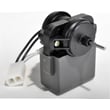
- Evaporator motor WP2315539 (drives the freezer evaporator fan)
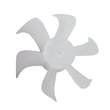
- Fan blade WP2163777 (moves air across the evaporator)
For model-specific access steps, wiring routing, and safety guidance, use the 10674206402 owner's manual.
Why it matters
The evaporator fan is what distributes cold air. If it stops or airflow is restricted, the freezer may still feel somewhat cold near the evaporator, but the refrigerator section warms quickly and food safety becomes a concern.
Last updated: January 2026
Is Kenmore Elite high end?
Kenmore Elite is positioned as Kenmore’s higher-end line; it typically adds upgraded styling, stronger performance features, and more convenience options than standard Kenmore models. For your Kenmore Elite top-mount refrigerator model 10674206402, the exact feature set and care requirements are listed in the 10674206402 owner's manual.
What “high end” usually means for Kenmore Elite
Kenmore Elite models are generally designed to feel more premium than base models in the same category.
Common “Elite” differences include:
- More advanced temperature management (better consistency and food preservation)
- Added convenience features (ice maker options, improved storage layouts)
- Quieter operation and improved airflow design
- More refined finishes and trim details
- Higher overall parts and component quality in key systems (fans, sensors, controls)
How to judge if your specific refrigerator is “high end”
For a top-mount refrigerator like 10674206402, we recommend comparing it on the features that affect daily use and food quality.
| What to compare | Standard models | Kenmore Elite models |
|---|---|---|
| Temperature consistency | Basic control | Typically more consistent control |
| Storage flexibility | Basic bins/shelves | Often more adjustable storage |
| Convenience features | Fewer options | Often more options (ice, lighting, controls) |
| Serviceability | Varies | Varies, but commonly uses higher-grade components |
Why it matters
“High end” is most useful as a buying and repair guide: Elite models often justify repair because they are built to deliver better performance and comfort (quieter, steadier temps), and they commonly use higher-spec components.
Parts that commonly support “Elite” performance
If you are troubleshooting cooling, noise, or ice production, these parts are often involved:
- Evaporator motor WP2315539 (moves cold air through the compartments)
- Refrigerator temperature sensor WP2188819 (helps regulate temperatures)
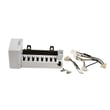
- Ice maker assembly - refrigerator ice maker by whirlpool 4317943 (ice production and cycling)
Last updated: January 2026
What are the common problems with Kenmore Elite refrigerators?
Common problems on the Kenmore Elite 10674206402 top-mount refrigerator include not cooling well after a power interruption or heavy loading, doors that will not close or are hard to open due to dirty or sticky gaskets, and ice maker or airflow issues that reduce ice production and cooling performance. See the 10674206402 owner's manual for model-specific troubleshooting steps.
Most common symptoms we see
- Refrigerator or freezer not cold enough (temperature swings after adding a lot of food)
- Interior moisture buildup (often tied to frequent door openings or blocked vents)
- Doors will not close completely (packages blocking the door, misleveling)
- Doors are difficult to open (dirty or sticky door gaskets)
- Ice maker not making ice or making small cubes (water supply or ice maker issue)
Quick checks you can do first
- Check airflow: make sure food is not blocking air vents; good circulation is required for even cooling.
- Limit door openings: organize items and close doors quickly to reduce warm air and humidity.
- After a big grocery load: allow several hours for temperatures to recover.
- Reset digital controls (if equipped): turn cooling off, then back on to reset.
- Clean door gaskets: wipe the gasket and the cabinet surface it seals against; if sticking, apply a thin coat of paraffin wax after cleaning.
Parts that commonly relate to these problems
| Symptom | Likely area | Example part for this model |
|---|---|---|
| Warm temps, poor airflow | Evaporator fan system | Evaporator motor WP2315539, fan blade WP2163777 |
| Ice maker not working | Ice maker assembly | Ice maker assembly - refrigerator ice maker by whirlpool 4317943 |
| Door not sealing, moisture | Door gasket | Gasket panels (color-specific) |
Why it matters
Cooling complaints and moisture buildup are often caused by simple issues (blocked vents, frequent openings, gasket sealing). Fixing those first can prevent food spoilage, reduce frost, and help the compressor run less.
Last updated: January 2026