 Installation guide
 Owner’s manual
 Error Codes
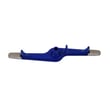


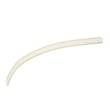

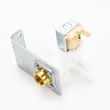
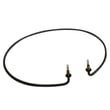
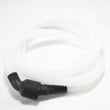
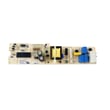
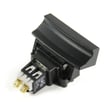
Where is the dishwasher check valve?
On Kenmore dishwasher model 58715102801, the check valve is part of the drain path and is typically located at the drain pump outlet or in the drain hose connection under the tub, behind the lower kickplate. Use the 58715102801 installation guide to confirm access points and routing for the drain hose.
Where to look first (most common locations)
- Behind the lower kickplate at the bottom front of the dishwasher
- At the drain pump outlet where the drain hose attaches
- In-line with the drain hose near the sump area (varies by design)
- At the sink/disposer connection (some setups use a check device or air gap at the sink side)
If you are already working on the drain path, the drain hose connection is a practical starting point; the drain hose routing and loop height matter for preventing backflow.
How to access it safely
- Disconnect power at the breaker.
- Shut off the water supply.
- Remove the lower toe panel or kickplate.
- Trace the drain hose from the tub area to the sink or disposer.
- Inspect the drain pump outlet and hose connection for a check valve or flapper-style backflow device.
Parts that are commonly involved in “check valve” symptoms
Backflow and poor draining are often caused by restrictions or a failing drain component, even when the check valve itself is not sold as a separate item.
| Symptom | Most likely area to inspect | Related part for this model |
|---|---|---|
| Water returns to tub after draining | Drain hose routing, sink/disposer connection | Hose 807117001 |
| Dishwasher will not drain | Drain pump, hose blockage | Dishwasher drain pump 154580301 |
| Slow drain or gurgling | Kinked hose, improper high loop | Hose 807117001 |
Why it matters
A working check valve (and correct drain hose routing) helps prevent dirty sink water from flowing back into the dishwasher tub. That protects wash performance, reduces odor, and helps avoid standing water after a cycle.
Last updated: January 2026
Why is the start button not working on my Kenmore Ultra Wash quiet guard?
On the Kenmore dishwasher model 58715102801, a Start button that won’t respond is usually caused by the door not fully latching, a cycle or delay-start setting issue, or a power supply problem. Start by confirming the door is closed and latched, then restart the cycle using the correct start sequence in the 58715102801 owner's manual.
Quick checks that fix most “won’t start” problems
- Make sure the door is fully closed and latched (a partially latched door can light up but not start).
- Confirm you selected a cycle and any options correctly.
- Check whether delay start is turned on; if it is, the dishwasher will wait to begin.
- Verify the circuit breaker is on (or replace a blown fuse if your home uses fuses).
- Make sure the water supply valve under the sink is turned on.
Reset and restart (safe first step)
- Press START/CANCEL once to clear the current selection.
- Wait about 30 seconds.
- Select your cycle again.
- Press START/CANCEL to begin.
If the control seems “stuck,” turning power off at the breaker for about 5 minutes and restoring power often clears a temporary control glitch.
When it’s likely a part problem
If the dishwasher has power but still will not start after the checks above, these are common causes:
- Door latch not engaging (the dishwasher thinks the door is open)
- Float/overfill protection issue (less common for a no-start, but can affect operation)
- User interface or control issue (buttons not registering)
Symptom-to-cause guide
| What you notice | Most likely cause | What to do next |
|---|---|---|
| Lights work, but nothing happens when you press Start | Door not latched or latch switch issue | Inspect latch alignment; test latch assembly |
| Starts sometimes, then stops | Door not closing consistently | Check for rack interference; check latch |
| No response at all | Power supply or control problem | Check breaker, then control diagnostics |
Why it matters
The Start button is “permission-based” on this Kenmore design: the control will only start a wash cycle when it senses a properly latched door and a valid cycle selection. Fixing the latch or settings prevents repeated no-starts and incomplete cycles.
For model-specific troubleshooting steps and cycle selection details, use the 58715102801 owner's manual.
Last updated: January 2026
What are the common problems with Kenmore dishwashers?
Common problems on the Kenmore 58715102801 dishwasher include poor cleaning (food soils left on dishes), drying issues, detergent not dispensing, and leaks or overflow from suds. Many of these are caused by loading, water temperature, water pressure, or detergent and rinse aid use rather than a failed part; see the 58715102801 owner's manual for model-specific checks.
Most common symptoms and what usually causes them
- Food soils left on dishes: blocked spray arms, nesting dishes, low water temperature, low water pressure, hard water, or old detergent
- Dishes not drying well: rinse aid empty, wrong cycle/options, or poor loading that traps water
- Detergent left in the cup: old detergent, dispenser blocked by a dish, or cycle not completing
- Leaks or water on the floor: too much detergent or spilled rinse aid causing foam, or the dishwasher not level
- Unusual sounds: normal fill and circulation sounds; sound changes when spray arms alternate
Quick checks we recommend first
- Confirm incoming hot water is about 120°F (49°C).
- Verify home water pressure is roughly 20 to 120 psi.
- Reload to prevent nesting; keep tall items from blocking spray arms.
- Use fresh automatic dishwasher detergent; measure for your water hardness.
- If you see suds, wipe up spilled rinse aid and reduce detergent.
Parts that commonly relate to these problems
If the basics check out, these parts are often involved:
| Symptom | Common part area | Example part for this model |
|---|---|---|
| Leaking at the door | Door seal and splash area | Gasket 809006501 |
| Poor drying or poor wash results | Heating circuit | Heater 154825001 |
| Won’t fill or fills slowly | Water supply valve | Dishwasher water inlet valve 154637401 |
Why it matters
Dishwashers depend on correct water temperature, pressure, and spray arm movement to clean. When those basics are off, you can get “bad dishwasher performance” symptoms that look like a failed pump, heater, or control even when the dishwasher is mechanically fine.
Last updated: January 2026
What are the commonly replaced parts in a dishwasher?
In the Kenmore 58715102801 dishwasher, the most commonly replaced parts are the door seals and gaskets, water inlet and drain components, and wash system parts that affect heating, draining, and leak prevention. We use the parts diagram and troubleshooting steps in the 58715102801 owner's manual to match symptoms to the right replacement.
Commonly replaced dishwasher parts (and what they fix)
- Door seals and gaskets: stop leaks at the door and tub opening
- Water inlet valve: fixes no-fill, slow fill, or weak wash from low incoming water
- Drain hose and drain pump: fixes standing water and poor draining
- Heating element and hardware: improves drying and helps maintain proper wash temperature
- Float switch/overfill protector system: helps prevent overfilling and leak issues
- Dishrack rollers and racks: fixes racks that fall off track, bind, or won’t slide smoothly
Model-specific examples for Kenmore 58715102801
These are popular replacements for this model when symptoms match:
| Symptom | Likely part area | Example part for this model |
|---|---|---|
| Water leaking at the bottom of the door | Door seal | Gasket 809006501 |
| Dishwasher won’t fill or fills slowly | Water inlet | Dishwasher water inlet valve 154637401 |
| Water left in bottom of tub | Drain system | Hose 807117001 or dishwasher drain pump 154580301 |
| Poor drying or cool wash water | Heating circuit | Heater 154825001 and (if needed) dishwasher heating element nut 154106202 |
Quick checks before replacing parts
Use these checks to avoid replacing good parts:
- Confirm the dishwasher is level; an unlevel unit can contribute to leaks.
- Verify water supply is on and the supply line is not kinked.
- Check that the drain hose has no kinks and is properly routed.
- If you have a countertop drain air gap, clean it so the dishwasher drains properly.
- Make sure items are not blocking spray arms and that detergent cups can open.
Why it matters
Most “dishwasher problems” are really performance issues caused by leaks, restricted water flow, or poor draining. Identifying the symptom first helps you replace the correct Kenmore part the first time and restores normal wash and dry results.
Last updated: January 2026





