Owner’s manual
 Error Codes


Where can I find my Frigidaire dryer model number?
On your Frigidaire gas dryer, the model number is printed on the appliance’s identification label (model and serial tag). For model FASG7021NW0, we use that exact number to match the correct parts, diagrams, and troubleshooting steps in the FASG7021NW0 owner's manual.
Look for a sticker or metal tag in one of these spots:
- Inside the door opening on the front panel (door jamb area)
- On the back panel of the dryer cabinet
- Along the lower front frame behind the door
- Near the lint screen housing area (depending on design)
Record the full model number and serial number exactly as shown.
- Model number: identifies the exact dryer design and compatible replacement parts
- Serial number: helps confirm production details when parts changed during a run
- Brand: Frigidaire (useful when searching manuals and error code charts)
| Item | What it looks like | What we use it for |
|---|---|---|
| Model number | Letters and numbers (example: FASG7021NW0) | Picking correct parts like belts, rollers, switches |
| Serial number | Longer string, often numbers | Verifying production series when needed |
Using the exact model number prevents ordering the wrong gas dryer parts (for example, a door switch, drum belt, or thermostat that looks similar but mounts differently). It also ensures any diagnostic steps you follow match your control and wiring layout.
Last updated: February 2026
Can I look up Frigidaire parts by model number?
Yes. For your Frigidaire gas dryer model FASG7021NW0, looking up parts by the full model number is the most reliable way to match the correct replacement part, diagrams, and part IDs for repairs. Use the complete model number exactly as shown on the dryer’s data tag.
On most Frigidaire dryers, the model/serial tag is typically located in one of these spots:
- Inside the door opening on the cabinet frame
- On the door itself (edge or inner panel)
- On the rear panel of the dryer
- Near the lower front area behind the toe panel (on some designs)
For model-specific labeling details and diagrams, use the FASG7021NW0 manual.
When you search by model number, you narrow results to parts that fit your exact configuration (gas valve setup, drum size, control style, and door components).
- Enter FASG7021NW0 exactly (including all letters and numbers)
- Use the parts diagram sections (drum, cabinet, burner, controls) to identify the correct item
- Match by part ID and description, not just “looks similar”
- Confirm symptoms before ordering (for example, “won’t start” vs. “runs but won’t heat”)
- Keep your old part until the replacement arrives so you can compare connectors and mounting
These are examples of parts that are often searched by model number because fit matters:
| Repair need | Example part for this model | What it affects |
|---|---|---|
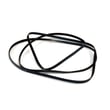
| Drum not turning | White-westinghouse dryer drum belt 134719300 | Drum rotation |
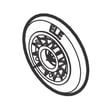
| Loud thumping/squeal | Dryer drum support roller 5304523152 | Drum support and noise |
| No heat or overheating symptoms | Dryer thermistor 134587700 | Temperature sensing |
| Door won’t start cycle | Dryer door switch 134813601 | Start enable/safety |
Dryer parts can look alike across Frigidaire-built models, but small differences (mounting holes, wire terminals, gas burner components) can prevent a correct install. Searching by FASG7021NW0 helps avoid returns and gets your dryer back to safe, normal drying.
Last updated: February 2026
What are the parts of the dryer?
A Frigidaire FASG7021NW0 gas dryer is built around an airflow system (blower, burner, venting), a tumbling system (drum, belt, rollers, idler), and safety and control parts (thermostats, thermistor, door switch, user interface). For diagrams and locations, use the FASG7021NW0 manual.
- Drum: holds and tumbles clothes for even drying
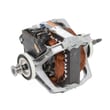
- Drive system: belt, idler, and motor that rotate the drum
- Support system: rollers and bulkhead supports that keep the drum aligned
- Heating system (gas): igniter, gas valve, and coils that create heat
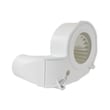
- Airflow system: blower wheel and ducting that move air through the drum and out the vent
- Temperature control and safety: thermistor, thermostats, and thermal safety devices
- Door and controls: door switch, catch/strike, and user interface
These are some frequently serviced items for this model:
- White-westinghouse dryer drum belt 134719300 (drum won’t turn, squealing, belt snapped)
- Dryer drum support roller 5304523152 (thumping, rumbling, drum not rolling smoothly)
- Dryer thermistor 134587700 (temperature issues, overheating or underheating symptoms)
- Dryer door switch 134813601 (dryer won’t start when door is closed)
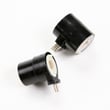
- Booster coil 5303931775 (gas heat cuts in and out, weak or intermittent flame)
| Symptom | Most likely area | Example parts for this model |
|---|---|---|
| Drum won’t tumble | Drive system | Belt, idler, motor |
| Loud thump/rumble | Drum support | Rollers, bulkhead supports |
| No heat or heat cycles off | Gas heat + temp control | Coils, igniter, thermistor/thermostat |
| Won’t start | Door/control/safety | Door switch, user interface |
Knowing the major assemblies helps you troubleshoot faster, order the right replacement part, and avoid replacing good components. It also helps you focus on airflow first, since restricted venting can mimic heating or thermostat problems.
Last updated: February 2026
How much does it cost to replace a heating element in a Frigidaire dryer?
For a Frigidaire gas dryer like model FASG7021NW0, “heating element” cost usually means the price of the failed heating-system part plus labor. Most customers spend about $200 to $400 total, depending on whether it’s an igniter, gas valve coils, thermostat, or a service call.
Gas dryers do not use the same style “heater element” as many electric dryers; heat is created by a burner assembly. Replacement cost depends on which component failed.
- DIY parts-only: commonly $20 to $150
- Professional repair (parts + labor): commonly $200 to $400
- Higher total cost happens when multiple parts are replaced in one visit (common on no-heat calls)
| What failed (common no-heat causes) | What it does | Typical parts cost range |
|---|---|---|
| Gas valve coils | Open the gas valve when energized | $20 to $50 |
| Burner igniter | Ignites the gas at the burner | $80 to $150 |
| High-limit thermostat / thermistor | Prevents overheating, regulates temp | $30 to $80 |
| Gas valve assembly | Controls gas flow to burner | $200 to $300+ |
If your dryer runs but won’t heat, these model-matched parts are frequent fixes:
- Booster coil 5303931775 (gas valve coil kit)
- Dryer burner igniter 5304517325
- Dryer high-limit thermostat 3204267
- Dryer thermistor 134587700
These checks often prevent replacing the wrong part.
- Confirm the dryer is set to a heated cycle (not Air Fluff / No Heat)
- Clean the lint screen and verify strong airflow at the exhaust
- Check that the gas shutoff valve is fully open
- If heat starts then stops, suspect coils or a temperature safety device
- Use the FASG7021NW0 manual for model-specific diagnostics and access guidance
A “heating element” quote can be misleading on a gas dryer; identifying the exact failed heating component (igniter, coils, thermostat, or gas valve) is what keeps the repair cost under control.
Last updated: February 2026
Why is my Frigidaire dryer not drying?
For a Frigidaire FASG7021NW0 gas dryer, “not drying” is almost always an airflow problem (lint screen, vent, or blower path) or a heat problem (igniter, gas valve coils, thermostats, or temperature sensor). We start with venting and lint buildup first because it is the most common cause.
- Clean the lint screen before every load; wash it with warm water if you use dryer sheets (film can block airflow).
- Confirm strong airflow at the outside vent hood while the dryer runs.
- Inspect the vent run for kinks, crushed flex duct, long runs, or heavy lint buildup.
- Try a timed dry cycle; if timed dry works better than auto dry, the moisture sensing or airflow is usually the issue.
- Do not overload; tightly packed loads dry slowly even with good heat.
On a gas dryer, the drum can tumble normally even when the burner is not firing. These are the most common heat-related suspects.
| Symptom | Most likely area | What to do next |
|---|---|---|
| No heat at all | Ignition or gas valve | Check for burner ignition; inspect coils and igniter wiring |
| Heats once, then stops heating | Gas valve coils overheating | Replace the booster coil 5303931775 kit |
| Overheats or shuts down on high heat | High-limit safety opening | Check venting first; then test the kelvinator dryer high-limit thermostat 3204267 |
| Poor temperature control, long dry times | Temperature sensing | Test/replace the dryer thermistor 134587700 |
If the vent is clear but drying is still slow, check for internal lint blockage.
- Lint packed in the blower housing or exhaust duct
- Crushed internal ducting
- Loose drum seal allowing air leaks
- Drum not turning at full speed (belt slipping)
A worn belt can let the drum slip and reduce tumbling action, which increases dry time. If you hear squealing or the drum movement feels weak, inspect the white-westinghouse dryer drum belt 134719300.
Poor airflow makes clothes take longer to dry and can cause the burner to cycle off early on safety limits. Fixing venting and lint buildup first improves drying performance and protects key parts like thermostats, coils, and the motor.
For model-specific access panels, test points, and disassembly order, follow the FASG7021NW0 manual.
Last updated: February 2026