 Owner’s manual
 Error Codes



What is the average lifespan of a Kenmore Elite refrigerator?
Most Kenmore Elite refrigerators, including model 59676522500, typically last 10 to 15 years with normal household use. Regular maintenance (cleaning condenser coils, keeping door seals tight, and maintaining proper temperatures) is what most often determines whether you land closer to 10 years or closer to 15.
Typical lifespan and what affects it
A refrigerator’s life is usually limited by sealed-system wear (compressor and refrigerant system), airflow problems, or repeated ice maker and water system issues.
- Maintenance level: clean coils, clear vents, replace filters on schedule
- Environment: hot garages, tight cabinetry, dusty homes shorten life
- Usage: frequent door openings and heavy ice/water use add load
- Repairs over time: fans, defrost components, and controls can add up
- Water quality: poor water can increase filter changes and dispenser issues
What the manual tells you about durability
Your 59676522500 documentation includes warranty coverage that helps indicate which systems are designed for long service:
| System or item | Coverage noted in documentation | What it means for lifespan planning |
|---|---|---|
| Whole refrigerator | 1-year full warranty | Early failures are usually addressed quickly |
| Sealed refrigeration system | 5-year full warranty | Compressor and sealed system are expected to be long-life components |
| Water filter cartridge (if equipped) | 30-day warranty | Filters are consumables; plan routine replacement |
For model-specific care and maintenance intervals, follow the 59676522500 owner's manual.
Why it matters
Knowing the typical 10 to 15-year lifespan helps you decide when preventive maintenance is worth it versus when a major repair (especially sealed-system work) may be better put toward replacement.
Quick maintenance checklist to help reach 15 years
- Vacuum/brush condenser coils regularly
- Keep door gaskets clean and sealing evenly
- Set temps to about 37°F fresh food and 0°F freezer
- Replace the water filter on schedule (more often with poor water)
- Keep air vents inside the compartments unblocked
Last updated: January 2026
What year did the Kenmore Elite come out?
Kenmore Elite was introduced as Sears’ premium Kenmore line in the late 1990s, but the exact “year it came out” for your refrigerator depends on when your specific Kenmore Elite model 59676522500 was manufactured. For this model, we use the model and serial label inside the fresh food section to determine the build date (not the Elite brand launch date); see the 59676522500 owner's manual.
How to find the manufacture year for model 59676522500
The most reliable way is to read the model and serial number sticker and then decode the serial number format used on your unit.
- Open the refrigerator (fresh food) door.
- Look on the left interior wall for the model and serial number sticker.
- Write down the full serial number exactly as shown.
- Use the serial number to determine the production week and year (format varies by manufacturer).
- If the label is missing or unreadable, check for a secondary label on the cabinet or rear panel.
Where the label is located (model-specific)
Our manual for Kenmore Elite 59676522500 states the model and serial number sticker is inside the refrigerator section on the left wall.
| What you need | Where to find it | Why it helps |
|---|---|---|
| Model number (59676522500) | Inside fresh food section, left wall | Confirms the exact parts list and documentation |
| Serial number | Same label | Identifies the unit’s production date |
| Purchase date (optional) | Your receipt or records | Helps estimate age if serial decoding is unclear |
Why it matters
Kenmore Elite is a product line name, not a single release-year model. The manufacture year is what matters for ordering the right refrigerator parts (like an ice maker, light bulb, or water filter housing) and matching service procedures.
Related help
If you are trying to date the refrigerator because of a display message or fault, start with the error code list for your Kenmore family; see Kenmore 106 model refrigerator error codes.
Last updated: January 2026
What are the common problems with Kenmore Elite refrigerators?
For Kenmore Elite refrigerator model 59676522500, the most common problems we see are poor cooling, water leaks, ice maker or dispenser issues (slow flow, small cubes), excess frost or condensation, and unusual noises. Many fixes start with cleaning condenser coils, confirming doors seal, and checking water pressure; see the 59676522500 owner's manual troubleshooting section.
Most common symptoms and what usually causes them
- Not cooling or warm temperatures: dirty condenser coils, controls set incorrectly, door not closing, rear air grille blocked, frequent door openings, or the unit being in defrost mode.
- Runs too often: dirty coils, warm room conditions, door not sealing, or large amounts of warm food added.
- Water leaking: low water pressure, improper water connection parts (such as saddle valves), or less-durable plastic supply tubing.
- Slow water flow or hollow/small ice cubes: low water pressure, clogged water filter, kinks in copper tubing, or reverse osmosis systems that reduce pressure.
- Condensation or water droplets: high humidity, frequent door openings, or a door gasket not sealing.
Quick checks we recommend first (fast, no parts)
- Clean the condenser coils and make sure airflow is not blocked.
- Confirm the doors close fully; check for bins, drawers, or containers preventing closure.
- Check the door gaskets for a full seal all the way around.
- Verify control settings for both refrigerator and freezer.
- Inspect the water supply line for kinks and confirm household water pressure is adequate.
When a part is commonly involved
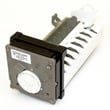
If the refrigerator is cooling but you have ice production problems (no ice, partial harvest, odd cube shape), the ice maker assembly is a frequent wear item. For this model, we match that to the refrigerator ice maker D7824706Q.
| Symptom | Most likely area | Typical next step |
|---|---|---|
| Warm fridge/freezer | Airflow, coils, controls, door seal | Clean coils; adjust controls; check gasket seal |
| Slow dispenser flow | Water pressure, filter, supply line | Check pressure; replace filter; straighten line |
| Leaking water | Supply connection, tubing/valve setup | Recheck connection method; use durable tubing |
| Loud/unfamiliar sounds | Normal operation vs. fan/ice maker activity | Identify when noise happens; inspect for obstructions |
Why it matters
Catching issues early (especially dirty coils, poor door sealing, and low water pressure) helps prevent food temperature swings, reduces compressor run time, and improves ice and water performance.
Last updated: January 2026





