
How much horsepower does a Delta 34-440 have?
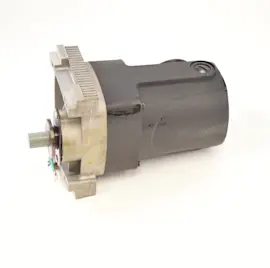
Delta model 34-440 (95H98460 & higher) was sold in configurations where the motor horsepower depends on the specific motor installed on your saw. The reliable way to answer this for your unit is to read the HP value on the motor nameplate and use that information when selecting electrical parts on Sears PartsDirect.
Look at the motor nameplate (usually on the side of the motor housing) and write down:
- Horsepower (HP) rating
- Voltage (commonly 120V or 240V, depending on how it’s wired)
- Full-load amps (FLA)
- RPM
- Motor model/frame information
If HP is not listed, the volts and amps still help identify the correct switch, cord, and wiring components for your setup.
Use the nameplate details to match parts and troubleshoot power issues.
- If the saw struggles under load: confirm the blade is sharp and correct for the cut, then verify belt condition and tension
- If the motor hums or trips a breaker: check wiring connections and the switch circuit
- If the saw is intermittent: inspect the cord, plug, and any splices or terminals
For safe electrical testing steps, use our guide how to use a multimeter to test electrical parts video.
| Motor HP (as listed on your nameplate) | Typical cutting behavior on a 10 inch contractor saw | What to adjust first |
|---|---|---|
| Lower HP | Slower feed rate in thick hardwood | Use a rip blade, reduce feed pressure |
| Higher HP | Holds blade speed better under load | Confirm belt alignment, keep blade clean |
Horsepower affects how well the blade maintains speed during ripping and crosscutting. On an older contractor saw like the Delta 34-440, the motor may be original or a replacement, so the nameplate is the most accurate spec for your exact machine.
Last updated: February 2026
Is there a standard table saw height?
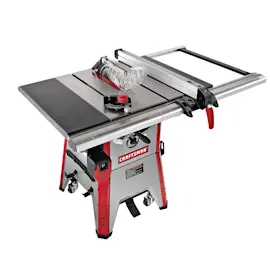
Most table saw setups land around 34 to 36 inches from the floor to the tabletop, which matches common countertop height and fits many users comfortably. For a Delta 34-440 10-inch contractor saw, we recommend setting the saw height to what keeps your back straight and your shoulders relaxed.
Use these as practical starting points, then fine-tune for your body and the work you do most.
- 34 to 36 in.: most common “standard” working height
- 36 to 38 in.: often better for taller users or detailed work
- 32 to 34 in.: can feel better for shorter users or heavy sheet goods handling
- Keep the surface level and stable; wobble matters more than the exact number
We set height based on how you stand at the saw, not a single universal spec.
- Stand in your normal shoes on your shop floor
- Rest your hands on the tabletop near the front edge
- Your elbows should be slightly bent; shoulders should not be raised
- You should be able to push stock through without leaning forward
- If you feel lower-back strain, raise the saw; if your shoulders tense, lower it
| Setup choice | Typical height range | Why you would choose it |
|---|---|---|
| Saw on factory stand | 34 to 36 in. | Balanced, common, easy to live with |
| Saw on mobile base | 34 to 37 in. | Adds mobility; may raise height slightly |
| Saw built into outfeed/bench | 34 to 38 in. | Best support for long rips and sheet goods |
A table saw that is too low encourages hunching; too high encourages shoulder tension. Dialing in height improves control, reduces fatigue, and helps you keep consistent feed pressure for cleaner cuts.
If you are rebuilding the stand, leveling feet, or mobility setup for your Delta 34-440, we recommend starting with the parts list for your exact variation (95H98460 and higher) and searching by model number on Sears PartsDirect.
Last updated: February 2026
What is a good HP for a table saw?
A good horsepower (HP) range for a table saw depends on what you cut and how often you cut it. For a Delta 34-440 10" contractor saw, most users are well served by about 1.5 to 2 HP for general DIY and jobsite-style work; 3 to 5 HP is best for frequent ripping of thick hardwood at faster feed rates.
- 1 to 1.75 HP: light DIY, softwoods, plywood, occasional hardwood
- 1.5 to 2 HP: most “contractor saw” use, steady ripping with sharp blades
- 3 HP: serious hobby shop, frequent hardwood ripping, less bogging
- 5 HP: production-level cutting, thick stock all day, fastest feed rates
Higher-HP motors usually require higher-voltage circuits and heavier wiring. Use this as a practical planning guide:
| Motor size | Typical power setup | What you’ll notice |
|---|---|---|
| 1 to 2 HP | Often 120V (some can be 240V) | Works well, but you must feed slower in thick hardwood |
| 3 HP | Commonly 240V | Strong starts, steadier cuts, less slowdown |
| 5 HP | 240V | Best for long ripping sessions and thick stock |
- If you cut mostly plywood and 2x lumber, 1.5 to 2 HP is the sweet spot.
- If you rip 8/4 hardwood often, 3 HP pays off in smoother, faster cuts.
- If you want production speed, 5 HP is the right class of saw (and usually a heavier cabinet-style build).
- If your saw bogs now, first check blade sharpness, blade type, belt condition, and alignment before assuming you need more HP.
Horsepower mainly affects how fast you can feed material without stalling. A smaller motor can still cut the same wood, but you will use a slower feed rate and you will be more sensitive to dull blades and misalignment.
For help finding the exact model tag details you need when shopping motors or electrical parts, use Sears PartsDirect.
Last updated: February 2026
Will a 10 inch table saw cut a 4x4?
A 10-inch table saw like the Delta 34-440 typically will not cut completely through a standard 4x4 in a single pass. Most 4x4 posts are about 3-1/2 inches thick, while many 10-inch contractor saws (including the 34-440 class) max out around 3-1/8 inches at 90 degrees.
A 4x4 is usually thicker than the saw’s maximum straight-cut depth, so you plan on a two-step cut.
- Nominal vs. actual size: A “4x4” is commonly 3-1/2 in. x 3-1/2 in.
- Max depth at 90 degrees: Many 10-inch contractor saws are about 3-1/8 in.
- Bevel cuts reduce depth: At 45 degrees, max depth is typically much less.
- Blade condition matters: A sharp, correct-tooth blade reduces burning and binding.
- Support matters: Infeed and outfeed support keeps the post flat and stable.
Use one of these safe, common approaches:
- Cut, then flip: Make the first pass, rotate the post 180 degrees, then finish the cut from the opposite face.
- Use a miter gauge or sled for crosscuts: Keep the post controlled; avoid freehand cutting.
- Use the fence for rips only: For ripping a 4x4, keep steady pressure against the fence and use push sticks.
| Item | Typical measurement | Single-pass on 10-inch contractor saw? |
|---|---|---|
| “4x4” post actual thickness | ~3-1/2 in. | Usually no |
| Typical 10-inch saw max depth at 90 degrees | ~3-1/8 in. | Not enough to clear 3-1/2 in. |
Trying to force a one-pass cut when the blade cannot clear the thickness increases binding and kickback risk. Planning a flip-cut (and supporting the work) improves safety and cut accuracy.
For model-specific diagrams and replacement parts for your Delta 34-440, start with the parts list for this model, or search by model number on Sears PartsDirect.
Last updated: February 2026