Owner’s manual
 View engine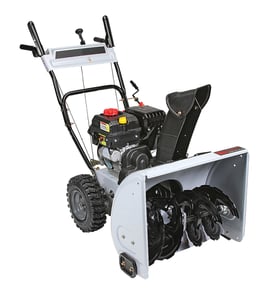



How many years should a snowblower last?
A Craftsman 247889550 gas snowblower typically lasts 15 to 20 years with normal residential use and consistent maintenance. Separately, the operator guidance for this model also references an average useful life of 7 years or 60 operating hours as an inspection milestone, not an automatic end-of-life point (see the 247889550 operator's manual).
What “lasts” means for this model
A snowblower can still be worth keeping even after many seasons if the engine starts reliably, the auger and drive systems work smoothly, and wear items are replaced as needed.
Common wear items on gas snowblowers include:
- Belts (auger and drive)
- Shear pins
- Skid shoes and shave plate
- Spark plug
- Friction wheel rubber
Maintenance that most extends lifespan
We see the longest life when owners stay ahead of fuel, oil, and wear-part service.
- Change engine oil on schedule (including after the first few hours on a fresh season or rebuild)
- Use fresh fuel and avoid storing fuel in the tank for long periods
- Keep the chute and auger housing clear; never clear clogs by hand
- Check belt condition and tension; replace when glazed, cracked, or slipping
- Store clean and dry; protect metal surfaces from rust during off-season
Quick rule-of-thumb table
| Situation | What we recommend | Expected outcome |
|---|---|---|
| Starts easily, throws snow well | Keep maintaining | Long service life (often 15 to 20 years) |
| Frequent belt slip or weak auger | Inspect/replace belt | Restores performance and reduces strain |
| Hard starting after storage | Fuel system tune-up steps | Prevents carburetor and starting issues |
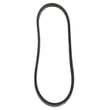
If you’re already seeing auger performance issues, a common first check is the auger belt; for this model, one compatible option is the belt 256963.
Why it matters
A snowblower’s “life” is usually limited by neglected fuel storage, skipped oil changes, or running worn drive/auger components. Replacing inexpensive wear parts on time often prevents bigger failures and keeps your Craftsman snow thrower dependable.
Last updated: January 2026
Where is the serial number on a snowblower?
On the Craftsman snow thrower model 247889550, the serial number is typically printed on the model and serial number label (often called the ID tag) attached to the machine’s frame. Common locations are on the rear of the unit near the handles or on the back of the auger housing. For label illustrations and recording fields, use the 247889550 operator's manual.
Where to look on model 247889550
Check these spots first (wipe off snow, salt, and grime so the label is readable):
- Rear of the snowblower frame, behind the engine and below the handle panel
- Back side of the auger housing (the front “bucket” area), facing the operator
- Side of the frame near the wheels or axle area
- Near the engine mounting area on the frame rail
What the label usually includes
The ID tag commonly lists multiple identifiers. Here is what you will typically see:
| Label item | What it means | What to use for parts lookup |
|---|---|---|
| Model number | Identifies the snowblower model family | Use this to match diagrams and parts |
| Serial number | Identifies your exact production unit | Helpful for confirming revisions |
| Date code (if shown) | Manufacturing date information | Usually not required for parts |
Tips to read the numbers correctly
- Write the numbers down exactly as printed (including dashes and dots if present).
- Take a clear photo of the tag before ordering parts.
- If the label is scratched, try a flashlight at an angle to make the print stand out.
- If the tag is missing, the manual’s parts diagrams can still help you identify components by location.
Why it matters
We use the model and serial information to match the correct Craftsman snowblower parts and diagrams for 247889550, especially when a design change happened during production.
Last updated: January 2026
Who repairs Craftsman snow blowers?
For a Craftsman snow thrower like model 247889550, we recommend using Sears Home Services or another qualified small-engine/snowblower technician for diagnosis and repair. For model-specific operating, maintenance, and safety guidance before scheduling service, use the 247889550 operator's manual.
Best repair options for this model
- Sears Home Services: Factory-aligned service for Craftsman equipment.
- Local small-engine repair shop: Good choice for carburetor, drive, and auger system repairs.
- Authorized service provider (where available): Often best for warranty-style repairs and OEM procedures.
- DIY for basic maintenance: Oil checks/changes, spark plug inspection, skid shoe adjustments (follow the manual).
What to do before you book a repair visit
We suggest doing these quick checks first because they can save time and help the technician arrive prepared:
- Confirm the model number 247889550 from the unit’s ID label.
- Note the symptom (won’t start, won’t self-propel, auger not turning, poor throwing distance).
- Check for obvious issues: loose hardware, damaged belts, or sheared auger pins.
- Review the troubleshooting and maintenance sections in the 247889550 operator's manual.
- If you suspect an auger belt issue, have the correct replacement ready, such as the belt 256963.
Common repair types and who should handle them
| Repair type | Typical cause | Best choice |
|---|---|---|
| No-start / runs rough | Fuel, spark plug, carburetor issues | Technician (DIY checks first) |
| Won’t move (drive issue) | Drive cable, drive belt, friction wheel wear | Technician or experienced DIY |
| Won’t throw snow well | Clogged chute, auger belt, shear pins | DIY checks, then technician |
| Excessive vibration | Loose parts, auger/impeller damage | Technician (safety-critical) |
Why it matters
Snowblowers combine a gasoline engine with fast-moving auger and impeller components. Using a qualified repair provider helps ensure safe operation, correct adjustments, and proper replacement parts for your Craftsman 247889550.
Last updated: January 2026
Can I use 5W30 instead of SAE 30 in my snowblower?
Yes. For Craftsman model 247889550, the operator’s manual specifies 5W-30 engine oil (20 oz capacity), so using 5W-30 is the correct choice; SAE 30 is typically a warm-weather oil and can make cold starting harder in a snow thrower. See the 247889550 operator's manual.
What we recommend for this model
For 247889550, we follow the manual’s oil guidance for cold-weather operation.
- Use 5W-30 4-stroke engine oil
- Use oil meeting at least SF/SG service classification
- Check oil level before each use
- Change oil after the first 5 hours, then every season or 50 hours
- Do not overfill; overfilling can cause smoking or hard starting
5W-30 vs SAE 30: quick comparison
| Oil type | Best use case | What you’ll notice in winter |
|---|---|---|
| 5W-30 | Cold-weather equipment like snowblowers | Easier starting and better flow when cold |
| SAE 30 | Warmer temperatures | Thicker when cold; harder starting and slower lubrication |
How to switch oils safely
If you are changing from SAE 30 to 5W-30, we recommend doing it as a normal oil change.
- Run the engine briefly (if safe) to warm the oil slightly
- Shut off engine, remove the key, and let hot parts cool as needed
- Drain oil into an approved container
- Refill with 20 oz of 5W-30
- Recheck level on a level surface before starting
For step-by-step visuals, use our how to change snowblower oil video.
Why it matters
Snowblower engines depend on fast oil flow at startup. In freezing temperatures, the wrong viscosity can delay lubrication, increase wear, and make starting more difficult.
Last updated: January 2026
Is it cheaper to repair or replace a snowblower?
For the Craftsman snow thrower model 247889550, it’s usually cheaper to repair when the problem is a normal wear item (belt, tune-up parts, adjustments). It’s usually smarter to replace when you’re facing repeated major failures or a costly drivetrain or engine repair that approaches about half the cost of a comparable new unit.
A practical decision rule we use
- Repair if the fix is straightforward and limited to one system (starting, auger drive, chute control, skid shoes).
- Repair if the machine has been reliable and this is the first significant issue.
- Replace if you’re paying for multiple repairs in the same season.
- Replace if the engine has low compression, heavy smoking, or persistent fuel-system issues after service.
- Replace if the drive system is slipping badly and the friction wheel and related components are heavily worn.
Typical “repair” examples for this model
These are common, cost-effective fixes on model 247889550:
- Replace a worn auger belt (the manual includes belt replacement steps).
- Correct drive or auger control cable adjustment.
- Replace a broken flywheel key after an impact.
- Replace throttle linkage parts if the engine won’t hold speed.
Helpful references for this model:
Repair vs. replace quick comparison
| Situation | Usually best choice | Why |
|---|---|---|
| One clear failure (belt, linkage, minor hardware) | Repair | Low parts cost, fast turnaround |
| Multiple issues at once (drive + auger + engine running rough) | Replace (often) | Labor adds up quickly |
| Major engine internal problem | Replace (often) | High cost, limited long-term payoff |
| Unit is near typical end-of-life | Replace | Better reliability and performance |
Why it matters
Snowblowers are seasonal; downtime during a storm is expensive in time and frustration. A small repair (like replacing a belt) can restore full function quickly, but repeated major repairs can cost more than upgrading to a newer, more reliable machine.
Last updated: January 2026
How to tell if a snowblower auger belt is bad?
On the Craftsman snow thrower model 247889550, a bad auger belt usually shows visible wear (cracks, fraying, glazing) or causes symptoms like the augers not turning, weak snow throwing, belt squeal, or a hot rubber smell. Confirm belt condition and auger control adjustment using the 247889550 operator's manual.
Quick signs your auger belt is failing
- Cracks or missing chunks on the belt
- Frayed edges or exposed cords
- Glazing (shiny, slick belt surface from slipping)
- Stretched belt that rides low in the pulley or feels loose
- Augers stop under load even though the engine runs normally
- Burning rubber smell after engaging the auger
Simple checks you can do safely
- Shut the engine off, remove the key, and wait for all moving parts to stop.
- Remove the belt cover and inspect the belt surface and edges.
- Check for belt dust or melted rubber near the pulleys (a common slip clue).
- Verify the auger fully stops when you release the auger control; if it does not, the cable may be too tight.
Belt condition vs. adjustment (what it usually means)
| What you notice | Most likely cause | What to do next |
|---|---|---|
| Belt looks shiny and auger slips | Belt is worn or loose | Inspect belt and pulleys; replace belt if glazed |
| Belt looks OK but auger still weak | Cable out of adjustment or belt stretched | Check auger control adjustment steps in the manual |
| Belt squeals or smells hot | Belt slipping or pulley issue | Stop and inspect before continued use |
When replacement is the right move
If the belt is cracked, frayed, glazed, or stretched enough to slip, replacement is the reliable fix. For this model, one compatible replacement option listed is the belt 256963. For step-by-step belt replacement technique, we also recommend how to replace a snowblower belt video.
Why it matters
A slipping auger belt reduces throwing distance and can overheat, leaving you with no snow discharge when you need it most. Catching belt wear early also helps protect pulleys, idlers, and the auger drive system.
Last updated: January 2026
Can I use WD-40 on my snowblower chute?
Yes, you can use WD-40 on the chute of your Craftsman snow thrower model 247889550 to help reduce snow sticking and chute clogging, but we recommend a silicone spray for a longer-lasting slick coating on plastic and metal. Apply only to a clean, dry chute and reapply as needed.
Best practice for model 247889550
We follow the safety steps in the 247889550 operator's manual when working around the chute and auger area: shut the engine off, remove the ignition key, and use the clean-out tool for clogs.
- Shut the engine off and remove the ignition key before spraying.
- Let the chute dry completely before starting the engine.
- Spray the inside of the chute and discharge opening lightly; avoid soaking.
- Keep spray off belts, pulleys, friction surfaces, and the drive system.
- Reapply more often in wet, heavy snow.
WD-40 vs silicone spray
| Product type | What it does well | Tradeoffs |
|---|---|---|
| WD-40 multi-use | Helps shed moisture, can reduce sticking short-term | Usually needs more frequent reapplication; can leave residue that attracts dirt |
| Silicone spray | Creates a slick, longer-lasting film on plastic and metal | Still needs reapplication over time, especially in slush |
If your chute still clogs often
Chute spray helps, but repeated clogging can also point to auger/impeller performance issues.
- Clear clogs only with the clean-out tool (never your hand).
- Verify the auger control cable is adjusted so the auger fully engages.
- Check for a loose or worn auger belt; if you are replacing the auger belt on this model, use the correct belt 256963.
- Slow your ground speed in heavy, wet snow to avoid overfeeding the housing.
Why it matters
A slick chute helps snow flow through the impeller discharge more consistently, which can reduce clogging and improve throwing distance, especially in warm or wet conditions.
Last updated: January 2026
How to tell year of Craftsman snowblower by serial number?
For Craftsman snow thrower model 247889550, the operator’s manual does not provide a serial-number decoding chart that lets us identify the exact build year from the serial number alone. The most reliable approach is to use the date-of-purchase record and the model/serial tag details shown in the 247889550 operator's manual.
What we can confirm for model 247889550
The manual for this model includes a place to record identifying information, but it does not explain how to translate the serial number into a manufacturing year.
Use these model-specific identifiers:
- Model number: 247889550
- Serial number: recorded from the model/serial label
- Date of purchase: recorded in your paperwork or manual
Where to find the model and serial number
On most Craftsman snow throwers like model 247889550, the model/serial label is typically on the frame or housing.
Common places to check:
- Rear of the unit near the handle mounting area
- Frame rail near the engine
- Auger housing area
- Near the belt cover area
How to narrow down the year (practical methods)
If you need the year for parts matching or resale, these methods usually get you there without guessing a serial format:
- Check your receipt, warranty registration, or service invoice for the purchase date
- Compare your unit’s features and controls to the illustrations and parts list in the 247889550 operator's manual
- If you are replacing wear items, match parts by model number and diagram, not by year
- Use the engine model information (often on the engine shroud) as an additional clue when ordering engine-related parts
Quick comparison
| Method | What it tells you | Best for |
|---|---|---|
| Receipt or service record | Purchase year (often close to build year) | Dating the machine |
| Model/serial label | Exact identification | Parts lookup |
| Manual parts list/diagrams | Configuration match | Correct replacement parts |
Why it matters
Craftsman snowblower serial formats can vary by production run and supplier, so using the model number and diagrams is the safest way to avoid ordering the wrong part. For example, if you are diagnosing an auger drive issue, matching the correct belt 256963 by model is more dependable than relying on a guessed build year.
Last updated: January 2026