

What size is a Kenmore model 11097590120 dryer?
Kenmore gas dryer model 11097590120 is a full-size 27-inch class dryer. Most dryers in this Kenmore 110 series footprint measure about 27 inches wide, 27 to 29 inches deep, and 43 to 44 inches tall (height varies most with leveling legs and control console style).
Use these common ranges for a standard installation space (closet or laundry room):
- Width: ~27 inches
- Depth: ~27 to 29 inches (not including the vent elbow)
- Height: ~43 to 44 inches
- Recommended clearance: allow extra space behind for the exhaust vent and gas line
| Measurement | Typical range | What changes it most |
|---|---|---|
| Width | ~27 in. | Cabinet style (most are fixed) |
| Depth | ~27 to 29 in. | Vent connection, door style |
| Height | ~43 to 44 in. | Leveling legs, console height |
For the most accurate size, measure the cabinet itself and then account for connections.
- Measure width at the widest cabinet points (left to right)
- Measure height from floor to the top of the cabinet (include leveling legs)
- Measure depth from the back panel to the front (include the door if it protrudes)
- Add 2 to 6 inches behind the dryer for the vent elbow and airflow space
- If you are changing vent direction, confirm the outlet location and parts needed (for example, a side-vent kit such as plug W10470674)
Dryer “fit” problems usually come from the depth once the exhaust duct and gas hookup are connected. Planning for the connection space helps prevent crushed vents, poor airflow, longer dry times, and overheating.
Last updated: February 2026
How do I tell what model my Kenmore dryer is?
Your Kenmore dryer’s model number is printed on the appliance data label; for model 11097590120, it will match exactly and lets us pull the correct gas dryer parts list, diagrams, and compatible replacements.
Check these common spots on Kenmore dryers:
- Inside the door opening on the front panel (most common)
- On the door frame itself
- On the back panel of the dryer cabinet
- Near the lint screen housing (some designs)
- On the lower front area behind the toe panel (if equipped)
Record the full model number exactly as shown, including all digits.
| What to capture | Example for this dryer | Why it matters |
|---|---|---|
| Model number | 11097590120 | Ensures correct parts fit |
| Serial number | (varies) | Helps match production version |
| Type | Gas dryer | Confirms ignition and heat parts |
- Match every digit; 11097590120 is not the same as a similar-looking number.
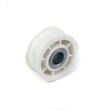
- Use the model number when searching for common wear items like an idler pulley, thermal fuse, or operating thermostat.
- If the label is worn, take a clear photo and zoom in to read it.
Kenmore model numbers can look similar across different series, but internal components (like the drive system, blower wheel, and safety thermostats) can vary. Using the exact model number keeps troubleshooting and part selection accurate.
If you’re diagnosing a display or control issue, use our Kenmore 110 series electronic control model dryer error codes guide to match the code to the right checks and parts.
Last updated: February 2026
How to replace a Kenmore dryer thermistor?
For Kenmore gas dryer model 11097590120, replacing the thermistor means disconnecting power, opening the cabinet to reach the blower or exhaust area, swapping the sensor, and reassembling. We recommend taking a quick photo of the wire routing before removal so the new sensor connects the same way.
- Unplug the dryer from the wall outlet.
- Shut off the gas supply valve to the dryer.
- Let the dryer cool completely.
- Have a 1/4-inch nut driver or screwdriver ready.
- Label wires or take a photo before disconnecting anything.
On most Kenmore gas dryers like 11097590120, the thermistor is mounted on or near the blower housing or exhaust duct inside the cabinet. You typically access it by removing the lower front panel or the rear panel (panel location varies by design).
- Disconnect power and shut off gas.
- Remove the access panel (front lower panel or rear panel).
- Locate the thermistor on the blower housing or exhaust duct.
- Pull off the wire connector(s) from the thermistor terminals.
- Remove the mounting screw(s) and take out the thermistor.
- Install the new thermistor in the same position and tighten the screw(s).
- Reconnect the wires firmly.
- Reinstall the panel, restore gas, plug in, and test a timed dry cycle.
A “bad thermistor” symptom can overlap with airflow and safety-limit issues. Check these common items:
- Lint screen and housing: clean fully (restricted airflow causes overheating).
- Vent duct: confirm strong airflow outside.
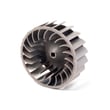
- Blower wheel: inspect for cracks or a loose hub (consider dryer blower wheel WP697772).
- Thermal fuse: if the dryer won’t run or heat after overheating, test/replace (consider thermal fuse WP3390719).
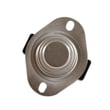
- Operating thermostat: if temperatures are erratic, test/replace (consider dryer operating thermostat WP3387134).
| Symptom | Most common check | Related part option |
|---|---|---|
| Runs but no heat | Airflow restriction, sensor circuit | Dryer operating thermostat WP3387134 |
| Stops mid-cycle, overheats | Venting, safety limit opened | Thermal fuse WP3390719 |
| Weak airflow, long dry times | Blower wheel, venting | Dryer blower wheel WP697772 |
The thermistor helps the control regulate drum temperature. When it drifts out of range or fails, the dryer can underheat, overheat, or cycle heat incorrectly, which increases dry time and can trip safety devices like the thermal fuse.
Last updated: February 2026
What are common problems with Kenmore dryers?
For the Kenmore gas dryer model 11097590120, the most common problems are no heat, long dry times, drum not turning, and loud noises. These issues usually trace back to airflow restrictions (lint and venting) or normal wear on parts like the thermal fuse, thermostat, blower wheel, and idler pulley.
- Dryer runs but won’t heat: failed thermal fuse, operating thermostat, or burner sensing issue
- Clothes take too long to dry: clogged lint screen, restricted vent, or weak airflow from the blower area
- Drum won’t tumble: worn idler pulley, motor pulley issue, or drive motor problem
- Squealing, thumping, or rattling: worn idler pulley or blower wheel problems
- Door won’t stay closed or won’t start: door latch/catch wear
- Clean the lint screen before every load and wash off fabric softener residue if present.
- Confirm strong airflow at the outside vent hood while the dryer is running.
- Check that the vent line is short, not crushed, and not packed with lint.
- Avoid overloading; heavy loads reduce tumbling and airflow.
- If you smell gas or suspect a gas leak, shut off the gas supply and have service performed.
| Symptom | Likely part to check | Example part for model 11097590120 |
|---|---|---|
| No heat | Thermal fuse or operating thermostat | Thermal fuse WP3390719, dryer operating thermostat WP3387134 |
| Long dry times | Blower wheel, venting, lint screen | Dryer blower wheel WP697772, screen W10120998 |
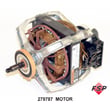
| Drum not turning | Idler pulley, motor, motor pulley | Dryer idler pulley 279640, drive motor 279787, dryer motor pulley W10837625 |
| Noisy operation | Idler pulley or blower wheel | Dryer idler pulley 279640, dryer blower wheel WP697772 |
Heat and airflow problems can cause repeated shutdowns, poor drying performance, and overheating. Fixing vent restrictions and replacing worn drive or safety parts helps your Kenmore 11097590120 dry faster, run quieter, and operate more reliably.
Last updated: February 2026