Installation guide
 Owner’s manual
 Error Codes



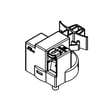
Do Whirlpool washers have a filter that needs to be cleaned?
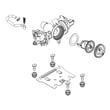
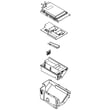
Yes. The Whirlpool WFW5620HW1 washer uses a drain pump filter that should be cleaned occasionally to help prevent slow draining, standing water, and drain pump noise. On this model, the filter access is behind the dispenser drawer area, and you drain residual water before removing the filter.
The manual procedure for this washer describes opening and removing the dispenser drawer to reveal the drain pump filter. Follow the steps in the WFW5620HW1 owner's manual.
- Turn the washer off and unplug it.
- Pull out the dispenser drawer; release the side tabs to remove the drawer.
- Set a shallow pan under the filter area.
- Release the small black drain hose from its clip, remove the plug, and drain water into the pan.
- After draining, remove the filter and clear lint, coins, hair pins, and debris.
- Reinstall the filter snugly, re-plug and re-clip the drain hose, then reinstall the drawer.
| What you notice | What it usually means | What to do next |
|---|---|---|
| Washer won’t drain well | Filter was restricted | Run a Drain/Spin or rinse cycle and recheck for leaks |
| Rattling or grinding during drain | Debris hit the impeller | Clean filter again; check pockets before washing |
| Still not draining after cleaning | Pump or drain path issue | Inspect the drain hose routing; consider replacing the washer drain pump assembly W11458345 |
We recommend checking the drain pump filter every 1 to 3 months for heavy use (pets, small items, lots of lint) and at least twice a year for typical use.
A clean filter protects the drain pump, helps the washer complete cycles normally, and reduces odor and residue problems that can build up when water cannot evacuate quickly.
Last updated: February 2026
Are Whirlpool washer parts interchangeable?
Many Whirlpool washer parts are not interchangeable across models, even when they look similar. For your Whirlpool WFW5620HW1, we recommend matching parts by model number and the exact part ID to ensure proper fit, correct electrical connections, and reliable performance.
Parts can be interchangeable only when the design, mounting, connectors, and specifications match. On modern front-load washers, small differences can cause leaks, error codes, or no-start conditions.
- Different wire harness plug style or pin layout (controls, door lock)
- Different flow rate or coil specs (water valve)
- Different hose port angle or mounting tabs (drain pump, dispenser)
- Software or calibration differences (electronic control board)
- Revised part versions that require a specific kit or instructions
Use the model number WFW5620HW1 and verify the exact part ID before ordering. The most reliable cross-check is the parts list and diagrams in the WFW5620HW1 owner’s manual.
| System | Example part name | Example part ID |
|---|---|---|
| Draining | Washer drain pump assembly | W11458345 |
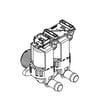
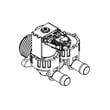
| Filling | Water valve | W11688995 |
| Door/lid safety | Ha15g Janus- | W11565030 |
If you are troubleshooting a drain issue, starting with the correct pump for this model (such as washer drain pump assembly W11458345) prevents fitment problems and repeat repairs.
Using the correct Whirlpool WFW5620HW1 parts helps prevent leaks, reduces nuisance error codes, and keeps cycle performance consistent. It also avoids damage caused by mismatched electrical components or seals.
Last updated: February 2026
What does F1 and E1 mean on a Whirlpool washer?
On the Whirlpool WFW5620HW1 washer, F1 E1 points to a control-related fault (the washer is detecting a problem with its main electronics or sensing circuit). Start by power-resetting the washer and checking for simple causes like a stuck key, moisture, or a drain issue that is triggering the fault.
- Unplug the washer (or turn off the breaker) for 1 minute, then restore power and try a Drain/Spin cycle.
- Make sure the door closes firmly and the latch area is clear of detergent residue.
- If the tub is full of water, focus on draining first; a drain problem can cascade into other faults.
- If the code returns immediately, avoid repeated restarts; it can worsen intermittent electrical issues.
| Likely cause | What you may notice | What to check next |
|---|---|---|
| Main control problem | Code appears at start or mid-cycle | Wiring connections, then control replacement if needed |
| Drain system restriction | Won’t drain, long drain time, water left in tub | Pump filter/hoses, then pump |
| Pressure sensing issue | Overfill/underfill behavior, odd water levels | Pressure hose and pressure sensor |
| Door lock feedback issue | Won’t start, door won’t lock/unlock normally | Door lock and strike alignment |
If your WFW5620HW1 also will not drain or leaves water in the drum, these model-matched parts are the most relevant:
- Washer drain pump assembly W11458345 (drains water out of the tub)
- Pressure sen W11316246 (water level sensing input to the control)
- Ha15g janus- W11565030 (door lock feedback to the control)
F1 E1 is often the washer protecting itself from running with unreliable sensor or control feedback. Addressing drain flow, door lock feedback, and pressure sensing first prevents repeat shutdowns and helps you avoid replacing the wrong part.
For model-specific reset steps, diagnostic mode guidance, and safety information, follow the WFW5620HW1 owner's manual.
Last updated: February 2026
What is the most common problem with Whirlpool washers?
The most common Whirlpool washer problems are draining or spinning failures, usually caused by a drain restriction (coins, lint, small socks), an unbalanced load, or a door-lock issue. On the Whirlpool WFW5620HW1 front-load washer, drainage problems often trace back to the pump area and hoses.
- Run a Drain/Spin (or similar) cycle and listen for the drain pump running.
- Check the drain hose for kinks, crushing, or a clogged standpipe.
- Reduce load size and redistribute items to correct out-of-balance spinning.
- If the door will not lock or the cycle will not start, inspect the door strike and lock.
- If the washer vibrates or “walks,” re-level the feet; proper leveling reduces noise and vibration.
| Symptom | Most likely cause | What to check next |
|---|---|---|
| Won’t drain | Pump restriction or blocked drain path | Clean pump area; inspect drain hose routing |
| Won’t spin | Unbalanced load or door not locking | Rebalance load; check door strike/lock |
| Loud noise | Shipping/installation issue or loose items | Confirm install steps; check for foreign objects |
| Won’t fill | Water supply issue or inlet valve problem | Verify both faucets on; check hoses/screens |
If troubleshooting points to a failed component, these model-matched parts are common fixes:
- Washer drain pump assembly W11458345 (no-drain, slow drain, grinding during drain)
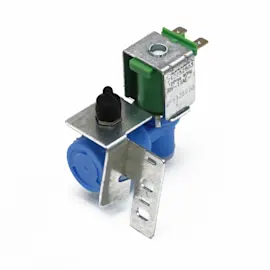
- Water valve W11688995 (no fill, slow fill, fill errors)
- Ha15g janus- W11565030 (door won’t lock, won’t start, stops mid-cycle)
- Strike, door W11316914 (door won’t latch securely)
- Washer drain hose assembly W11549455 (leaks, restrictions, poor draining)
Drain and spin problems can leave water in the drum, cause odor, and strain the motor and control system. Correcting hose routing, leveling, and simple clogs early prevents repeat failures and reduces vibration-related wear.
Use the WFW5620HW1 owner’s manual for the exact cleaning and operating steps (including the Clean Washer cycle guidance and care recommendations), and the WFW5620HW1 installation guide for leveling, hose hookup, and transport-bolt removal details.
Last updated: February 2026