Owner’s manual



How do I reset the lid lock on my Whirlpool washer?
On the Whirlpool WFW9470WL01, there is no lid lock because it is a front-load washer with a door lock. To clear a door-lock issue, we reset the cycle by canceling it correctly, then letting the washer drain if needed so the door can unlock (as described in the owner's manual).
Quick reset steps (door won’t unlock)
- Press PAUSE/CANCEL twice to cancel the cycle.
- Wait for the washer to power down; the door should unlock.
- If the water level or temperature is high, let the washer drain automatically before the door unlocks.
- If you need to force a drain, select DRAIN/SPIN and press START (about 1 second).
- After the spin completes, the door unlocks and you can remove items.
If the controls are locked (not the door)
This model also has a control lock that disables most buttons.
- Press and hold CONTROLS LOCK/UNLOCK for 3 seconds to unlock.
- When Controls Lock is lit, only Pause/Cancel and Start work.
| Symptom | What it usually means | What to do |
|---|---|---|
| Door won’t open | Door lock is active, or washer must drain first | Cancel cycle; run DRAIN/SPIN if needed |
| Buttons don’t respond | Controls Lock is on | Hold CONTROLS LOCK/UNLOCK 3 seconds |
| Door lock light stays on after cancel | Water level/temp too high, or lock not releasing | Let it drain; then retry cancel |
When a part is likely needed
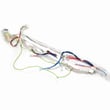
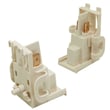
If the door never locks, never unlocks, or you see intermittent locking behavior even after canceling and draining, the door lock assembly can be the cause. For this model, the replacement is the washer door lock WP8183270.
Why it matters
The door lock is a safety feature; it prevents opening the door during a high-water or high-speed condition. Resetting by canceling and draining protects the washer, your laundry area, and the control system.
Last updated: February 2026
What is the life expectancy of a Whirlpool washing machine?
A Whirlpool washing machine typically lasts 10 to 14 years. For your Whirlpool WFW9470WL01 front-load washer, consistent care (using HE detergent, avoiding overloads, and keeping the door seal clean) is what most directly determines whether you land closer to 10 years or closer to 14.
Typical lifespan ranges (what we see most often)
- Front-load washers: about 10 to 12 years
- Top-load washers: about 11 to 14 years
- Heavy use (large family, daily loads): tends to shorten lifespan
- Light to moderate use: tends to extend lifespan
| Washer type | Typical life expectancy | Biggest life-shortener |
|---|---|---|
| Front-load (like WFW9470WL01) | 10 to 12 years | Overloading and seal neglect |
| Top-load | 11 to 14 years | Chronic off-balance loads |
Maintenance that extends the life of WFW9470WL01
We recommend these habits because they prevent the most common failure patterns (leaks, odor, vibration, and drain issues):
- Use HE (high efficiency) detergent and avoid over-dosing.
- Leave the door slightly open between loads to help the boot dry.
- Wipe the door seal after washing; check for coins, pins, and debris.
- Run periodic cleaning cycles as outlined in the owner's manual.
- Keep loads balanced; avoid washing a single heavy item by itself.
Parts that commonly affect “how long it lasts”
If the washer is otherwise in good shape, replacing a wear item can keep it running reliably longer:
- Leaks at the door opening: inspect the washer door boot WP8182119 and clamps.
- Door not latching or stopping mid-cycle: check the washer door lock WP8183270.
- Excessive shaking or banging: suspension components such as shocks can be involved.
Why it matters
Most “end of life” decisions are really about cost and downtime, not the calendar. A washer that is cleaned, not overloaded, and repaired early for leaks or vibration usually delivers the full expected lifespan with fewer major breakdowns.
Last updated: February 2026
What is the most common problem with Whirlpool washers?
The most common Whirlpool washer problems are water-related and cycle-completion issues: not filling (water inlet problem), not draining/spinning (drain problem), and leaks. On your Whirlpool WFW9470WL01, these often trace to kinked or clogged hoses, clogged inlet screens, excess suds, or a door that is not fully latched (see the owner's manual).
Most common issues (and what to check first)
- Won’t fill or fills slowly (often shown as F20): confirm both hot and cold faucets are fully open; check for kinked hoses and clogged inlet screens.
- Won’t drain or won’t spin (often shown as F21): check for a kinked, frozen, or clogged drain hose; confirm the drain hose is not routed higher than 96 in. (2.4 m) above the floor.
- Washer won’t start: make sure the door is closed firmly (it can look closed but not latched); press and hold START for 1 second after selecting a cycle.
- Excess suds (SUD routine): too much detergent can extend the cycle while the washer removes suds.
- Leaks at the door: a torn or mold-stiffened door seal can drip during tumble and spin.
Quick symptom-to-likely-cause guide
| Symptom | Most likely cause | What we recommend |
|---|---|---|
| F20, no/low water | Supply off, kinked hose, clogged inlet screens | Open faucets; clean screens; straighten hoses |
| F21, standing water | Drain hose kink/clog; drain height too high | Clear hose; verify height under 96 in. |
| Stops mid-cycle | Power interruption, breaker/fuse, excess suds | Check power; reduce detergent; rerun cycle |
| Door won’t lock/start | Door not fully shut; latch issue | Reclose door firmly; inspect latch area |
| Water at front of washer | Door boot worn or not sealing | Inspect and replace seal if damaged |
Parts that commonly solve these problems
If your checks point to a worn seal or a door-latch issue, these model-matched parts are common fixes:
- Washer door boot WP8182119 (door seal that prevents front leaks)
- Washer door lock WP8183270 (helps the washer start and stay locked during the cycle)
- Washer tub-to-pump hose WPW10467168 (can leak or restrict draining if damaged)
Why it matters
Fill, drain, and door-lock problems are the top reasons a front-load washer will not complete a cycle. Fixing the root cause prevents repeat error codes, reduces vibration from wet loads, and helps avoid water damage.
Last updated: February 2026
Can a clogged drain cause the F9E1 error?
Yes. On a Whirlpool WFW9470WL01 washer, a clogged drain path can trigger a long-drain fault (often shown as a drain problem code) because the washer cannot pump water out fast enough to safely continue the cycle. Use the steps in the owner's manual to check the drain hose and drain system.
What to check first (fast, common fixes)
- Cancel the cycle and unplug the washer.
- Check the drain hose for kinks, crushing, or freezing.
- Check for a clog in the standpipe or household drain where the washer empties.
- Make sure the drain hose is not installed too high (many Whirlpool front-load models specify a maximum of 96 in. above the floor).
- Run a Rinse/Drain and Spin after clearing the restriction.
Parts that commonly relate to long-drain problems
If the drain path is clear but the washer still drains slowly, these parts are often involved:
- Drain pump: pump 280187
- Tub-to-pump connection (can trap debris): washer tub-to-pump hose WPW10467168
- Hose clamp (helps prevent leaks after hose service): clamp WP285655
Quick symptom guide
| What you notice | Most likely cause | What we recommend |
|---|---|---|
| Water remains in tub, pump sounds strained | Partial clog in hose or pump area | Clear hose and check pump inlet |
| Drains very slowly, then stops with error | Restriction or excessive suds | Clear restriction; use HE detergent |
| Intermittent draining, works sometimes | Debris shifting in hose or weak pump | Inspect hose; consider pump replacement |
Why it matters
A long-drain condition stops the cycle to prevent overflow and protect the motor control system. Clearing the clog quickly also helps prevent odors and standing water issues.
Helpful reference
For code meaning and model-family troubleshooting steps, use our Whirlpool duet alpha front load washer error codes guide.
Last updated: February 2026