Owner’s manual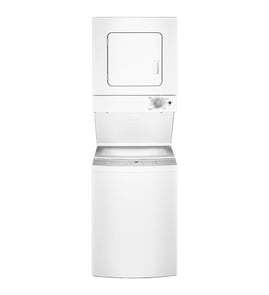



How many cubic feet is a Kenmore model 41799812990 washer?
The washer capacity (cubic feet) for Kenmore stacked laundry center model 41799812990 is listed in the product specifications section of the 41799812990 owner's manual. If you do not see capacity called out, use the tub measurement method below to estimate it accurately.
Check the specifications or features pages in the 41799812990 owner's manual. Capacity is often shown as “washer capacity” or “wash basket volume.”
If you need a working number for load planning, you can estimate tub volume and convert to cubic feet.
- Unplug the laundry center for safety
- Measure the inside tub diameter (inches)
- Measure the tub depth to the normal fill line (inches)
- Use the cylinder formula and convert cubic inches to cubic feet
- Round to the nearest tenth for a practical estimate
| Item | What to use |
|---|---|
| Tub volume (cubic inches) | π × (diameter/2)² × depth |
| Convert to cubic feet | cubic inches ÷ 1728 |
Most Kenmore 417-series stacked laundry center washers are in the small-to-mid capacity range, commonly about 2.5 to 3.5 cu. ft. That range helps with load sizing while you confirm the exact spec in the manual.
Washer capacity affects how much you can load without overfilling, which helps prevent out-of-balance spinning, poor rinsing, and extra wear on the drive system. The manual also notes not to load above the top row of holes in the wash tub for proper performance.
Last updated: February 2026
What are the most common issues with 41799812990?
The most common issues we see with the Kenmore 41799812990 stacked laundry center are no-start problems, poor drying or overheating, water not filling or draining, and excessive noise or vibration. Many of these symptoms trace to a small set of wear parts and airflow or drain restrictions; use the owner's manual for model-specific checks and safety steps.
- Dryer will not start: door switch circuit issue, failed start switch, wiring problem
- Dryer not heating or overheating: restricted venting, failed thermostat or high-limit thermostat
- Washer will not fill: inlet screens clogged, failed water valve, pressure switch issue
- Washer will not drain: clogged pump or drain hose, pump failure
- Loud squealing, rumbling, or thumping: worn drum bearing components, loose hardware, unbalanced loads
If your symptoms match, these model-compatible parts are frequent solutions:
| Symptom | Common part to check | What it does |
|---|---|---|
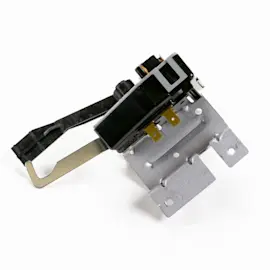
| Dryer won’t start | Start switch 134399700 | Sends power to the motor circuit when you press start |
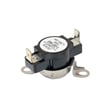
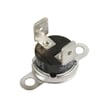
| Dryer runs hot or shuts off | Kelvinator dryer high-limit thermostat 3204267 | Opens if temperature gets too high to protect the dryer |
| Washer won’t drain | Pump 137221600 | Moves water out of the tub during drain/spin |
| Washer won’t fill | Water valve 134190200 | Controls hot and cold water flow into the washer |
| Dryer poor drying | Dryer lint filter 5304516871 | Captures lint; airflow problems start here |
- Confirm the dryer vent is clear and not crushed behind the unit.
- Clean the lint filter and the filter housing area.
- Verify the washer drain hose is not kinked and the standpipe is not clogged.
- Reduce load size and redistribute items to prevent out-of-balance spinning.
- Unplug the laundry center before inspecting wiring, switches, or thermostats.
On a stacked laundry center like the 41799812990, airflow and drainage issues can mimic failed parts. Fixing restrictions first prevents repeat overheating, long dry times, and pump strain, and it helps you choose the right repair the first time.
Last updated: March 2026
What is the average lifespan of 41799812990?
The average lifespan of the Kenmore 41799812990 stacked laundry center is 13 years with normal household use and routine maintenance. Keeping airflow clear in the dryer and preventing washer overloads are the two biggest factors that help this unit reach its full service life.
A laundry center combines a washer and dryer in one frame; wear items in either section can end the usable life if they are ignored.
- Load size and frequency: frequent heavy loads shorten motor, bearing, and suspension life
- Ventilation: restricted venting overheats the dryer and stresses thermostats
- Water quality: hard water increases valve and pump wear
- Leveling and vibration: out-of-level installs accelerate bearing and drum support wear
- Maintenance habits: cleaning the lint filter and checking hoses prevents common failures
Use these habits as your baseline; they prevent the most common breakdowns.
- Clean the dryer lint screen every load (replace a damaged one with dryer lint filter 5304516871)
- Verify strong airflow at the exterior vent; clean the vent path at least yearly
- Do not overload the washer; distribute bulky items to reduce spin stress
- Watch for slow draining or grinding; address pump issues early
- Review care and cleaning guidance in the owner's manual
These are typical patterns we see across Kenmore stacked laundry centers.
| Age of unit | What commonly shows up | Examples of parts involved |
|---|---|---|
| 0 to 5 years | Minor adjustments, door closure issues | door catch, strike, screws |
| 6 to 10 years | Drain and fill complaints, switch issues | pump, water valve, start switch |
| 11 to 15 years | Noise, heat control, bearing wear | drum bearing parts, thermostats, motors |
Knowing the expected 13-year lifespan helps you decide whether to maintain, repair, or replace. If your 41799812990 is near that age and showing multiple symptoms (noise plus heating or draining problems), targeted part replacement often restores reliable operation.
Last updated: March 2026