Owner’s manual
 Error Codes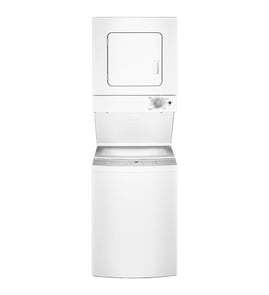


Can a Kenmore washer and dryer be stacked?
Yes, but it depends on the exact Kenmore washer and dryer models. Your Kenmore 41790802991 is a stacked laundry center already (washer and dryer built into one vertical unit), so it is not designed to be separated and re-stacked like a standard washer and dryer pair. For installation and safety requirements, follow the 41790802991 owner's manual.
What “stackable” means (and what you have)
A stackable laundry pair is typically two separate appliances (a washer and a dryer) that can be secured together with a stacking kit. A stacked laundry center like the Kenmore 41790802991 is a single integrated appliance.
Quick comparison
| Setup type | Separate washer + dryer? | Uses stacking kit? | Can you unstack later? |
|---|---|---|---|
| Stackable laundry pair | Yes | Yes | Usually yes |
| Stacked laundry center (41790802991) | No | No | No |
When stacking is OK for other Kenmore models
If you are stacking a separate Kenmore compact washer and dryer (not a laundry center), stacking is appropriate when:
- The washer and dryer are specifically labeled as stackable
- The correct stacking kit is used for that exact model pair
- The floor is solid and level to prevent vibration and shifting
- Venting and electrical connections meet local codes
- You keep airflow paths clear (do not block vents or pile items against the unit)
Why it matters
Stacking the wrong units, or stacking without the correct kit, can cause instability, excess vibration, and airflow restrictions. Your laundry center manual also emphasizes keeping ventilation unobstructed and following grounding and installation safety practices.
Last updated: February 2026
How can I tell how old my Kenmore washer is?
To tell how old your Kenmore stacked laundry center (model 41790802991) is, we use the serial number on the appliance data tag and decode it into a manufacture date. The exact date code format depends on who built the unit, so we match your serial format to the correct chart in the 41790802991 owner's manual.
Where to find the serial number
On Kenmore laundry centers, the data tag is typically in one of these spots:
- On the washer section: under the lid, around the lid opening, or on the rim of the tub opening
- On the cabinet: inside the front panel area or along a side panel edge
- On the back of the unit near the power cord entry
- Sometimes behind the control panel area (visible without disassembly)
Write down the full serial number exactly as shown (letters and numbers).
How the date code usually works
Most Kenmore serial numbers include a coded manufacture date. Common patterns you may see:
- Year + month embedded in the first few characters
- Week of year plus year code
- A letter code for month and a digit code for year
Quick decode guide (what to look for)
| What you see in the serial | What it often indicates | What to do next |
|---|---|---|
| Starts with letters then numbers | Manufacturer-specific format | Compare to the chart in the manual |
| Two digits that look like a month (01-12) | Month of manufacture | Confirm the year code nearby |
| A two-digit number 01-52 | Week of manufacture | Pair it with the year code |
Why it matters
Knowing the manufacture date helps us choose the right replacement parts (like a drain pump, lid lock, or control components) and avoid ordering look-alike parts that changed mid-production.
Helpful tip for parts matching
When you look up parts for model 41790802991, we recommend keeping these details together:
- Model number: 41790802991
- Serial number: full code from the data tag
- Symptom (for example: no spin, won’t drain, won’t start)
- Any displayed fault code (if your unit shows one)
If your washer is showing a code, use the Kenmore 417 laundry center -washer error codes reference to translate it before ordering parts.
Last updated: February 2026
What is UL code on Kenmore washer?
On the Kenmore 41790802991 stacked laundry center, UL is not an error code. UL refers to Underwriters Laboratories, a safety certification mark found on the rating label; it indicates the appliance (or a component) meets certain electrical safety standards.
Where you will see “UL” on the washer
On most Kenmore laundry centers, the UL mark appears on the model and serial tag or an electrical rating label.
- Open the washer lid and check the rim of the tub opening
- Check the back panel near the power cord entry
- Look inside the dryer door area for the combined unit rating label
- Note the full model number and serial number for parts matching
If you meant a code showing on the display
Many customers say “UL” when the washer is actually showing a different code or a status indicator. Use the troubleshooting and code list in the 41790802991 owner's manual and compare what you see on the control.
Quick comparison
| What you see | What it usually means | What to do |
|---|---|---|
| “UL” printed on a label | Safety certification mark | No action needed |
| A code flashing during a cycle | Operating or fault code | Look up the exact code and follow steps |
| Heavy vibration or thumping | Out-of-balance load or leveling issue | Redistribute load, level the unit |
Why it matters
Knowing whether “UL” is a label mark or a displayed code prevents unnecessary repairs. If the washer is shaking, not spinning, or not draining, the fix is usually load balance, leveling, or a drain issue, not anything related to UL certification.
When a repair part is involved
If the washer will not drain or spin and you confirm a drain problem, a common repair is the drain pump. For this model, see the pump 137221600 if diagnostics point to a failed pump.
For a full list of Kenmore 417-series washer codes and what they mean, use Kenmore 417 laundry center -washer error codes.
Last updated: February 2026
What is the average lifespan of a Kenmore washer?
A Kenmore washer typically lasts 10 to 15 years with normal household use. For the Kenmore stacked laundry center model 41790802991, consistent maintenance (proper loading, good water supply, and prompt fixes for leaks or noise) helps you reach the upper end of that range; see the 41790802991 owner's manual for model-specific care and operating guidance.
Typical lifespan and what affects it
Most washers land in the 10 to 15 year window; the biggest difference is how hard the machine works and how well it is maintained.
- Load size and balance: overloading and out-of-balance loads increase wear on bearings and suspension
- Water quality and pressure: low pressure can affect fill performance; the manual notes typical minimum pressure guidance
- Ventilation and heat (for the dryer side): poor airflow can raise dryer temperatures and stress thermostats
- Routine cleaning: wiping residue and keeping the tub clean reduces odors and buildup
- Fast response to symptoms: addressing a new noise, leak, or no-spin issue early prevents secondary damage
Maintenance habits that extend life (41790802991)
The manual’s operating and washing procedure guidance maps well to real-world longevity.
| Habit | What to do | Why it matters |
|---|---|---|
| Don’t overload | Keep loads to a reasonable size for the tub | Reduces strain on the drive system and spin components |
| Keep loads balanced | Mix items, redistribute if the washer thumps | Helps the washer reach full spin and removes more water |
| Use correct water settings | Match water level and temperature to the load | Improves cleaning and reduces residue |
| Protect the lid lock | Close the lid fully; do not force it open during spin | Prevents lock damage and no-spin complaints |
Signs your washer is nearing end-of-life
When these become frequent, repairs can add up quickly.
- Loud rumbling or grinding during spin (often bearing-related)
- Repeated no-spin or slow-drain symptoms (pump or drain path issues)
- Persistent leaks or recurring electrical issues
- Heavy vibration even with balanced loads
Common repairs that can restore performance
If the washer is not draining or leaving clothes too wet, the drain pump is a common fix on laundry centers like this.
- Consider the pump 137221600 when you have confirmed a pump-related drain failure
Why it matters
A washer that cannot reach full spin leaves clothes wetter, increases dry time, and adds heat and run-time stress to the laundry center overall. Keeping the washer side running efficiently helps the entire 41790802991 unit last longer.
Last updated: February 2026
What is the capacity of the Kenmore 41790802991?
The Kenmore 41790802991 stacked laundry center washer capacity is 3.9 cu. ft. This is the usable washer tub volume for normal loads; we recommend using the load-size guidance in the 41790802991 owner's manual to avoid overfilling and poor cleaning.
How to verify capacity on the appliance
You can confirm the rated capacity and other specs using the model documentation and the unit’s ID label.
- Check the specifications or features section in the manual
- Confirm the model number matches exactly: 41790802991
- Locate the model and serial label (commonly inside the dryer door opening on stacked laundry centers)
- Use capacity as a guide, then load by fabric type and soil level
What 3.9 cu. ft. means for everyday loads
A 3.9 cu. ft. washer handles medium to large everyday loads when items can tumble and circulate freely.
| Load type | Typical fit in a 3.9 cu. ft. washer | Best practice |
|---|---|---|
| Bath towels | A full family towel load | Load loosely; do not pack tight |
| Jeans/heavy items | Medium load | Mix sizes, balance the tub |
| Bedding | Most queen sheet sets, some comforters | Use bulky cycle if available; keep room to move |
Why it matters
Loading to the correct capacity improves wash action, reduces out-of-balance spinning, and helps protect components such as the drain system (including the pump 137221600) and drive parts.
Last updated: February 2026