 Installation guide
 Owner’s manual
 Error Codes




Can I still use my appliance with an E22 error?
On a Bosch dishwasher like model SHE3ARF5UC, an E22 error usually points to a drainage or filter-area restriction; we recommend stopping use until you clear the cause so the dishwasher can drain correctly and clean effectively. Use the SHE3ARF5UC user manual for the exact reset and filter-cleaning steps for your unit.
What to do first (safe, quick checks)
- Turn the dishwasher off, then cancel and drain (if your model allows) and wait a few minutes.
- Remove and clean the filter area (food debris, labels, glass fragments).
- Check the sump area for standing water and obstructions.
- Inspect the drain hose for kinks or a clogged high loop/air gap.
- Run a short rinse cycle after cleaning to confirm the error clears.
When it is OK to run a cycle again
Run the dishwasher again only after the filter area is clean and the unit drains normally. If E22 returns quickly, focus on the drain path and drain components.
Common causes and what they affect
| Likely cause | What you may notice | What to check |
|---|---|---|
| Filter or sump blockage | Water left in bottom, poor cleaning | Filter screen, sump inlet |
| Drain hose restriction | Slow drain, gurgling | Hose routing, air gap/high loop |
| Drain pump issue | Hums but won’t drain | Pump impeller area, wiring |
| Sensor reading affected by soil | Error returns after cleaning | Filter cleanliness, water clarity |
Parts that commonly relate to E22 symptoms
If cleaning and hose checks do not fix it, these parts are often involved in drain problems:
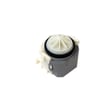
- Dishwasher drain pump 00631200 (moves water out of the tub)
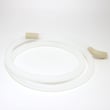
- Dishwasher drain hose (routing and clogs matter; match your exact hose by diagram)
Why it matters
Continuing to run with an E22 condition can leave dirty water in the sump, reduce wash performance, and increase the chance of leaks or odors because the dishwasher is not evacuating water as designed.
For code meaning and symptom patterns, we also use the Bosch dishwasher error codes reference.
Last updated: January 2026
What is the most common problem with a Bosch dishwasher?
The most common Bosch dishwasher issue we see is a drain problem: the dishwasher will not drain fully, leaves water in the tub, or stops mid-cycle because water cannot pump out. On the Bosch SHE3ARF5UC, this is usually tied to a clogged filter area, a kinked/blocked drain hose, or a failing drain pump.
Quick checks that fix most drain complaints
- Turn off power at the breaker before inspecting anything under the unit.
- Remove and clean the filter area in the bottom of the tub; clear food, glass, labels, and debris.
- Check the sink drain/disposer connection; make sure the inlet is not blocked.
- Inspect the drain hose for kinks, pinches, or a sag that traps water.
- Confirm the drain hose routing has a proper high loop or air gap (per local code).
Symptoms and the most likely causes
| Symptom | Most likely cause | What to do first |
|---|---|---|
| Standing water after cycle | Clogged filter or drain path | Clean filter and sump area |
| Hums but will not drain | Drain pump jammed or failing | Check for debris; consider replacing pump |
| Intermittent draining | Partial blockage in hose or disposer port | Inspect hose and disposer inlet |
| Stops and beeps mid-cycle | Drain restriction or sensor detecting poor draining | Clear drain path; then run a rinse cycle |
Parts that commonly solve a true “won’t drain” failure
If cleaning and hose checks do not restore draining, these model-matched parts are common fixes:
- Dishwasher drain pump 00631200: the pump that pushes water out to the household drain.
- Dishwasher drain hose 00668108: the hose that carries drain water to the sink/disposer connection.
Why it matters
A restricted drain can leave dirty water in the tub, redeposit soil on dishes, create odors, and trigger Bosch error conditions that stop the cycle to prevent overflow or poor wash results. For model-specific drain routing and access steps, use the SHE3ARF5UC installation guide and the SHE3ARF5UC manual.
Last updated: January 2026
What is the average lifespan of SHE3ARF5UC?
The average lifespan of a Bosch dishwasher like model SHE3ARF5UC is about 10 years. You can often extend service life with routine cleaning, correct detergent use, and quick repairs when symptoms like leaking, not draining, or not starting show up.
Typical lifespan and what affects it
Most dishwashers land in a similar range, but these factors make the biggest difference:
- Water hardness and mineral buildup (affects heater and circulation)
- How often you run it (daily use wears pumps and seals faster)
- Filter and spray arm cleanliness (impacts wash performance)
- Proper installation and leveling (reduces leaks and door issues)
- Fixing small problems early (prevents motor, control, and wiring damage)
What “end of life” usually looks like
If your SHE3ARF5UC is nearing the 10-year mark, these are common repair triggers:
- Won’t drain or leaves standing water (often drain path, hose, or pump)
- Poor cleaning or weak spray (often circulation issues or clogged sump)
- Leaks at the door or bottom edge (seal, alignment, or overfill issues)
- Won’t start or stops mid-cycle (door latch, control, or wiring)
For model-specific maintenance and operating guidance, follow the schedule in the SHE3ARF5UC owner’s manual.
Quick maintenance checklist (helps it last longer)
- Clean the filter area regularly and remove debris from the sump
- Run hot water at the sink before starting a cycle (improves wash temperature)
- Use rinse aid and keep the cap sealing properly
- Inspect the door seal for tears, flattening, or residue
- Check the drain hose routing for kinks and a proper high loop
Repair vs. replace: a simple rule of thumb
| If your dishwasher is… | Usually makes sense to… |
|---|---|
| Under 7 years old | Repair most issues (pumps, seals, valves) |
| Around 8 to 12 years old | Repair if the fix is straightforward and no major leaks |
| Over 12 years old | Replace if multiple major parts are failing |
Why it matters
Knowing the typical lifespan helps you plan: if your SHE3ARF5UC is near 10 years old, investing in preventive care and addressing early symptoms can avoid bigger failures like pump damage or persistent leaks.
Last updated: March 2026





