Owner’s manual
 Error Codes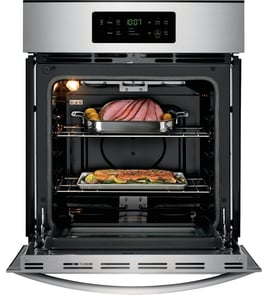



Is JTP15WA1WW getting discontinued?
GE JTP15WA1WW is an older wall oven model, and it is typically treated as discontinued once it is no longer being manufactured. What matters for repairs is parts support; you can still keep this oven running by matching parts to your exact model using the JTP15WA1WW owner's manual.
A discontinued model usually means:
- The oven is no longer produced as a new unit
- Some cosmetic parts may become harder to source over time
- Core service parts (heating, sensing, airflow) often remain available longer
- Repairs are still practical when key parts are in stock
If you are asking because performance is changing, these are the most common repair paths for a GE electric wall oven:
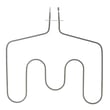
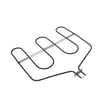
- No bake heat or weak baking: replace the GE range bake element WB44T10018
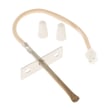
- Temperature swings or inaccurate temps: test/replace the GE wall oven temperature sensor WB23X5340
- Overheating cabinet area or noisy cooling: inspect the wall oven cooling fan assembly WB26K5061
- Door not sealing well: inspect the oven door gasket WB04T10008
For JTP15 and JKP15 series, the model and serial tag is typically located:
- On the front of the lower oven
- Behind the oven door
| What you are checking | Why it matters | Where to use it |
|---|---|---|
| Model number (JTP15WA1WW) | Ensures correct part fit | Parts lookup and diagrams |
| Serial number | Helps identify production run changes | Service and part matching |
Even if JTP15WA1WW is discontinued, you can still repair heating, temperature control, and door sealing issues cost-effectively when the correct replacement parts are available and matched to the model.
Last updated: February 2026
What are the most common issues with JTP15WA1WW?
The most common problems we see with the GE JTP15WA1WW wall oven are heating issues (won’t heat, uneven baking, or slow preheat), temperature accuracy problems, and door or cooling-fan related symptoms. These typically trace back to the bake/broil elements, temperature sensor, door parts, or airflow components.
- Oven won’t heat or heats weakly: failed bake element or a control/thermal issue
- Top broil not working: failed broil element or a connection problem
- Food bakes unevenly or temperature seems off: drifting temperature sensor or calibration needed
- Fan runs loud, runs too long, or oven overheats around the cabinet: cooling fan or fan housing issue
- Door won’t close tightly, heat leaks, or self-clean problems: worn hinge or door gasket
If your symptom matches, these model-compatible parts are frequent solutions:
| Symptom | Common part to check | Example part on this model page |
|---|---|---|
| No/low bake heat | Bake element | GE range bake element WB44T10018 |
| Temperature inaccurate | Oven temperature sensor | GE wall oven temperature sensor WB23X5340 |
| No broil heat | Broil element | Range broil element WB44K5017 |
| Overheating or noisy airflow | Cooling fan assembly | Wall oven cooling fan assembly WB26K5061 |
| Door not sealing | Oven door gasket | Oven door gasket WB04T10008 |
- Confirm the oven is getting full power at the breaker (many wall ovens use a 240V circuit).
- Try Bake and Broil separately; one working and the other not often points to a single element.
- Look for visible damage: blisters, cracks, or burn spots on elements.
- If temps are consistently off, test with an oven thermometer and review calibration steps in the owner's manual.
- Inspect the door seal and hinges for gaps, sagging, or torn gasket material.
Heating and temperature-control problems affect cooking results and can cause longer run times, while door-seal and cooling-fan issues can lead to overheating around the oven frame and inconsistent performance.
Last updated: March 2026
What is the average lifespan of JTP15WA1WW?
A GE electric wall oven like model JTP15WA1WW typically lasts 15 years with normal household use and basic maintenance. Keeping the door seal tight, the cooling airflow clear, and the oven temperature accurate helps you reach that lifespan.
- Heat stress from frequent high-temp baking or self-clean cycles
- Power quality (surges can damage controls and wiring)
- Door seal condition (heat leaks make components run hotter)
- Cooling performance (a weak fan can overheat internal parts)
- Sensor accuracy (temperature swings increase wear)
- Wipe spills promptly to reduce smoke and overheating.
- Avoid running self-clean back-to-back; let the oven cool fully between cycles.
- Confirm the door closes evenly and the gasket is not torn or flattened.
- If baking temps seem off, test with an oven thermometer and recalibrate if your model allows it (steps are in the owner's manual).
- Keep vents unobstructed so hot air can exit the cabinet area.
| Part | What you’ll notice when it’s failing | Example part for this model |
|---|---|---|
| Bake element | Slow preheat, uneven baking, no heat in Bake | GE range bake element WB44T10018 |
| Temperature sensor | Overheats, underheats, error codes, wide temp swings | GE wall oven temperature sensor WB23X5340 |
| Cooling fan | Loud fan, fan not running, oven shuts down from overheating | Wall oven cooling fan assembly WB26K5061 |
Knowing the typical 15-year lifespan helps you decide whether to repair or replace. If your JTP15WA1WW is near that age and you are seeing heating or temperature issues, replacing a common wear part (like the bake element or temperature sensor) often restores normal performance.
Last updated: March 2026