Owner’s manual
 Error Codes



What is the common problem with Samsung fridge ice maker?
The most common Samsung refrigerator ice maker problems on model RF23J9011SR are ice buildup in the ice room, little or no ice production, and dispensing issues. These usually trace back to airflow and temperature problems, restricted water supply, or an ice maker that needs a reset or service check (see the RF23J9011SR owner's manual).
- Ice maker stops making ice: freezer temperature too warm, ice room fan issue, or water supply restriction
- Frost or clumping in the ice bin: warm air leak, door not sealing, or ice room airflow problem
- Small, hollow, or slow ice: low water pressure, clogged filter, or inlet valve not opening fully
- No water at the dispenser and no ice: supply shutoff closed, kinked line, or valve problem
- Ice won’t dispense: auger motor or ice clump blockage
- Confirm the ice maker is turned ON and not in a “lock” or “off” mode.
- Make sure the freezer is set cold enough; most Samsung units perform best around 0°F.
- Dump old ice and check for frozen clumps blocking the auger.
- Verify the household shutoff valve is fully open and the water line is not kinked.
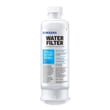
- Replace the water filter on schedule and flush several cups of water after replacement.
| Problem you see | Common part involved | What it affects |
|---|---|---|
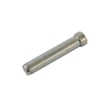
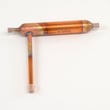
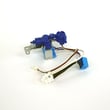
| No ice or slow fill | Refrigerator water inlet valve DA62-04027A | Water flow into the ice maker |
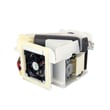
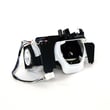
| Frost buildup, warm ice room | Refrigerator ice room fan motor assembly DA31-00070E | Air circulation in the ice room |
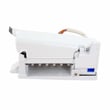
| Ice maker won’t cycle or harvest | Refrigerator ice maker service kit DA82-02642A | Ice maker mechanism and updates |
Ice makers are sensitive to temperature, airflow, and water pressure. A small change, like a slightly warm freezer setting or restricted water flow, can quickly lead to no-ice complaints or ice clumping that jams the dispenser.
- Why your Samsung fridge stopped making ice and how to fix it
- If your display shows a fault, use a Samsung refrigerator error code reference such as Samsung rb series bottom freezer refrigerator error codes to narrow the next step.
Last updated: February 2026
What is the difference between force defrost FD and RD?
On the Samsung RF23J9011SR refrigerator, RD (refrigerator defrost) focuses on defrosting the fresh food (refrigerator) evaporator, while FD (forced or full defrost) runs a broader defrost cycle to clear heavier ice buildup that can affect multiple cooling and ice-making areas. See the exact button sequence and display behavior in the RF23J9011SR owner's manual.
Use the mode that matches where the frost problem is happening.
- Use RD when the fresh food section is warming up, airflow is weak from the fridge vents, or you hear fan noise caused by light frost.
- Use FD when you suspect heavier icing that can involve the freezer evaporator area and ice room components (common when ice production slows and frost keeps returning).
- If you are unsure, start with RD; if symptoms return quickly, step up to FD.
These modes are service-style defrost options; they are meant to melt ice so airflow can return.
| Mode | What it’s meant to defrost | Best for | What you may notice after |
|---|---|---|---|
| RD | Fresh food evaporator area | Fridge section warming, mild frost | Temps stabilize after several hours |
| FD | Multiple defrost loads (more comprehensive) | Heavy icing, recurring ice maker or freezer airflow issues | More water to the drain pan, longer recovery |
These steps prevent repeat icing after the defrost finishes.
- Make sure doors close fully and gaskets seal; warm air leaks create frost fast.
- Confirm vents are not blocked by food packages.
- If the fridge is warm or shows erratic temps, a failed sensor can mismanage defrost; consider the refrigerator temperature sensor DA32-10104N.
- If you hear a fan hitting ice or airflow is weak, inspect the evaporator cover area for frost buildup.
- After any defrost, allow several hours for temperatures to pull back down before judging results.
Choosing RD vs. FD helps you defrost only what’s needed. RD is a targeted fix for fresh food airflow problems; FD is the better choice when icing is widespread and keeps disrupting cooling or ice production.
Last updated: February 2026
What size is RF23J9011SR?
The Samsung RF23J9011SR is a 36-inch-wide, counter-depth French door refrigerator with about 22.5 cu. ft. of total capacity. For the exact exterior dimensions (height, depth with handles, and clearance needs), we follow the specs listed in the RF23J9011SR owner's manual.
- Width class: 36-inch
- Style: counter-depth French door (bottom-mount)
- Capacity: about 22.5 cu. ft.
- Fit planning: allow space for door swing and ventilation
- Best source for exact measurements: the model-specific manual
Counter-depth Samsung refrigerators in this class commonly fall into these ranges; use them for planning, then confirm the exact numbers in the manual:
| Measurement | Typical range (counter-depth 36-inch class) | Why you check it |
|---|---|---|
| Overall width | ~35 3/4 in. to 36 in. | Cabinet opening fit |
| Height | ~68 in. to 71 in. | Overhead cabinet clearance |
| Depth (with handles) | often ~30 in. to 33 in. | Walkway and door swing |
| Depth (without handles) | often ~28 in. to 31 in. | Flush look with counters |
Getting the “size” right is not just width and capacity. For RF23J9011SR, the exact height and depth (with handles and doors) determines whether the refrigerator clears surrounding cabinets, opens fully, and vents properly so the compressor and condenser fan can cool efficiently.
- Measure the cabinet opening width at the front and back
- Measure height to the lowest cabinet/soffit
- Measure depth to the front edge of counters (note baseboards)
- Plan for door and drawer swing clearance
- Confirm water line access if you use ice and water
Last updated: February 2026