Owner’s manual
 Error Codes


How do I know if my Kenmore refrigerator compressor is bad?
If your Kenmore Elite refrigerator model 79571053011 is not cooling and you hear abnormal clicking, buzzing, or repeated start attempts, the compressor or its start components may be failing. First rule out normal “new refrigerator” operating sounds and simple power or control settings in the 79571053011 owner's manual.
Quick checks before blaming the compressor
Many “bad compressor” symptoms are caused by airflow, controls, or power issues.
- Confirm the refrigerator is not in Demo (Demonstration) Mode (cooling disabled).
- Verify the outlet has power; reset a tripped breaker if needed.
- Listen for the condenser fan; you may hear air moving over the condenser.
- Check for heavy dust on the condenser area; dirty coils can reduce cooling.
- Make sure doors seal and close fully; warm air leaks can mimic cooling failure.
- Allow time after a power interruption; cooling can take time to stabilize.
Normal sounds vs. problem sounds
Your manual explains that modern, high-efficiency compressors often run longer and can sound different than older units.
| What you notice | Often normal | More likely a problem |
|---|---|---|
| Longer run times | Yes, especially in warm rooms or after loading groceries | If it never cycles off and temps keep rising |
| Pulsating or high-pitched sound while running | Yes | Loud grinding, repeated hard clicking, or frequent restart attempts |
| Gurgling/sizzling during defrost | Yes | Burning smell, repeated breaker trips |
Signs the compressor system needs service
These point to a sealed-system or compressor-related issue (or the compressor control/start circuit).
- Refrigerator and freezer temperatures stay warm even after 24 hours
- Compressor is extremely hot and cooling performance is poor
- Repeated clicking as the unit tries to start, then stops
- Breaker trips when the compressor tries to run
If you suspect a compressor control issue, the model uses an electronic compressor control board; see refrigerator compressor control board EBR65640204.
Why it matters
Replacing a compressor is a major repair; confirming airflow, settings, and normal operating sounds first prevents unnecessary parts replacement and gets cooling restored faster.
Last updated: February 2026
How many cubic feet is my Kenmore refrigerator model 79571053011?
The Kenmore Elite refrigerator model 79571053011 is part of the 795.7105* model family shown in the 79571053011 owner's manual. That manual family covers multiple configurations, so the most reliable way to confirm your exact cubic-foot capacity is to match your full model tag and the specifications section in the manual.
How to find the exact capacity for model 79571053011
We use the same two checks our technicians use so you get the right number the first time:
- Locate the model/serial label inside the fresh food compartment (typically on the right-hand side wall).
- Confirm the model reads 79571053011 (not just 795.7105*).
- Open the specifications or “parts and features” section in the 79571053011 owner's manual.
- Look for “capacity” listed as total, refrigerator, and freezer cubic feet.
- If the manual lists multiple versions, match by feature set (ice room, drawer layout, dispenser style).
Typical capacity range for this Kenmore 795 bottom-freezer style
Most Kenmore 795-series bottom-mount refrigerators (LG-built platform) commonly fall into a mid-size capacity range.
| Refrigerator type | Typical total capacity range | What changes it most |
|---|---|---|
| Bottom-mount (bottom freezer) | 20 to 22 cu. ft. | Cabinet width, ice room/dispenser, drawer layout |
Why it matters
Capacity affects how you plan food storage and also helps when comparing replacement parts and accessories (for example, matching the correct water filter style and change interval). If you are troubleshooting cooling or airflow, knowing the compartment sizes also helps interpret temperature recovery times.
Related parts customers often replace
These parts do not determine cubic feet, but they are commonly serviced on this model family:
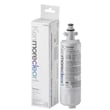
- Genuine Kenmore refrigerator water filter 9690 AGF80300801 (water taste, slow dispensing)
- Refrigerator door switch 6600JB1010A (lights, fan behavior when door opens)
- Refrigerator door gasket, right ADX73550624 (warm spots, moisture, frost)
Last updated: February 2026
What are the common problems with Kenmore Elite refrigerators?
Common problems on the Kenmore Elite 79571053011 bottom-mount refrigerator include warm temperatures from dirty condenser coils or airflow restrictions, ice maker and dispenser issues, water leaks from the water system, and door sealing problems that cause frost or temperature swings. Our 79571053011 owner's manual also notes that longer run times can be normal, especially with frequent door openings.
Most common symptoms and what they usually point to
- Not cooling well or uneven temps: dirty condenser coils, blocked vents, evaporator fan issues, or control/defrost problems
- Ice maker not making ice: ice bin not level/full sensing issues, ice compartment door not sealing, water supply problems
- Water dispenser slow or tastes off: clogged filter, restricted tubing, or filter head issues
- Water leaking or puddles: drain tube restriction, loose water line connections, or inlet valve seepage
- Frost buildup or moisture: door gasket not sealing, doors out of alignment, frequent openings
Quick checks we recommend first (fast, no parts)
- Confirm the controls are set correctly and give the unit 24 hours after any adjustment.
- Clean the condenser coils (dust buildup commonly causes poor cooling and long run times).
- Make sure air vents inside the refrigerator and freezer are not blocked by food packages.
- Check that doors close fully and the gaskets make full contact all the way around.
- For ice issues, level the ice in the bin and keep the ice compartment door tightly closed (the manual warns poor closure can stop ice production and freeze food in the fresh-food section).
Common part fixes for this model (when checks do not solve it)
| Problem area | Typical fix | Example model-matched part |
|---|---|---|
| Water tastes bad or flow is weak | Replace water filter | Genuine Kenmore refrigerator water filter 9690 AGF80300801 |
| No water to ice maker/dispenser | Diagnose inlet valve and supply | Lg refrigerator water inlet valve AJU72992601 |
| Door not sealing, moisture/frost | Replace gasket and align doors | Refrigerator door gasket, right ADX73550624 |
| Ice production failures | Service/replace ice maker | Refrigerator ice maker assembly AEQ73110205 |
Why it matters
Cooling, ice, and leak complaints often share the same root causes: restricted airflow (dirty coils, blocked vents) or water flow restrictions (filter, valve, tubing). Fixing the underlying cause protects food temperatures, reduces compressor run time, and prevents repeat leaks.
Last updated: February 2026
What is the average lifespan of a Kenmore Elite refrigerator?
A Kenmore Elite refrigerator typically lasts 10 to 15 years. For the Kenmore Elite 79571053011 bottom-mount refrigerator, regular care like cleaning condenser coils, keeping door gaskets sealing, and maintaining the water and ice system helps you reach (and often exceed) that range; see the 79571053011 owner's manual for model-specific care steps.
Typical lifespan and what affects it
Most refrigerators in this class land in the same general window, but these factors move the needle:
- Condenser coil cleanliness (dust buildup makes the compressor run longer)
- Door gasket condition (air leaks force longer run times)
- Room temperature and ventilation around the cabinet
- How often doors are opened and how full the compartments are
- Water and ice system upkeep (filter changes, avoiding frozen lines)
Maintenance checklist that extends life
We recommend these routine actions for Kenmore Elite bottom-mount models:
- Vacuum and brush the condenser coil area on a regular schedule
- Inspect and clean door seals; replace if torn or warped
- Keep the refrigerator level so doors close fully
- Replace the water filter on schedule; a restricted filter can reduce flow and strain the system
- Address unusual noises early (rattling can indicate leveling or fan issues)
Common “wear” items vs. major components
| Category | Examples | What it means for lifespan |
|---|---|---|
| Routine maintenance | Coil cleaning, leveling, filter changes | Helps the sealed system run cooler and longer |
| Wear parts | Door gaskets, door switch, ice maker components | Replacing these can keep the refrigerator reliable |
| Major components | Compressor, control boards | Failures here often drive repair vs. replace decisions |
Why it matters
A refrigerator that runs excessively (often caused by dirty coils or a poor door seal) uses more energy and puts extra hours on the compressor. The troubleshooting guidance in the 79571053011 owner's manual also notes that modern refrigerators may run longer than older units, especially with frequent door openings or warm room conditions.
Last updated: February 2026
Where to find model number on Kenmore Elite fridge?
On Kenmore Elite model 79571053011, the model and serial number are printed on an identification label inside the fresh food (refrigerator) compartment, on the right-hand side wall. For the exact label location and what to record, use the 79571053011 owner's manual.
Quick ways to spot the ID label
We see the label most often in one of these places on bottom-mount refrigerators like this Kenmore Elite:
- Right interior wall of the refrigerator compartment (most common)
- Near the crisper drawer area on the side wall
- Behind items on the upper right liner wall (move food packages aside)
- Sometimes near the door opening edge on the right side wall
What you should write down
The ID label typically includes both numbers you will need for parts and service.
- Model number (example format: 795.7105*)
- Serial number
- Date of purchase (from your receipt, not the label)
Why it matters
We use the model number to match the correct Kenmore refrigerator parts (like a door gasket, ice maker assembly, or water filter) because similar-looking refrigerators can use different components.
Model vs. serial number (what each one does)
| Item | What it identifies | When we use it |
|---|---|---|
| Model number | The exact refrigerator design and parts list | Ordering parts, looking up diagrams, checking compatibility |
| Serial number | Your specific unit’s production run | Service history, manufacturing details |
Last updated: February 2026
Why is my Kenmore Elite refrigerator leaking water out of the bottom?
Water leaking from the bottom of your Kenmore Elite refrigerator model 79571053011 is usually caused by defrost water not draining into the drain pan (most often a clogged or frozen defrost drain) or by a leak in the water supply system for the dispenser or ice maker. Use the troubleshooting and care steps in the 79571053011 owner's manual to pinpoint the source.
Quick checks that find the leak fast
- Look for ice or water under the crisper drawers: this points to a clogged defrost drain.
- Check the floor under the back of the refrigerator: water here often points to the water inlet valve or tubing connections.
- Inspect the dispenser area and door hinge area for drips from the water line.
- Check the ice maker fill area for splashing or a slow seep.
- Confirm the refrigerator is level; a tilt can make water miss the drain pan.
Most common causes (and what to do)
| Likely cause | Typical signs | What we recommend |
|---|---|---|
| Clogged/frozen defrost drain | Water pooling inside, then leaking out the bottom | Clear the drain path; flush with warm water and remove debris |
| Leaking water line or fitting | Drips near the back or under the unit | Tighten fittings; re-seat tubing; replace damaged line |
| Cracked or loose internal tubing | Leaks when dispensing water or during ice maker fill | Inspect and replace tubing if split (a common fix is replacing refrigerator water tubing MJU62070602) |
| Water valve seep/leak | Slow puddle even when not dispensing | Inspect valve and connections; replace if leaking |
Step-by-step: isolate whether it is defrost water or supply water
- Dry everything under and behind the refrigerator.
- Turn the ice maker off and shut off the water supply for 12 to 24 hours (the manual recommends shutting off water for vacation and service situations).
- If leaking stops, the issue is in the water supply system (tubing, connections, valve, ice maker fill).
- If leaking continues, focus on the defrost drain/drain pan path.
Why it matters
A defrost drain problem can lead to recurring puddles and ice buildup, while a water line leak can worsen quickly under household water pressure. The manual also notes to check for leaks at water line connections after turning the water on, which is a key step after any adjustment.
Related DIY help: how to get rid of refrigerator puddles
Last updated: February 2026
Why is my refrigerator not getting cold at the bottom?
If your Kenmore Elite refrigerator model 79571053011 is warm at the bottom, the most common causes are blocked airflow, temperature controls that need adjustment, or doors that are not sealing and closing fully. Start by clearing vents and confirming the controls are set correctly, then allow 24 hours for temperatures to stabilize.
Quick checks that fix most “warm bottom” complaints
- Make sure food packages are not blocking interior air vents; blocked vents prevent cold air from circulating.
- Confirm the refrigerator is set near 37°F and the freezer near 0°F (recommended presets); wait 24 hours after any change.
- Avoid overpacking the lower shelves and crisper area; tight packing traps warm air.
- Minimize door openings and check that doors close completely every time.
- Verify the room temperature is within 55°F to 110°F; extreme ambient temps reduce cooling performance.
Control settings: what to adjust first
The refrigerator control acts like the main thermostat, and the freezer control adjusts cold airflow into the refrigerator section. We adjust in this order:
| Symptom | First adjustment | Then what | Timing |
|---|---|---|---|
| Refrigerator bottom warm | Lower refrigerator temp 1 step | Recheck temps | Wait 24 hours |
| Still warm after 24 hours | Adjust freezer temp 1 step colder | Recheck airflow and loading | Wait 24 hours |
For the exact control ranges and button behavior, follow the 79571053011 owner's manual.
Door sealing and alignment (often overlooked)
If the doors are not closing completely, warm air enters and the bottom section can be the first place you notice weak cooling.
- Look for gaps in the gasket along the lower corners.
- Clean the gasket and the cabinet sealing surface.
- If the door looks slightly out of level, adjust the leveling legs so the front is slightly higher than the rear (helps the doors self-close).
If the gasket is torn or won’t seal, replacement is a permanent fix; for this model, see the refrigerator door gasket, right ADX73550624 (or match left/freezer gaskets by location).
Why it matters
Poor airflow and warm-air leaks force longer compressor run times, raise energy use, and can push food in the lower refrigerator zone above safe storage temperatures.
Last updated: February 2026