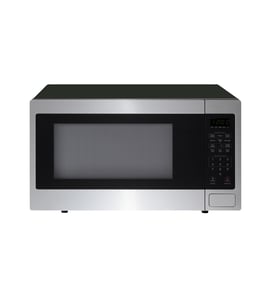


How much space do you need around a Microwave Oven?
For a Panasonic NN-SN797S countertop microwave, we recommend leaving open space on the sides and back so the vents can move air and the cabinet does not overheat. Most countertop microwaves do best with about 2 to 6 inches of clearance on the sides and rear.
Recommended clearances (typical countertop setup)
Use these as practical targets unless your unit’s labeling specifies something different.
- Sides: 2 to 6 inches
- Rear: 2 to 6 inches
- Top: enough room for heat to dissipate and for comfortable access to controls
- Front: keep the area in front clear so the door opens fully and airflow is not blocked
- Surface: place on a stable, level countertop (not on a soft surface that can block airflow)
Quick placement checklist
- Keep the microwave’s air intake and exhaust vents unobstructed.
- Do not push the cabinet tight against a wall or backsplash.
- Avoid placing it next to heat sources (range, toaster oven) that add extra heat load.
- Do not store items on top that could trap heat.
- If the cord feels warm or the cabinet gets unusually hot, increase clearance and recheck placement.
Clearance guide (at-a-glance)
| Area around microwave | Typical minimum | Better target |
|---|---|---|
| Left side | 2 in. | 4 to 6 in. |
| Right side | 2 in. | 4 to 6 in. |
| Rear | 2 in. | 4 to 6 in. |
| Front | Keep clear | Fully open door |
Why it matters
Proper clearance helps prevent overheating, nuisance shutoffs, and premature wear on internal components like the cooling fan and thermal protection devices.
For additional safe-use tips that also help prevent overheating and damage, follow never do these things with a microwave.
Last updated: February 2026
Which brand of microwave is the most reliable?
Panasonic is one of the most reliable microwave brands overall, and it is a strong fit if you are shopping for a countertop unit like the Panasonic NN-SN797S. For reliability, we focus on simple controls, solid door-latch performance, and good ventilation, not just extra features.
Our reliability short list (what we see most often)
- Panasonic: Consistently strong countertop reliability; inverter-style designs are common in the lineup.
- LG: Strong overall; many models are easy to keep clean and have good parts availability.
- GE (and premium lines): Often dependable; good option when you want a wide service network.
- Whirlpool: Generally reliable across price points; straightforward designs tend to last.
- Samsung: Can be a good choice; prioritize simpler control panels and solid door feel.
What matters more than the logo
Even within a “reliable” brand, model design choices drive real-world durability.
- Choose a model with a firm, square door close (no sagging or bounce-back).
- Avoid routinely running the microwave empty.
- Keep the waveguide cover and cavity clean to reduce arcing risk.
- Use microwave-safe containers and avoid metal trim.
- Make sure the unit has proper airflow clearance (especially for countertop placement).
Quick comparison: how to pick for reliability
| What you care about | What to look for | Why it helps |
|---|---|---|
| Fewer breakdowns | Simpler keypad and fewer “smart” features | Fewer components to fail |
| Consistent heating | Even heating performance on common foods | Less stress from repeated re-cooking |
| Door longevity | Solid latch engagement, no slamming needed | Protects interlock switches |
| Cleaner interior | Easy-to-wipe cavity and turntable system | Reduces arcing and odor buildup |
Why it matters
Most microwave “failures” we hear about are tied to heating complaints, door/interlock issues, or damage from arcing and poor cleaning habits. Picking a solid brand helps, but choosing a simple, well-built model and using it correctly is what keeps a microwave reliable long-term. For heating-related troubleshooting tips, use our guide: why is my microwave not heating.
Last updated: February 2026
What are common issues with Panasonic microwaves?
Common issues we see with Panasonic countertop microwaves like model NN-SN797S include not heating, stopping a few seconds after Start, sparking or arcing, a dead display, and keypad problems. These symptoms usually trace back to door interlock switches, a blown fuse, a failing high-voltage system, or a control board issue.
Most common symptoms and what they usually mean
- Runs but does not heat: high-voltage components (magnetron/inverter, diode, capacitor) or a control problem
- Starts then shuts off quickly: door switch or door latch alignment issue, sometimes an internal safety cutout
- No power (dead display): blown fuse, bad outlet, tripped breaker, or failed noise filter/control board
- Sparking or burning smell: waveguide cover damage, metal in the cavity, food splatter carbon tracking
- Buttons not responding: membrane keypad wear, moisture intrusion, or control board failure
- Loud buzzing/humming: high-voltage component strain or a failing cooling fan
Quick checks you can do safely
Unplug the microwave before any inspection.
- Confirm the outlet works (test with a lamp) and reset the breaker
- Inspect the door for a solid close; clean the latch area and remove debris
- If sparking occurred, stop using it and inspect the cavity for burn marks or damaged covers
- Try a simple reset: unplug for 2 minutes, then plug back in
- If it runs but will not heat, avoid repeated testing; that can worsen damage
Troubleshooting guide by symptom
| Symptom | Most likely area | Typical next step |
|---|---|---|
| No heat | High-voltage system or control | Use our guide: why is my microwave not heating |
| Dead/no display | Fuse or power feed | Check fuse continuity and power supply path |
| Shuts off after a few seconds | Door interlock circuit | Inspect door switches and latch alignment |
| Sparking | Cavity/waveguide area | Clean, inspect, repair burn marks before reuse |
Why it matters
Microwaves use a high-voltage circuit that can store dangerous energy even when unplugged. Symptoms like “no heat,” “sparking,” or “starts then stops” are often safety-interlock or high-voltage related, so correct diagnosis prevents repeat failures and unsafe operation.
Last updated: February 2026
What is the highest rated countertop microwave?
There is no single “highest rated” countertop microwave for every shopper; ratings vary by test method and what you cook. For Panasonic countertop microwaves like the NN-SN797S, we recommend choosing based on cooking evenness, usable capacity, wattage, and sensor features, then matching those to your kitchen space and habits.
How we recommend choosing a top-rated countertop microwave
We focus on the factors that most directly affect day-to-day performance and satisfaction.
- Capacity that fits your dishes: most countertop microwaves are about 0.7 to 2.2 cu. ft.
- Power for speed: many full-size countertop models run about 900 to 1250 watts
- Even heating: look for strong power control and a stable turntable system
- Sensor cook/reheat: improves results for common foods without guesswork
- Usability: readable display, logical keypad, and manageable beep volume
Quick comparison: what “highest rated” usually measures
| Rating category | What to check before you buy | Why it matters |
|---|---|---|
| Heating results | Evenness on reheats and defrosts | Fewer hot and cold spots |
| Speed | Wattage and real-world cook times | Faster meals and reheats |
| Ease of use | Sensor programs, control layout | More consistent results |
| Fit | Exterior size vs. interior capacity | Works on your counter and fits plates |
If your NN-SN797S is not performing like a top-rated microwave
Performance complaints often come down to heating issues, power supply problems, or door-safety circuits.
- If it runs but does not heat, follow the steps in why is my microwave not heating.
- If it is completely dead (no display), a blown fuse or door-switch issue is common; see how to replace a microwave fuse.
- Verify the outlet is delivering full power (test with another small appliance).
- Do not run the microwave empty; it can damage internal components.
Why it matters
“Highest rated” usually reflects a microwave that heats evenly, fits real dishes, and is easy to use every day. Matching capacity and wattage to your cooking style matters more than chasing a single #1 pick.
Last updated: February 2026


