Owner’s manual
 Error Codes
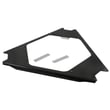


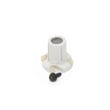

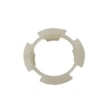
Does my Kenmore top load washer have a filter?
Yes. Your Kenmore top load washer model 11020912990 uses a self-cleaning lint filter that’s built into the wash system, so there’s no routine “filter cleaning” like many front-load washers. We focus instead on good drain flow and proper loading; see the 11020912990 owner's manual for your model’s features.
What “filter” means on this washer
On this style of Kenmore top-load washer, filtration is typically handled in one of these ways:
- A self-cleaning lint filter (maintenance-free) that captures lint during agitation and flushes it out during drain
- The drain pump moving water out; clogs here can look like a “dirty filter” problem
- The outer tub and hose path where small items can restrict flow
When you should check for a clog anyway
Even with a self-cleaning lint filter, we recommend checking the drain path if you notice:
- Washer won’t drain or drains slowly
- Standing water left in the tub after spin
- Burning/rubber smell during drain or spin
- Loud humming or grinding when it should be draining
- Wet loads because the washer never reaches full spin
Quick troubleshooting steps (safe checks)
- Unplug the washer.
- Confirm the drain hose isn’t kinked or shoved too far down the standpipe.
- If draining is weak, inspect the pump and hoses for lint, coins, or a sock.
If you’re chasing a drain issue, the washer drain pump WP3363394 is the common service part that moves water out of the tub.
Filter vs. drain problem: what to look for
| Symptom | Most likely cause | What to check first |
|---|---|---|
| Won’t drain, motor hums | Pump jam or blockage | Pump inlet, hose, small items |
| Drains but won’t spin | Lid switch or drive issue | Lid latch action, drive coupling |
| Lint on clothes | Overloading, water level, detergent | Load size, water level setting, rinse |
Why it matters
Knowing this washer has a self-cleaning lint filter helps you avoid unnecessary disassembly. Most “filter” complaints on model 11020912990 trace back to drain flow, loading, or water level choices rather than a removable filter.
Last updated: February 2026
How to identify a Kenmore washer model?
To identify your Kenmore washer model, we look for the model and serial number label on the washer cabinet. On Kenmore model 11020912990, the plate is commonly found under the lid, and it may also be on or behind the control panel depending on the design; confirm the exact location in the 11020912990 owner's manual.
Where to check on the washer
Check these common label locations in this order:
- Under the lid on the top rim of the cabinet (a very common spot on top-load Kenmore washers)
- Back of the control panel (or behind the console end caps on some versions)
- Side of the main cabinet near the bottom edge
- For front-load designs (not typical for this model family): inside the door opening or on the door jamb
What the label looks like and what to write down
The label typically includes both numbers; we recommend recording them exactly.
- Model number (example format: 110.XXXXXXXX)
- Serial number (used to identify production date range and revisions)
- Electrical ratings (volts/amps) and sometimes a barcode
Why the model number matters
The model number is how we match the correct Kenmore washer parts and diagrams. Even small model-number differences can change the correct fit for items like a lid switch, drain pump, or motor coupling.
| If you have this | Use it for |
|---|---|
| Model number | Finding the correct parts list and diagrams |
| Serial number | Confirming version changes and compatible replacements |
Quick tip if the label is hard to read
If the ink is worn or the plate is scratched:
- Wipe the area with a damp cloth and mild soap, then dry
- Use a flashlight at an angle to make faint printing easier to see
- Take a close-up photo and zoom in
Last updated: February 2026
What is the average lifespan of a Kenmore washer?
A Kenmore washer typically lasts 10 to 15 years. For Kenmore model 11020912990, lifespan depends most on load size, cycle frequency, and basic upkeep; replacing common wear parts can often extend useful life and restore normal wash and spin performance.
Typical lifespan and what changes over time
Most washers reach the 10 to 15 year range before you see more frequent issues such as draining problems, no-spin symptoms, agitation wear, or leaks.
| Washer age | What’s common | What we usually do first |
|---|---|---|
| 0 to 5 years | Minor adjustments, occasional clogs | Leveling, hose checks, cleaning |
| 5 to 10 years | Wear parts start showing up | Replace small mechanical parts |
| 10 to 15 years | Multiple symptoms, more downtime | Targeted repairs, evaluate major parts |
| 15+ years | Higher chance of major mechanical wear | Repair vs. replace decision |
Maintenance that helps you reach 10 to 15 years
We recommend these habits for a top-load Kenmore washer like the 11020912990:
- Avoid overloading; heavy loads strain the drive system and suspension.
- Use the correct water level and temperature settings for the load.
- Keep the drain path clear (standpipe, drain hose, and pump area).
- Periodically inspect fill hoses and the drain hose for cracking or bulges.
- If agitation gets weak, address it early to prevent extra wear elsewhere.
For model-specific operating guidance (water level, temperatures, cycle features), use the 11020912990 owner’s manual.
Parts that commonly affect “it’s wearing out” symptoms
When a washer seems “old,” it is often one or two worn parts causing the biggest performance drop.
- No spin or intermittent spin: lid switch, clutch
- Won’t drain or drains slowly: drain pump, drain hose
- Poor agitation or clicking in agitator: agitator dogs
If your washer agitates but the top portion slips or won’t “grab,” the agitator dog 80040 is a common fix on this style of Kenmore washer.
Why it matters
Knowing the typical lifespan helps you decide whether a symptom is likely a simple wear-part repair (often worthwhile) or a sign of broader mechanical wear. On older machines, fixing a clear root cause early can prevent secondary damage.
Last updated: February 2026
How to reset a Kenmore 11020912990 washer?
To reset a Kenmore 11020912990 washer, we use a simple power reset: turn the washer off, unplug it for 1 minute, then plug it back in and select a new cycle. This clears many “stuck” control conditions and restarts the cycle logic.
Quick reset steps (most common)
- Press Pause/Cancel once to stop the cycle.
- Turn the cycle selector to Off.
- Unplug the washer (or switch the breaker off).
- Wait 60 seconds.
- Restore power.
- Set the cycle selector to a new cycle and press Start.
If the washer still will not start or spin
These checks fix the most common “looks on but won’t run” symptoms on this style of Kenmore top-load washer.
- Confirm the lid is fully closed; a failed lid switch can stop spin and drain.
- Try a Drain/Spin selection to see if the pump runs.
- Reduce the load size and redistribute items evenly.
- Check for a slow or no-drain condition (kinked hose, clogged pump).
- If agitation is weak or intermittent, inspect the agitator drive parts.
| Symptom | What it usually points to | Common related part |
|---|---|---|
| Won’t spin/drain | Lid safety circuit not closing | Washer lid switch WP3949238 |
| Won’t drain or drains slowly | Pump obstruction or worn pump | Washer drain pump WP3363394 |
| Agitates poorly | Worn agitator drive dogs | Agitator dog 80040 |
Why it matters
A reset is a safe first step because it clears a paused control state without disassembling anything. If the problem returns often, the washer is usually reacting to a real condition (lid switch issue, drain problem, or load balance), so checking those items prevents repeat interruptions.
For model-specific operating details (cycle behavior, water level settings, and control features), use the 11020912990 owner's manual.
Last updated: February 2026
How many cubic feet is a Kenmore Model 11020912990 washer?
The Kenmore washer model 11020912990 is typically considered a Super Capacity Plus top-load washer; most washers in this Kenmore 110 platform are about 3.2 cu. ft. capacity. For the exact rated capacity for your specific unit, check the specifications section in the 11020912990 owner's manual.
How to confirm capacity on your exact washer
We recommend using the manual first because capacity can vary slightly by revision and basket design.
- Open the 11020912990 owner's manual and look for “Specifications” or “Capacity”
- Check the model and serial number plate under the lid to confirm you are matching the correct model
- Look for wording such as “Super Capacity Plus” (common for this series)
- If the manual lists basket size in gallons or liters, convert to cubic feet for comparison
- If you are comparing to another washer, compare tub volume, not just “large” or “extra large” labels
Typical capacity range for this style of Kenmore washer
If you are planning load size, detergent amount, or replacement parts, these typical ranges help.
| Washer type | Typical capacity range |
|---|---|
| Standard top-load (agitator) | 2.9 to 3.5 cu. ft. |
| “Super capacity” top-load (agitator) | 3.2 to 3.8 cu. ft. |
| High-efficiency top-load (impeller) | 4.0 to 5.5 cu. ft. |
Why capacity matters
Capacity affects how much laundry you can wash per load and how the washer performs. Overloading can reduce cleaning, increase vibration, and speed up wear on drive components such as the coupling 285753A and the clutch 285785.
Last updated: February 2026