 Installation guide
 Owner’s manual



How can I force my Frigidaire dishwasher to drain?
On our Frigidaire LGBD2431LF0A dishwasher, you can typically force a drain by canceling the cycle (often by pressing and holding START/CANCEL for about 3 to 5 seconds), then closing the door so the drain pump can run. If it still will not drain, the drain hose routing or a clog is usually the cause.
- Press and hold START/CANCEL for 3 to 5 seconds (common Frigidaire control behavior).
- Close and latch the door fully; many models will not drain with the door unlatched.
- Listen for the drain motor; a short drain is normal at the start of many cycles.
- If water remains, check the sink/disposer connection for a blockage.
- If the unit was just installed or moved, inspect the drain hose for kinks.
The installation requirements are what most often prevent draining. Use the routing and connection details in the LGBD2431LF0A installation guide.
- Make sure the drain hose is attached to the drain pump and secured.
- Route the hose with no sharp bends or kinks that restrict flow.
- Secure the hose with a clamp, but do not overtighten.
- Keep the hose away from wiring and electrical components.
- Maintain a proper high loop; the drain hose loop should be at least 32 inches from the floor to help prevent backflow.
| Symptom | Most likely cause | What to check first |
|---|---|---|
| Hums but does not drain | Kinked or restricted hose | Hose path under sink and behind unit |
| Drains slowly | Partial clog | Sink/disposer inlet and hose interior |
| Water returns after draining | Backflow | High loop height and sink connection |
| Leaks under sink during drain | Loose connection | Clamp tightness and hose seating |
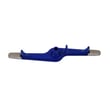
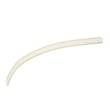
If the hose and sink connection are correct and the dishwasher still will not drain, the drain pump area is the next place to focus. On this model, the drain path is tied to the pump system described in the LGBD2431LF0A user manual. If you are replacing parts, the drain hose 807117001 is a common fix when the hose is split, kinked, or damaged.
A proper cancel-and-drain clears dirty water so the next fill can wash effectively. Correct drain hose routing (high loop, no kinks) also prevents sink water from flowing back into the tub and causing odors, poor cleaning, or standing water.
Last updated: January 2026
What does i20 mean on a dishwasher?
On a Frigidaire dishwasher like model LGBD2431LF0A, the i20 code points to a draining problem: the dishwasher is taking too long to drain or is not draining fully. In most cases, clearing a blockage in the drain path or correcting a hose installation issue restores normal operation.
- Cancel the cycle and let the unit drain; then restart a rinse cycle to recheck.
- Check the sink drain and garbage disposer inlet (a clogged sink drain can slow dishwasher draining).
- Inspect the drain hose for kinks, crushing, or a low spot that traps water.
- Verify the drain hose routing has a proper high loop or air gap (per local plumbing code).
- Clean the dishwasher filter area and remove debris that can restrict flow.
If the drain path is clear but i20 returns, these parts are common suspects on LGBD2431LF0A:
| Symptom you notice | Most likely area | Example part for this model |
|---|---|---|
| Hums but drains slowly | Drain hose restriction or routing | Drain hose |
| Won’t drain at all | Drain pump or blockage at pump | Pump |
| Drains sometimes, then stops | Intermittent pump, wiring, or control issue | Control assembly |
Replace a component when the symptom matches and cleaning or hose correction does not help.
- If the hose is brittle, split, or permanently kinked: consider drain hose 807117001.
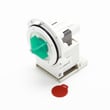
- If the dishwasher won’t drain and the pump is noisy or seized: consider pump A00126401.
A drain-time fault can leave dirty water in the sump, reduce cleaning performance, and trigger repeated cycle interruptions. Fixing the drain restriction also helps protect the pump and prevents odors.
For model-specific cycle behavior and control responses, follow the steps in the LGBD2431LF0A manual.
Last updated: January 2026
Why does my dishwasher keep having power failure?
Intermittent “power failure” on a Frigidaire LGBD2431LF0A dishwasher is usually caused by a loose power connection, a door that is not fully latched, or a control that resets after a brief voltage drop. Start by checking the door closure and the home circuit, then inspect the dishwasher wiring per the LGBD2431LF0A installation guide.
- Reset the breaker fully (OFF, then ON) and confirm the circuit is 120V AC, 15 to 20 amp, grounded.
- Make sure the door closes firmly; a door that is not fully latched can stop the cycle.
- Check for a loose plug (if corded) or loose junction box connections (if hardwired).
- Avoid running the dishwasher on the same circuit as high-draw appliances (microwave, toaster oven) if possible.
- If the unit stops mid-cycle, note when it happens (fill, wash, heat, drain) to narrow the cause.
Most repeat power interruptions come from one of these:
| What you notice | Most likely cause | What to do next |
|---|---|---|
| Unit goes dead, then comes back later | Loose house wiring, weak breaker, or voltage drop | Tighten connections, test outlet/junction box, replace breaker if needed |
| Stops when you bump the door | Door not fully latched or latch switch issue | Recheck alignment, close firmly, inspect latch area |
| Random resets during cycle | Control reacting to brief power interruption | Verify stable power first; then consider control diagnosis |
| Trips breaker | Shorted heater, motor, or wiring | Stop using and troubleshoot components safely |
After you confirm stable household power and solid wiring connections, these parts are common suspects:
- Electronic control: can reset after repeated power dips or internal faults.
- Wash motor or pump: a failing motor can draw excess current and cause shutdowns.
- Heater circuit: a heater problem can trip the breaker or interrupt operation.
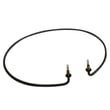
If you’re diagnosing a no-heat or breaker-trip symptom, the heater 154825001 is one of the model-matched components to check.
A dishwasher that repeatedly loses power can leave water in the tub, interrupt heating and drying, and stress the control board. Confirming the correct grounded 120V supply and secure wiring prevents repeat failures and protects key components.
Last updated: January 2026
How to reset error code on Frigidaire dishwasher?
On the Frigidaire LGBD2431LF0A dishwasher, we reset most error displays by pressing START/CANCEL to cancel the cycle and clear the code; if the control is still acting up after a power interruption, the display can show “RE” and clearing it is also done by touching START/CANCEL. For exact code meanings and model-specific steps, use the LGBD2431LF0A owner's manual.
- Press START/CANCEL once to stop the current cycle.
- Wait about 30 seconds, then press START/CANCEL again if the display or lights are still flashing.
- Close the door firmly so it latches; some models flash indicators when the door is open.
- Start a new cycle by pressing START/CANCEL, then closing the door to latch.
- If the dishwasher was just installed or power was interrupted, look for “RE” on the display and clear it with START/CANCEL.
A repeating error usually means the dishwasher is still detecting the problem. These checks fix the most common causes:
- Drain issue: Clean the filter area and check the drain path; a clog can trigger drain-related errors.
- Water fill issue: Make sure the shutoff valve is open and the supply line is not kinked.
- Heating or drying issue: If dishes stay wet and the unit shows heating-related symptoms, inspect the heating circuit; the heater 154825001 is the model-matched heating element.
- Door not latching: Re-close the door and confirm nothing is blocking the latch.
| What you see | What it usually means | What to do first |
|---|---|---|
| “RE” in the display | Power was interrupted or unit was first installed | Touch START/CANCEL to clear |
| Flashing status lights | Door open or cycle was canceled | Close door, restart cycle |
| Code returns after cancel | Underlying fault still present | Check drain, fill, heating, door latch |
Resetting clears the control so you can restart a cycle, but it does not remove the cause of a drain, fill, or heating problem. Fixing the root issue prevents repeat errors, poor cleaning, and standing water.
Last updated: January 2026





