


What engine is in the Briggs and Stratton 21R707-0145-G1?
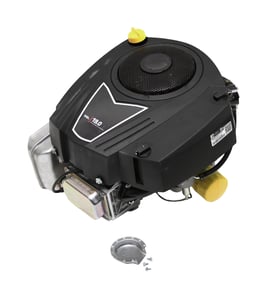
The Briggs 21R707-0145-G1 is the engine model itself; it identifies a specific Briggs single-cylinder, vertical-shaft lawn and garden engine configuration. When ordering parts or confirming fit, match the full model number exactly and use the parts list for 21R707-0145-G1.
How to confirm you have the right engine model
We recommend verifying the engine’s model-type-code stamping on the blower housing or valve cover area (location varies by shroud style). The stamping should include 21R707 plus additional numbers/letters.
- Clean the stamping area so all characters are readable
- Match the full string (model, type, and code) before ordering parts
- If the equipment has its own model number, do not use that for engine parts
- Use the engine model to select tune-up and fuel system parts
Common parts customers replace on this engine
If you are servicing a no-start, surging, or power-loss issue on a 21R707-0145-G1, these are common maintenance and repair items found for this model:
- Briggs & stratton lawn & garden equipment engine fuel filter (white) 394358S
- Briggs & stratton lawn & garden equipment engine air filter 591583
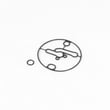
- Briggs & statton lawn & garden equipment engine carburetor rebuild kit 796184
- Briggs & statton lawn & garden equipment engine ignition coil 594626
Quick symptom-to-part check
| Symptom | Most common checks | Parts on this model page |
|---|---|---|
| Starts then dies | Fuel flow restriction, dirty carburetor | Fuel filter, carburetor rebuild kit |
| Surges at idle | Lean condition, varnished jets | Carburetor rebuild kit |
| No spark | Coil/boot/wiring issue | Ignition coil, spark plug boot |
| Cranks slowly or not at all | Starter or battery/cables (equipment side) | Starter motor |
Why it matters
Briggs engine families can look similar, but internal and external parts (carburetor, ignition, gaskets, seals) change by model and type. Using the exact 21R707-0145-G1 identification prevents wrong-part returns and speeds up repairs. You can order replacement parts from the parts list for this model, or search by model number on Sears PartsDirect.
Last updated: February 2026
What is the valve clearance of the Briggs and Stratton 21R707-0145-G1?
On the Briggs 21R707-0145-G1 lawn and garden engine, valve clearance (valve lash) is set with the engine cold and the piston at top dead center on the compression stroke. For this model, a reliable cold starting target is 0.003 in. intake and 0.005 in. exhaust.
Valve clearance specs (cold)
Set lash with a feeler gauge so it has a slight, smooth drag.
| Valve | Clearance (cold) | Where you measure |
|---|---|---|
| Intake | 0.003 in. | Between rocker arm and valve stem tip |
| Exhaust | 0.005 in. | Between rocker arm and valve stem tip |
How to set valve clearance on the 21R707-0145-G1
- Remove the spark plug boot so the engine cannot start.
- Remove the valve cover.
- Rotate the crankshaft to TDC on the compression stroke (both valves closed).
- Insert the correct feeler gauge at the rocker arm to valve stem contact point.
- Loosen the rocker nut, adjust to the clearance, then tighten and recheck.
- Rotate the engine two full revolutions, return to TDC compression, and recheck.
Parts that commonly affect results after a valve adjustment
If it still starts hard, surges, or lacks power, these tune-up items often matter:
- Replace a restricted fuel filter: Briggs & stratton lawn & garden equipment engine fuel filter (white) 394358S
- Replace a dirty air filter: Briggs & stratton lawn & garden equipment engine air filter 591583
- If cranking is slow, test the starter circuit and consider: Briggs & stratton lawn & garden equipment engine starter motor 593934
Why it matters
Correct valve lash keeps compression and valve timing where they belong. Tight valves cause hard starting (especially hot) and low power; loose valves increase noise and can reduce performance.
You can order replacement parts for your 21R707-0145-G1 from the parts list for this model, or search by model number on Sears PartsDirect.
Last updated: February 2026
What kind of oil does a Briggs and Stratton 21R707-0145-G1 take?
For the Briggs 21R707-0145-G1 lawn and garden engine, use a high-quality 4-cycle engine oil; SAE 30 is a strong choice for warm-weather mowing, and 10W-30 works well when temperatures swing. Add oil by dipstick level (not by a fixed ounce amount) to avoid overfilling.
Recommended oil viscosity (SAE grade)
Choose viscosity based on the temperatures you run the engine in:
- SAE 30: best for consistently warm conditions
- 10W-30: best for variable spring and fall temperatures
- 5W-30 synthetic: best for colder starts and easier cranking
- API service rating: use a modern detergent oil intended for 4-stroke engines
How to fill correctly (best practice)
Oil capacity varies by exact crankcase and dipstick configuration, so the correct method is to fill to the mark.
- Park the equipment on level ground
- Let the engine cool, then remove the dipstick
- Add oil slowly, pausing to let it settle
- Recheck the dipstick and stop at the FULL mark
- Run the engine briefly, shut it off, then recheck and top off if needed
Quick reference table
| Outdoor temperature | Oil to use | What you get |
|---|---|---|
| Above ~40°F | SAE 30 | Stable protection in heat |
| ~0°F to 100°F | 10W-30 | Better across temperature changes |
| Below ~40°F | 5W-30 synthetic | Faster lubrication at startup |
Why it matters
Correct viscosity and correct fill level protect internal parts from wear and overheating. Overfilling can cause smoking, fouled plugs, and leaks; underfilling can quickly damage the engine.
Parts that often go with an oil service
If you are doing a tune-up at the same time, these model-matched parts are commonly replaced:
- Briggs & stratton lawn & garden equipment engine air filter 591583
- Briggs & stratton lawn & garden equipment engine fuel filter (white) 394358S
You can order replacement parts for your Briggs 21R707-0145-G1 from the parts list for this model, or search by model number on Sears PartsDirect.
Last updated: February 2026