 Owner’s manual



How do I tell what model Kenmore dishwasher I have?
Your Kenmore dishwasher model number is printed on the model and serial number plate fastened to the tub wall just inside the dishwasher door. For Kenmore model 36314071792, you will see the number in that location; we use it to match the correct parts and troubleshooting info.
Where to look first (fastest checks)
- Open the door fully and look along the tub wall just inside the door opening
- Check the left and right tub walls near the front edge
- Look along the inner door frame area where the door seals
- Wipe the area with a damp cloth; soap film can hide the print
- Use a flashlight and view from an angle to make faint text easier to read
What the model plate looks like
Most Kenmore dishwashers use a sticker or metal plate that lists Model No. and Serial No. The manual for this style of Kenmore dishwasher calls it the “model and serial number plate” and places it on the tub wall just inside the door.
| What you need | Example format | Why we ask for it |
|---|---|---|
| Model number | 36314071792 | Ensures exact part fit and correct diagrams |
| Serial number | Letters and numbers | Helps identify production details for service |
Why it matters for parts and repairs
Using the exact model number prevents ordering look-alike parts that do not fit. For example, rack hardware and wash system parts can vary by model; common replacements include items like the rack roller WD28X31819 or the mechanism assembly WD26X10013.
If the label is hard to read
- Take a close-up photo and zoom in
- Copy the number exactly (include all digits)
- Compare what you see to the model format shown in the 36314071792 owner's manual
Last updated: February 2026
Is it worth repairing a Kenmore dishwasher?
Yes, repairing a Kenmore dishwasher is usually worth it when the fix is a common wear item (rollers, seals, drain parts) or the machine is otherwise in good shape; for Kenmore model 36314071792, we use the repair guidance and safety steps in the 36314071792 owner's manual to help you decide.
Quick decision checklist
- If the dishwasher is under 10 years old, repairs are typically the better value.
- If the repair is under about 50% of the cost of a comparable new dishwasher, repair is usually worth it.
- If the issue is leaking at the door, start with the door seal and alignment checks.
- If the issue is not draining, check the drain path and drain components before replacing major assemblies.
- If racks are hard to roll, replacing rollers often restores normal use quickly.
Common repairs that are usually worth it (and why)
Many problems on 36314071792 are caused by parts that wear out but are straightforward to replace.
| Symptom | Often the fix | Example part for this model | Typical value impact |
|---|---|---|---|
| Lower rack won’t roll smoothly | Worn rollers | Dishwasher dishrack roller, lower front WD12X271 | Low cost, big usability gain |
| Water leaking at the door | Door seal or loading issue | Gasket WD08X10057 | Prevents cabinet and floor damage |
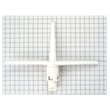
| Poor wash coverage | Clogged or damaged spray arm | Dishwasher spray arm WD22X154 | Restores cleaning performance |
| Won’t drain or drains slowly | Drain restriction or drain solenoid issue | (Inspect hose, air gap, solenoid) | Avoids standing water and odors |
Repairs that can tip the scale toward replacement
These repairs can still be worth doing, but they are higher-cost and usually only make sense if the dishwasher is in otherwise excellent condition.
- Pump and motor related failures (often higher parts cost and labor)
- Multiple major issues at once (leak plus electrical plus wash performance)
- Severe tub or door structural damage
Why it matters
A targeted repair can extend the life of your Kenmore dishwasher, reduce waste, and restore performance without the cost and hassle of replacing and reinstalling a new unit.
Safety and documentation notes
The manual emphasizes disconnecting electrical power before servicing and avoiding contact with the heating area during or right after a cycle; follow the step-by-step guidance in the 36314071792 owner's manual before starting any repair.
Last updated: February 2026
What are common problems with Kenmore dishwashers?
Common problems we see with the Kenmore 36314071792 dishwasher include not starting, not filling, not draining, unusual noise, leaks, poor cleaning, and detergent or rinse-aid dispenser issues. Many of these trace back to power/water supply, loading and detergent choices, or a worn drain or wash component (see the 36314071792 owner's manual).
Most common symptoms and what they usually mean
- Won’t start: no power to the dishwasher, cycle/dial not set correctly, or the start control not fully engaged
- Won’t fill: water supply valve under the sink is off, or the inlet supply line is clogged with sediment
- Water left in the tub: partial drain restriction, drain path issue, or a drain component problem
- Unusual rattling noise: items not secured on rack pins, or a small item dropped below the rack
- Leaks or suds: too much detergent, wrong detergent (hand dish soap), or spilled rinse agent
- Odor or staining: dishes held too long, or detergent dyes and tomato-based soils staining the tub
Quick checks we recommend before replacing parts
- Confirm power: check the house fuse or circuit breaker.
- Confirm water: verify the shutoff valve under the sink is fully open.
- Set the cycle correctly: make sure the dial/cycle is set and the cycle button is fully pushed in.
- Load for spray access: keep tall items from blocking the spray arm.
- Use the right detergent: automatic dishwasher detergent only; reduce amount in soft water.
Parts that commonly relate to these problems (when symptoms match)
| Symptom | Commonly involved area | Example part for this model |
|---|---|---|
| Poor cleaning, weak spray, noise during wash | Wash circulation and spray | Dishwasher spray arm WD22X154 |
| Not draining or intermittent draining | Drain system components | Dishwasher drain solenoid kit WD21X10060 |
| Overfilling or won’t stop filling | Overfill protection | Dishwasher float switch WD21X479 |
Why it matters
Catching the root cause early prevents repeat failures. For example, using the wrong detergent can create heavy suds that lead to leaks and poor wash performance, while a restricted water supply can cause long fills and weak cleaning.
Last updated: February 2026





