 Installation guide
 Owner’s manual




Is GE profile considered high-end?
Yes. GE Profile is widely considered the higher-end tier within GE’s mainstream appliance lineup; it typically adds more premium features, upgraded styling, and more advanced controls than standard GE models, while still sitting below GE’s luxury lines (such as Café and Monogram).
GE uses multiple “good, better, best” tiers across many product types. In most categories, GE Profile is positioned as the “better to best” option within the core GE family.
Common differences you’ll see with GE Profile compared to standard GE:
- More advanced wash, dry, or cooking features (depending on appliance type)
- More electronic controls and cycle options
- More premium finishes and design details
- More convenience features (for example, quieter operation or smarter diagnostics)
- Higher typical price point than entry-level GE models
Your model GSD3360K01SS is a GE dishwasher model number, but “GE Profile” is a separate product tier and is usually identified on the badge/branding and in the model’s full product name.
Use this quick check:
| What you see on the appliance | What it usually indicates |
|---|---|
| “GE Profile” on the door/control panel | Profile tier (higher-end within GE mainstream) |
| “GE” only | Standard GE tier (varies by features) |
| “Café” or “Monogram” branding | Premium/luxury tier |
For model identification details (where to find the model label and how GE lists model information), use the owner's manual.
Knowing whether an appliance is GE Profile helps set expectations for features, noise level, control style, and parts compatibility. When ordering replacement parts for a dishwasher like GSD3360K01SS, the model number match is what ensures fit.
Last updated: February 2026
Is it worth fixing a GE dishwasher?
Yes, it’s usually worth fixing a GE dishwasher like model GSD3360K01SS when the problem is a single, replaceable part (drain, wash, door switch, rack) and the total repair cost stays well below the price of a comparable new dishwasher. Replacement makes more sense when multiple major systems are failing.
We use a simple rule of thumb: if the repair is under about 50% of the cost of a new unit, repairing is the better value, especially when the dishwasher has otherwise been reliable.
Good candidates for repair
- Won’t drain because of a clogged hose or failed drain component
- Poor cleaning from a worn spray arm or circulation issue
- Won’t start due to a door switch problem
- Leaks caused by a worn door seal
- Rack damage (rusted, broken wheels, bent frame)
These are typical “single-part” fixes that can restore normal operation:
- Dishwasher drain hose WD24X10014 (kinks, clogs, or internal restriction)
- Dishwasher door switch WD21X10261 (dishwasher thinks the door is open)
- Dishwasher door seal WD08X10057 (water leaking at the door)
- Dishwasher spray arm, lower WD12X10244 (weak spray, poor cleaning)
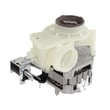
- GE dishwasher pump and motor assembly WD26X10051 (no wash action, loud grinding)
| Symptom | Most likely area | Usually worth fixing? |
|---|---|---|
| Won’t start | Door latch/switch, power supply | Yes |
| Not draining | Drain hose, drain solenoid | Yes |
| Not cleaning | Spray arms, circulation pump | Often |
| Leaking at door | Door seal, loading issues | Yes |
| Multiple issues at once | Control plus motor plus leaks | Usually no |
A dishwasher is a water-heating appliance, and proper installation and service access matter for long-term reliability. The installation instructions also emphasize leaving room for future removal for service, which helps keep repair labor reasonable over time. Use the GSD3360K01SS installation guide to confirm your setup supports safe servicing.
Last updated: February 2026
What does E1 mean on a GE dishwasher?
On the GE GSD3360K01SS dishwasher, an E1 code typically points to a water fill problem (the dishwasher is not getting enough water fast enough). The most common causes are a closed water supply, a kinked inlet line, or a restriction at the inlet valve screen.
- Make sure the shutoff valve under the sink is fully open.
- Confirm the dishwasher has power and you can start a cycle normally (some installs use a wall switch).
- Check the water inlet line for kinks or crushing.
- If you have an air gap, check it for blockage and clear it.
- If your home has hard water, mineral buildup can restrict the valve over time.
- Reset the control: turn power off for 1 minute, then restore power and try a cycle.
- Verify fill conditions: start a cycle and listen for water entering during the initial fill.
- Inspect for restrictions: shut off water, then check the inlet line and inlet valve screen for debris.
- If the dishwasher still will not fill: the inlet valve or control may be at fault; follow the diagnostic steps in the GSD3360K01SS owner's manual.
If the dishwasher is not filling and the supply is confirmed good, these parts are often checked during diagnosis:
| Symptom | Common area to inspect | What it affects |
|---|---|---|
| No water entering | Water supply and inlet path | Fill at start of cycle |
| Stops mid-cycle with poor wash | Pumping and circulation | Spray pressure and cleaning |
| Drains incorrectly and refills oddly | Drain system | Water level stability |
For draining-related issues that can look like a fill error, we often inspect the dishwasher drain hose WD24X10014 for clogs or improper routing.
A true fill error can leave the pump running with too little water, which leads to poor cleaning and can strain components. Fixing the water supply restriction early usually restores normal cycle operation.
For code definitions and model-family troubleshooting steps, we also use the GE electronic dishwasher error codes reference.
Last updated: February 2026
What is the average life expectancy of a GE dishwasher?
A GE dishwasher typically lasts 10 to 12 years. For your GE GSD3360K01SS, consistent cleaning, correct detergent use, and fixing small leaks or drain issues early are the biggest factors that help you reach (or beat) that average; see the GSD3360K01SS owner's manual for model-specific care steps.
Most residential dishwashers fall into a predictable range based on use and maintenance.
| Usage pattern | Typical life expectancy | What usually ends the run |
|---|---|---|
| Light use (few loads/week) | 12 to 15 years | Rack rust, seals, minor leaks |
| Average use (daily or near-daily) | 10 to 12 years | Pump wear, drainage problems |
| Heavy use (multiple loads/day) | 8 to 10 years | Motor/pump, control issues |
We see these habits make the biggest difference over time:
- Clean and deodorize the tub periodically (helps prevent mineral film and odor buildup).
- Keep the door sealing surfaces clean; wipe the gasket area so it seals evenly.
- Avoid overloading; good water flow reduces strain on the circulation system.
- Use the right amount of detergent for your water hardness to reduce residue.
- Address slow draining quickly; standing water can stress the pump and cause odors.
These are frequent wear items that can affect performance as the unit ages:
- Door sealing components such as the dishwasher door seal WD08X10057
- Wash system components (spray arms, circulation pump, pump and motor assembly)
- Drain components (drain hose, drain solenoid)
- Racks and rack components (coating wear, rust spots)
Knowing the typical 10 to 12-year lifespan helps you decide whether to repair or replace. If your GSD3360K01SS is near that age and you are seeing repeated draining, leaking, or wash-quality problems, targeted maintenance or a key part replacement can restore reliability.
Last updated: February 2026
What is the most common problem with GE dishwashers?
The most common GE dishwasher problems are draining issues, leaks, and “won’t start/won’t run” symptoms. On the GE GSD3360K01SS, these usually trace back to a clogged drain path, a worn door seal, or a door switch or control issue; routine cleaning and a few quick checks often restore normal operation.
- Not draining or draining slowly: check for food debris in the sump area and kinks or clogs in the drain line.
- Leaking at the door: inspect the door gasket for tears, flattening, or gaps.
- Has power but won’t run: confirm the breaker is on and any wall switch feeding the dishwasher is on.
- Stops mid-cycle or acts erratic: try a reset per the control style described in the GSD3360K01SS owner’s manual.
- Poor cleaning: verify spray arms spin freely and are not blocked by tall items.
If cleaning and basic checks do not fix the problem, these model-matched parts are frequent fixes:
| Symptom | Common suspect | Example model-matched part |
|---|---|---|
| Won’t drain | Drain solenoid or drain hose restriction | GE dishwasher drain solenoid assembly WD21X10268, dishwasher drain hose WD24X10014 |
| Leaks at door | Door gasket not sealing | Dishwasher door seal WD08X10057 |
| Won’t start / intermittent | Door switch not closing reliably | Dishwasher door switch WD21X10261 |
| No wash action / weak spray | Pump or circulation issue | GE dishwasher pump and motor assembly WD26X10051 |
Drain and door-seal problems can lead to standing water, odors, and water on the floor. Start and control-related problems can look “electrical,” but they are often caused by simple power, latch, or switch conditions that are quick to confirm.
If your dishwasher shows electronic symptoms or unusual behavior, use the GE dishwasher error codes guide to match the code or symptom to the most likely cause.
Last updated: February 2026





