Owner’s manual
 Error Codes




What is the most common problem with a Whirlpool refrigerator?
The most common Whirlpool refrigerator problem is a cooling complaint: the fresh food section gets warm, the freezer temperature drifts, or the unit runs constantly. On Whirlpool GB2FHDXWS06, the most frequent root causes are restricted airflow (dirty condenser coils or a stalled evaporator fan) and defrost system issues that let frost block airflow; confirm your model’s checks in the GB2FHDXWS06 owner's manual.
Most common symptoms we see
- Refrigerator section warm but freezer still cold
- Freezer warming up or soft ice
- Loud humming, rattling, or a fan noise that comes and goes
- Frost buildup on the back wall of the freezer
- Ice maker not making ice or making small/hollow cubes
Quick checks you can do first (no parts required)
- Set temperatures to typical targets: 37°F for fresh food and 0°F for freezer.
- Clean condenser coils and make sure the front grille area has good airflow.
- Listen for the evaporator fan in the freezer; it should run when the compressor is running.
- Check door gaskets for gaps and make sure doors close fully.
- If you see heavy frost, unplug the refrigerator and do a full manual defrost (24 hours with doors open) to restore airflow, then monitor for frost returning.
Parts that commonly fix these problems on GB2FHDXWS06
| Symptom | Likely system | Example model-matched part |
|---|---|---|
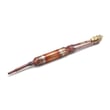
| Warm fresh food, weak airflow | Air circulation | Refrigerator evaporator motor W11024089 |
| Frost blocking airflow | Defrost system | Refrigerator defrost heater WP12729128 |
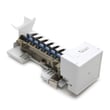
| Ice maker not producing | Ice maker system | Refrigerator ice maker assembly W10884390 |
| No water to ice maker | Water supply | Refrigerator valve WPW10498976 |
Why it matters
Cooling and airflow problems usually get worse over time; the refrigerator may run longer, temperatures swing more, and food spoils faster. Catching a fan, defrost, or airflow issue early helps protect the compressor and keeps temperatures stable.
For display codes or blinking indicators, use our Whirlpool refrigerator error codes reference to narrow the failure to a specific circuit or sensor.
Last updated: January 2026
What's the average lifespan of a Whirlpool refrigerator?
Whirlpool refrigerators typically last 10 to 20 years, and a well-maintained bottom-mount model like GB2FHDXWS06 commonly lands around 12 to 15 years of reliable service before major repairs become more likely. For model-specific care and cleaning intervals, use the GB2FHDXWS06 manual.
Typical lifespan ranges (what to expect)
Most refrigerators fall into a predictable pattern based on usage, airflow, and maintenance.
- 0 to 5 years: usually minor issues only (lights, bins, adjustments)
- 6 to 10 years: occasional part replacements (ice maker, fan, door seal)
- 10 to 15 years: higher chance of cooling or defrost-related repairs
- 15 to 20 years: many units still run, but efficiency and repair frequency often decline
| Refrigerator age | What’s most common | What we recommend |
|---|---|---|
| Under 10 years | Small repairs, maintenance | Keep coils clean, confirm door seal |
| 10 to 15 years | More frequent service needs | Address cooling/ice issues early |
| Over 15 years | Major component wear | Compare repair cost vs. replacement |
What shortens (or extends) refrigerator life
These factors have the biggest impact on how long your Whirlpool refrigerator lasts.
- Dirty condenser area and restricted airflow
- Door gaskets not sealing (warm air leaks cause longer run times)
- Ice maker and water system issues that lead to leaks or freezing
- Overpacking that blocks vents and disrupts airflow
- High room temperatures or tight cabinet clearances
Maintenance that helps you reach the high end of the range
We recommend these habits for GB2FHDXWS06 and most Whirlpool bottom-mount refrigerators:
- Vacuum dust from the condenser area regularly
- Keep door gaskets clean and check for gaps
- Keep interior air vents clear of food packages
- Level the refrigerator so doors close fully
- If you have a water dispenser or ice maker, replace filters on schedule and purge air after changes using how to replace the water filter in a Whirlpool refrigerator
Why it matters
A refrigerator that runs longer to maintain temperature wears out key components faster (compressor, evaporator fan, defrost system). Simple airflow and sealing checks reduce run time, improve temperature stability, and help the unit last closer to 20 years.
Last updated: January 2026
How big is the Whirlpool gb2fhdxws06?
The Whirlpool GB2FHDXWS06 is a bottom-mount refrigerator with a typical total capacity of about 22 cu. ft. (commonly listed as 21.9 cu. ft.). For the exact capacity and the official exterior dimensions for your unit, use the GB2FHDXWS06 owner's manual.
What “big” usually means (capacity vs. dimensions)
Refrigerator size is usually described two ways:
- Capacity (cu. ft.): how much food it holds
- Exterior dimensions (in.): how much space it takes in your kitchen
- Clearances: extra space needed for airflow and door swing
- Configuration: bottom freezer drawer affects how far the freezer pulls out
Typical size range for this style of Whirlpool bottom-mount
Most Whirlpool bottom-freezer refrigerators around 22 cu. ft. fall into these common ranges (your exact numbers can vary by configuration and handles):
| Spec | Typical range | What to measure at home |
|---|---|---|
| Capacity | 21 to 22 cu. ft. | N/A (listed in specs) |
| Width | 32 to 33 in. | Cabinet opening width |
| Height | 66 to 70 in. | Floor to top of hinge/door |
| Depth | 33 to 35 in. | Back wall to front of doors/handles |
How to measure your space correctly
Use a tape measure and check these before ordering a replacement refrigerator or planning cabinetry:
- Measure width at the narrowest point of the opening
- Measure height to the lowest overhead cabinet or trim
- Measure depth from the back wall to the front edge of counters
- Allow room for door swing and the freezer drawer to fully extend
- Leave ventilation clearance as specified in the GB2FHDXWS06 owner's manual
Why it matters
Getting the right size prevents installation headaches, improves airflow for better cooling, and helps avoid door and drawer clearance issues that can lead to temperature swings and excess frost.
Last updated: January 2026
How do you remove the bottom freezer drawer on a Whirlpool refrigerator?
On the Whirlpool GB2FHDXWS06 bottom-mount refrigerator, we remove the bottom freezer drawer by pulling it fully open, lifting the basket(s) out, then releasing the drawer front from the slide rails (usually with locking tabs or screws) so the drawer can lift off the rails.
Quick steps (most Whirlpool bottom-mount drawers)
- Unplug the refrigerator or switch off power at the breaker for safety.
- Pull the freezer drawer all the way open.
- Lift out the upper basket (if equipped), then lift out the lower basket.
- Look at both slide rails near the drawer front for locking tabs, clips, or screws.
- Release both sides evenly (press tabs or remove screws), then lift the drawer front up and off the rails.
- If you need the rails out too, remove the rail mounting screws and slide the rails out.
What you will usually see at the rails
| What you find | What to do | Common symptom if stuck |
|---|---|---|
| Locking tabs/clips | Press or pry the tabs to release the drawer front | Drawer front lifts on one side only |
| Screws at the drawer front brackets | Remove screws, then lift drawer front off | Drawer will not separate from rails |
| Ice buildup on rails | Defrost, dry, then retry | Drawer feels glued or grinds |
Tips to avoid damage
- Support the drawer front with both hands; release left and right sides at the same time.
- Keep the drawer level so the rail wheels do not bind.
- If the drawer is hard to move, check for frost or a blocked drain; a clogged drain can refreeze and interfere with drawer travel.
- If you see water or ice under the freezer, inspect the drain tube; the refrigerator drain tube W10619951 is a common fix when the drain path is damaged or leaking.
Why it matters
Removing the freezer drawer correctly prevents bent slide rails, broken brackets, and door seal gaps that can cause warm temperatures, frost buildup, and noisy operation.
For model-specific drawer and basket removal details, use the GB2FHDXWS06 manual.
Last updated: January 2026