 Installation guide
 Owner’s manual
 Error Codes




What is the most common problem with GE dishwashers?
The most common GE dishwasher problems are not draining, not starting, and leaking. On your GE CDT845P3N1D1, these usually trace back to a dirty filter area, a drain restriction, or a door that is not fully latched, which can interrupt the cycle.
Most common issues (and what to check first)
- Not draining: food debris in the filter/sump area, a kinked drain hose, or a weak drain pump.
- Won’t start or stops mid-cycle: door not closed/latched, cycle interrupted, or control not initialized after power was switched off.
- Leaking: door seal/tub gasket wear, loose hose connections, or oversudsing from the wrong detergent.
- Poor cleaning: clogged spray arm ports, blocked filter, or loading that prevents spray arm rotation.
- White film or cloudy dishes: detergent and water chemistry issues (hard water, too much detergent, or low-quality detergent).
Quick troubleshooting steps for CDT845P3N1D1
Use these checks before replacing parts; they solve a large share of service calls.
- Press Start and close the door promptly if the cycle was interrupted (the manual notes the Start light can flash after the door opens).
- Clean the filter assembly; use a soft brush or sponge and reinstall the fine filter under the rear retaining tabs (see the CDT845P3N1D1 owner’s manual).
- Confirm the wall switch (if used) is ON; if it was turned off, wait 5 to 10 seconds after turning it back on before pressing Start.
- Use only automatic dishwasher detergent; hand dish detergent can cause suds that spill from vents and mimic a leak.
- Check the drain path for kinks or clogs; if the dishwasher still won’t drain, the dishwasher drain pump WD19X25461 is a common fix.
Symptom-to-part guide (when cleaning and checks don’t solve it)
| Symptom | Most likely area | Example part for this model |
|---|---|---|
| Standing water after cycle | Drain path or drain pump | Drain pump (WD19X25461) |
| Won’t run unless door is pushed | Door latch system | Door latch lock (WD21X10490) |
| Intermittent fill/wash behavior | Water level sensing | Pressure sensor (WD21X25468) |
| Wet floor with lots of suds | Wrong detergent | Switch to dishwasher detergent |
Why it matters
Drain, latch, and leak issues can cancel cycles, leave dirty dishes, and create water on the floor. Starting with filter cleaning, correct detergent, and door-latch checks prevents unnecessary part replacement and gets your GE dishwasher back to normal operation faster.
Last updated: February 2026
What is the average lifespan of a GE dishwasher?
A GE dishwasher typically lasts 10 to 12 years with normal household use. For your GE CDT845P3N1D1, consistent cleaning, correct water temperature, and fixing small leaks or draining issues early are the biggest factors that help you reach (or beat) that average; see the CDT845P3N1D1 owner's manual.
Typical lifespan and what changes it
Most dishwashers fall into a similar range, but these factors move the needle the most:
- Usage frequency: 1 load/day usually wears parts faster than 3 to 4 loads/week.
- Water quality: hard water speeds up mineral buildup on spray arms, sump, and heater.
- Water temperature: GE guidance is 120°F to 150°F entering water for effective cleaning.
- Maintenance: regular cleaning reduces strain on the wash pump and drain system.
- Early repairs: replacing a failing pump, gasket, or sensor prevents secondary damage.
Quick checklist to help your dishwasher last longer
We recommend these habits for the CDT845P3N1D1:
- Run hot water at the sink until it is hot before starting a cycle.
- Use a rinse agent to improve drying and reduce spotting and film.
- Keep the tub seals clean and inspect for drips at the bottom of the door.
- Clean the interior and remove debris that can block circulation and draining.
- Address slow draining quickly (kinks, clogs, or a weak pump).
Common “wear-out” parts and what they affect
| Symptom | Often involved system | Example part for this model |
|---|---|---|
| Not draining, water left in tub | Drain path and pump | Dishwasher drain pump WD19X25461 |
| Poor cleaning, weak spray | Wash circulation | Wash pump main asm WD19X25700 |
| Leaks at door or tub edge | Sealing surfaces | Dishwasher tub gasket WD08X23477 |
Why it matters
A dishwasher that is maintained and repaired early usually avoids bigger failures like motor overloads, repeated error conditions, and water damage under the unit. Small fixes and correct operating conditions often add years of reliable service.
Last updated: February 2026
What is NSF ANSI standard 184 certified dishwasher?
An NSF/ANSI 184 certified residential dishwasher is tested to confirm it can sanitize dishes on a sanitizing cycle. On the GE CDT845P3N1D1, the Sani (Sanitize) option is monitored; if conditions are met, the Sanitized indicator turns on at the end of the cycle (see the CDT845P3N1D1 owner’s manual).
What NSF/ANSI 184 certification means
NSF/ANSI 184 is a residential dishwasher performance standard that includes sanitization requirements. In practical terms, certification indicates the dishwasher can reach the required wash conditions on a sanitizing cycle to reduce bacteria to a very high level.
Key points to know
- Certification applies to residential dishwashers, not commercial dish machines.
- Sanitization is verified only when you run a sanitizing cycle/option.
- The dishwasher may extend cycle time to reach the needed temperature.
- If the cycle is interrupted or inlet water is too cold, sanitization conditions may not be met.
- On this GE platform, the Sanitized light is your confirmation that the cycle achieved the monitored conditions.
How to use the sanitize feature on GE CDT845P3N1D1
Use the Sani/Sanitize option when you want the final rinse temperature boosted for sanitization.
| What you do | What the dishwasher does | What to look for |
|---|---|---|
| Select Sani/Sanitize | Raises final rinse temperature; may add about an hour | Longer cycle time |
| Let the cycle finish without interruption | Monitors whether sanitizing conditions are achieved | Sanitized indicator at end |
| Start with hot water at the sink | Helps the unit reach target temps faster | Better chance of meeting sanitize conditions |
Why it matters
If you are washing baby bottles, cutting boards, or items that need extra hygiene, NSF/ANSI 184 certification and the sanitize option give you a measurable, standards-based way to confirm the dishwasher completed a sanitizing process.
Last updated: February 2026
Can I replace dishwasher parts myself?
Yes, for the GE CDT845P3N1D1 dishwasher, we see many DIYers successfully replace common wear parts and access items as long as power and water are shut off first and you follow the steps in the CDT845P3N1D1 owner's manual. For electrical, leak-related, or hard-wired repairs, we recommend using a qualified technician.
What you can usually replace yourself
These repairs are typically straightforward with basic hand tools:
- Clean or replace spray components (clogs and poor wash)
- Replace a door latch if the unit will not start because the door will not latch
- Replace a drain hose if it is split, kinked, or leaking
- Replace a tub gasket if you see water at the door or tub seam
- Replace rack hardware if racks bind or do not roll smoothly
Repairs that often require more skill
These involve wiring, diagnostics, or water handling where mistakes can cause bigger problems:
- Control and user interface issues (no response, random beeping, dead panel)
- Pump and sump repairs (leaks underneath, loud grinding, no wash action)
- Leak detection or repeated cycle canceling
- Hard-wired electrical connections and grounding
The manual also notes to disconnect power before maintenance and not to repair or replace parts unless recommended; use the CDT845P3N1D1 owner's manual as your baseline for safe DIY steps.
Quick DIY decision guide
| Symptom | Good DIY candidate? | Parts that commonly relate |
|---|---|---|
| Door will not latch, dishwasher will not start | Yes | GE dishwasher door latch lock WD21X10490, dishwasher door latch strike adapter WD13X22837 |
| Not draining or standing water | Often | Dishwasher drain pump WD19X25461, dishwasher drain hose WD24X10062 |
| Poor cleaning, weak spray | Often | Lower arm spray asm WD22X25281, dishwasher upper spray arm manifold WD12X34182 |
| Heating or drying problems | Sometimes | Element heat WD05X35098 |
Why leveling and installation details matter
A surprising number of “it leaks” or “the door rubs” complaints come from installation issues. The installation instructions emphasize leveling so racks do not roll on their own and the door closes without hitting the tub; that prevents nuisance problems and unnecessary service calls. Use the CDT845P3N1D1 installation guide when you are reinstalling the unit after a repair.
Helpful troubleshooting resource
If you are seeing a code or flashing lights, use GE electronic dishwasher error codes to narrow the problem before ordering parts.
Last updated: February 2026
What are the commonly replaced parts in a dishwasher?
In a GE dishwasher like model CDT845P3N1D1, the most commonly replaced parts are the ones that move water, heat water, or keep the door sealed and latched. Wear, clogs, leaks, and electrical protection trips typically drive these replacements; routine cleaning helps reduce failures.
Most common dishwasher parts that get replaced
These are the parts we see replaced most often across modern dishwashers:
- Drain components: drain pump, drain hose, and check areas for clogs
- Wash system components: wash pump, sump, diverter, and spray arms/manifolds
- Heating and drying components: heating element and venting pieces
- Door and leak-prevention parts: door latch, tub gasket, door springs
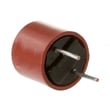
- Electrical protection and controls: thermal fuse, control board fuse, user interface/control board
- Rack and glide parts: rack rails, rollers, and rack assemblies
For model-specific diagrams, part locations, and maintenance guidance, use the CDT845P3N1D1 owner’s manual.
Model CDT845P3N1D1 examples (parts on this model)
Here are examples of commonly replaced parts that are available for this GE dishwasher:
| Symptom | Likely area | Example part on this model |
|---|---|---|
| Not draining, water left in tub | Drain system | Dishwasher drain pump WD19X25461, Dishwasher drain hose WD24X10062 |
| Poor cleaning, weak spray | Wash system | Lower arm spray asm WD22X25281, Dishwasher upper spray arm manifold WD12X34182 |
| Won’t start, dead or intermittent | Electrical protection/controls | Dishwasher wire harness and thermal fuse WD21X27402, Dishwasher control board fuse WD21X25696 |
| Door won’t latch or pops open | Door latch/strike | GE dishwasher door latch lock WD21X10490 |
| Leaks at the door or tub edge | Sealing | Dishwasher tub gasket WD08X23477 |
Why it matters
Replacing the correct part restores wash performance, prevents leaks that can cancel cycles, and avoids repeat failures. For example, a clogged drain path can mimic a bad pump, and a door that does not latch securely can stop the cycle from running.
Quick checks before you buy a part
These steps often pinpoint the real failure faster:
- Clean the filter area and check for debris around the sump
- Inspect spray arms for blocked holes and confirm they spin freely
- Verify the door closes firmly and the latch engages consistently
- Check the drain hose routing for kinks and high-loop/air-gap requirements
- If the dishwasher “won’t run,” check for a tripped breaker or blown fuse (as outlined in the manual)
If you’re seeing a code or unusual beeping, use GE electronic dishwasher error codes to match the symptom to the most likely component.
Last updated: February 2026





