Owner’s manual
 Error Codes


How many cubic feet is my Kenmore refrigerator by model number?
Your Kenmore side-by-side refrigerator model 10656236401 has a specific total capacity (cubic feet) listed on the model and serial rating label and in the specifications section of the owner's manual. That label is the fastest, most accurate way to match capacity to your exact configuration.
- Rating label inside the refrigerator: Usually on a side wall near the crisper area, ceiling, or door frame.
- Specifications section in the manual: Look for “capacity” or “total volume” in cubic feet.
- Model number lookup: Use the full model number 10656236401 when searching parts and documentation.
- Open the fresh food (refrigerator) door.
- Check the side walls near the crisper pans and the upper liner area.
- If you do not see it, check the door frame area.
- Write down the model number and serial number; capacity is often listed nearby.
Most Kenmore 106-series side-by-side refrigerators are commonly in this range:
| Refrigerator type | Typical total capacity range |
|---|---|
| Side-by-side refrigerator | About 20 to 26 cu. ft. |
Knowing the correct cubic feet helps us match the right shelves, bins, and airflow parts for your exact layout, and it also helps with planning food storage and temperature recovery after door openings.
If you are also planning water and ice maintenance, the manual and parts list for 10656236401 commonly reference the replacement water filter; the genuine Kenmore refrigerator water filter EDR3RXD1 is one of the model-matched options shown for this refrigerator.
Last updated: February 2026
How to clean the coils on a Kenmore side by side refrigerator?
Cleaning the condenser coils on your Kenmore 10656236401 side-by-side refrigerator helps it cool efficiently and can reduce run time and warm-temperature issues. We recommend cleaning the coils about every 6 to 12 months (more often if you have pets or heavy dust).
- Unplug the refrigerator or disconnect power at the breaker.
- Pull the refrigerator straight out to avoid damaging the floor.
- Keep flammable vapors (like gasoline) away from the refrigerator area.
- Use only nonflammable cleaners.
- If you need clearance guidance for moving the unit, check the owner's manual.
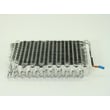
Most Kenmore side-by-side models have coils either underneath (behind a toe grille) or on the back.
- Remove the toe grille (if your model has one) or access the rear panel area.
- Use a coil brush to loosen dust and pet hair from the coil fins.
- Vacuum the loosened debris using a crevice tool.
- Clean the condenser fan area (if accessible) so airflow is not blocked.
- Reinstall the toe grille or rear cover, then restore power.
| Item | Recommended | Notes |
|---|---|---|
| Coil brush | Yes | Best for lifting packed lint from fins |
| Vacuum with crevice tool | Yes | Captures debris so it does not spread |
| Mild detergent + warm water | Sometimes | For nearby surfaces, not for electrical parts |
| Abrasive pads/harsh cleaners | No | Can damage surfaces and components |
- Refrigerator runs longer than normal
- Freezer or fresh food temps drift warmer
- Cabinet feels hot along the sides
- Dust buildup visible under the unit
Dirty coils trap heat, so the compressor has to work harder to remove heat from the refrigerator. Keeping coils clean supports steady temperatures, better energy efficiency, and longer component life.
Last updated: February 2026
What are the most common problems with Kenmore refrigerators?
The most common problems we see on Kenmore refrigerators like model 10656236401 are cooling complaints (warm fridge or freezer), water leaks, ice maker or dispenser issues, and unusual noises. Many of these trace back to airflow restrictions, defrost system trouble, or water supply and filter problems; use the owner's manual troubleshooting section to narrow it down.
- Not cooling or weak cooling: blocked air vents, dirty condenser coils, evaporator fan issues, or a defrost problem causing frost buildup
- Runs all the time: warm room, frequent door openings, large food load, or airflow problems (the manual notes high-efficiency compressors can run longer)
- Water leaking or puddles: clogged defrost drain, loose water line connection, or a leaking inlet valve
- Ice maker not making ice: water supply issue, frozen fill tube, failed ice maker module, or a restricted filter
- Noisy operation: normal sounds (buzzing, pulsating, sizzling) or vibration from items touching the cabinet
- Confirm the controls are on and allow 24 hours after installation for full cooling.
- Make sure vents are not blocked and follow the manual guidance for proper air circulation.
- Clean condenser coils and verify the doors close and seal fully.
- If dispenser water seems warm, note it is typically chilled only to about 50°F; discard the first glass if it has not been used recently.
- For ice and water issues, flush the system and confirm the refrigerator is connected to a cold water supply.
| Symptom | Common part to check/replace | What it affects |
|---|---|---|
| Bad-tasting water, slow dispensing, weak ice production | Genuine Kenmore refrigerator water filter EDR3RXD1 | Water flow and filtration to dispenser and ice maker |
| Frost buildup, warm temps, intermittent cooling | Refrigerator defrost bi-metal WPW10225581 | Defrost cycling and evaporator temperature sensing |
| No ice production or inconsistent harvest | Refrigerator ice maker WPW10190961 | Ice making and ejection cycle |
| Leaking at back or no water to ice maker/dispenser | Refrigerator inlet valve W10822681 | Water fill to ice maker and dispenser |
Cooling, ice, and leak problems often share the same root causes: airflow (fans, vents, frost) and water flow (supply pressure, valve, filter). Fixing the underlying cause prevents repeat failures and helps the compressor and fans run normally.
Last updated: February 2026
Where is the model number on a Kenmore side by side refrigerator?
On Kenmore side-by-side refrigerator model 10656236401, the model number is printed on the appliance identification label (the same label that also lists the serial number). We use that label information to match the correct parts and documentation for your exact refrigerator; see the 10656236401 owner's manual for label location details.
Check these common label locations on Kenmore side-by-side refrigerators:
- Inside the fresh food compartment on a side wall near the crisper drawers
- On the ceiling of the fresh food compartment near the light housing
- Along the door frame (hinge side) when you open the refrigerator door
- Behind the base grille area (less common, but possible)
The ID label typically includes both a model number and a serial number.
| Item on label | What it’s used for | Example format |
|---|---|---|
| Model number | Identifies the exact refrigerator design for parts fit | 10656236401 |
| Serial number | Identifies production details for service history | Letters and numbers |
Using the exact model number prevents ordering the wrong Kenmore parts, especially for fit-sensitive items like a refrigerator water filter, ice maker components, door bins, and dispenser parts.
- Copy the model number exactly as printed (include all digits)
- Take a clear photo of the label for reference
- If the label is worn, clean it gently with a damp cloth and dry it
- Use the model number to confirm part compatibility before checkout
Last updated: February 2026