Installation guide
 Owner’s manual
 Error Codes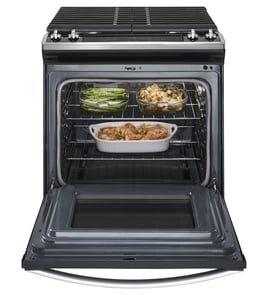




Does Kenmore make gas ranges?
Yes. Kenmore makes gas ranges, including the Kenmore 79072402013 gas range; they are designed to cook with gas surface burners and an electronically ignited gas oven, delivering responsive heat control for everyday baking, broiling, and stovetop cooking.
Kenmore is the brand on the appliance, and the 79072402013 is a gas range that uses gas for cooking and requires proper gas supply setup and ventilation practices.
- The range is factory preset for natural gas.
- If you need LP (propane) conversion, use the correct conversion kit and follow the instructions.
- The oven uses electric ignition; do not attempt to operate the electric ignition oven during a power failure.
- Surface burners can be lit with a match during an outage (use extreme caution).
- Proper installation and service should be performed by a qualified installer or service agency.
If you ever smell gas, follow the steps in the installation guide. For day-to-day use and care details, use the 79072402013 owner's manual.
| Topic | What to expect | Why it matters |
|---|---|---|
| Fuel type | Natural gas preset; LP conversion optional | Correct fuel prevents poor flames and unsafe operation |
| Power outage | Oven ignition should stay off; surface burners can be match-lit | Prevents unburned gas and ignition hazards |
| Airflow | Do not block oven vent or airflow around the base | Supports proper burner combustion |
Knowing Kenmore makes gas ranges helps you choose the right parts and instructions for your exact appliance. For the Kenmore 79072402013, fuel type, ignition behavior, and ventilation rules directly affect performance, safety, and troubleshooting.
Last updated: February 2026
How long should a Kenmore gas stove last?
A Kenmore gas range like model 79072402013 typically lasts 15 years with normal household use. Keeping burners clean, confirming proper ignition, and maintaining safe installation clearances helps reduce wear on igniters, valves, and burner components over time.
- Cooking frequency and heat levels (daily high-heat use shortens life)
- Spillovers and grease buildup on burner heads and igniters
- Ignition health (slow lighting strains the igniter system)
- Proper installation and ventilation (heat and moisture management)
- Leveling and stable gas supply (steady flames reduce stress on parts)
- Clean burner caps and burner heads regularly so ports stay open.
- If a surface burner is slow to light, purge air by holding the knob at LITE briefly (after any gas work).
- Watch for weak or uneven flames; correct flame quality prevents soot and overheating.
- Keep the oven bottom area free of debris; it helps the bake burner ignite and cycle normally.
- Follow the clearance and setup guidance in the 79072402013 installation guide.
The installation instructions describe typical ignition behavior you can use as a baseline.
| Function | What you should see | Typical timing |
|---|---|---|
| Surface burner ignition | Sparking, then flame | Lights within about 4 seconds after air is purged |
| Oven bake ignition | Igniter glows, then burner lights | Flame appears about 30 to 60 seconds after Bake is turned on |
| Broil ignition (if equipped) | Burner lights after start | Within about 60 seconds |
If the range is otherwise in good shape, replacing a few common wear items can extend useful life.
| Symptom | Common fix | Example part for this model |
|---|---|---|
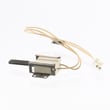
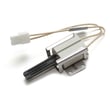
| Oven won’t ignite or takes too long | Replace oven igniter | Tappan range oven burner igniter 316489403 |
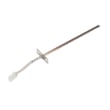
| Oven temperature is inaccurate | Replace temperature sensor | Frigidaire range oven temperature sensor 316490000 |
A gas range that lights quickly and burns cleanly runs cooler internally, cycles more predictably, and puts less stress on the oven gas valve, igniter, and burner assemblies. That is the difference between a range that reaches its 15-year lifespan and one that needs major repairs earlier.
Last updated: February 2026
How to change Kenmore spark electrode igniter?
To change a spark electrode igniter on your Kenmore gas range model 79072402013, we shut off power and gas, remove the burner cap and head, swap the electrode and wire connection, then reassemble and test ignition at the LITE position using the steps in the 79072402013 installation guide.
- Turn off power at the breaker (spark ignition uses electricity).
- Shut off the gas supply valve.
- Let the cooktop cool completely.
- Work in a well-ventilated area.
- If you smell gas at any point, stop and address the leak before testing.
- Remove the grate, then lift off the burner cap and burner head.
- Note how the burner cap seats; it should sit centered and “click” into place when installed correctly.
- Remove the mounting screw holding the electrode to the orifice holder (if equipped).
- Disconnect the electrode wire; transfer the connector to the new electrode lead if required, then crimp securely.
- Install the new electrode, route the wire away from hot surfaces, and reinstall the screw.
- Reinstall the burner head and cap, making sure the cap is centered and stable.
- Restore gas and power.
Use the ignition check procedure from the installation instructions:
- Push in and turn the burner knob counterclockwise to LITE; you should hear rapid sparking.
- The burner should light once gas is available (after air purges from the line).
- After ignition, turn the knob out of LITE and confirm a steady flame.
- Repeat for each burner; each burner position uses its own electrode.
| What you notice | Most common cause | What to check |
|---|---|---|
| Clicking but no flame | No gas flow or air in line | Gas shutoff open, purge air at LITE |
| No clicking at one burner | Bad electrode or wire | Electrode tip condition, wire connection |
| Clicking continues after flame | Misaligned cap/head | Cap seated centered and stable |
A properly installed electrode and correctly seated burner cap help the burner light within a few seconds and prevent nuisance clicking, delayed ignition, and uneven flames.
Last updated: February 2026
How to reset Kenmore gas range?
To reset a Kenmore gas range model 79072402013, we restore power and return every oven and surface control to OFF; this clears many control glitches after a power interruption and prevents the oven igniter from trying to relight unexpectedly. See the 79072402013 installation guide for the power-failure and control reset safety notes.
- Turn all surface burner knobs to OFF.
- Turn the oven function/temperature controls to OFF.
- If the range is plugged into an outlet: unplug for 1 minute, then plug back in.
- If it is hardwired or on a dedicated circuit: switch the breaker OFF for 1 minute, then ON.
- Wait 30 to 60 seconds for the control to stabilize, then test Bake.
The installation instructions for this model emphasize resetting all oven controls to OFF during a power failure. When power returns, the oven igniter can automatically relight if the oven control was left ON.
- Confirm the oven control is OFF before restoring power.
- If you smell gas, keep controls OFF and ventilate the area.
- Surface burners can be lit with a match during an outage (use extreme caution), but the oven’s electric ignition should not be operated without power.
If the display is blank, the oven will not heat, or the burner will not ignite after restoring power, these checks usually pinpoint the cause:
| Symptom | Most common cause | What to check next |
|---|---|---|
| Oven won’t ignite, no glow | Failed igniter | Inspect/test the tappan range oven burner igniter 316489403 |
| Oven heats erratically | Bad temperature feedback | Check the frigidaire range oven temperature sensor 316490000 |
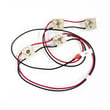
| Surface burners won’t spark | Ignition switch/harness issue | Inspect wiring and switches; consider the range igniter switch and harness assembly 316580611 |
A proper reset is mainly about safety and reliable ignition. Returning controls to OFF prevents unintended burner operation when power is restored and helps you separate a simple control glitch from a failed igniter, sensor, or ignition circuit.
Last updated: February 2026
What are the parts of a gas oven?
A Kenmore 79072402013 gas oven is built around a gas burner system (burner, igniter, and gas valve) plus temperature sensing and safety airflow through the oven vent. Many models also include an oven light, door seal, and panels that shape and protect the oven cavity.
- Bake burner: provides the main heat for baking (example part: range bake burner 316404400).
- Igniter: glows to ignite gas; the oven valve opens after the igniter heats up (common replacement: tappan range oven burner igniter 316489403).
- Oven gas valve: opens to release gas to the burner when the igniter is hot enough.
- Temperature sensor: tells the control how hot the oven is so it can cycle the burner.
- Oven vent: lets heat and combustion byproducts exit; it must stay unobstructed.
In this style of Kenmore gas range, the igniter heats and glows first; once it reaches ignition temperature, the gas valve opens and the burner lights. A normal ignition delay is typically 30 to 60 seconds from turning Bake on to seeing flame.
| Part | What you notice when it fails | Example from this model’s parts |
|---|---|---|
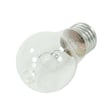
| Oven light bulb | Oven light does not turn on | Appliance light bulb, 40-watt (316538904) |
| Oven door seal | Heat leaks, uneven baking, hot door edges | Range oven door seal (5304498835) |
| Bottom panel / shields | Warping, rattling, heat shielding issues | Oven bottom panel (316400603) |
Knowing the major parts helps you troubleshoot faster. For example, a weak igniter can cause slow ignition or no bake heat, while a damaged door seal can waste heat and make temperatures unstable.
For the exact component layout and access steps for Kenmore 79072402013, use the 79072402013 installation guide and follow the safety notes about ventilation and ignition.
Last updated: February 2026
What does F2 mean on a Kenmore stove?
On the Kenmore gas range model 79072402013, an F2 code points to an oven temperature problem, most often a faulty oven temperature sensor circuit (sensor shorted/out of range) or a control that is reading the sensor signal incorrectly. Start by checking the sensor and its wiring first.
- Reset power: turn the range off at the breaker for 1 minute, then restore power and recheck.
- Look for obvious heat damage: inspect the sensor harness and connector for melted insulation or loose pins.
- Check the sensor resistance (with power off): unplug the sensor connector and measure resistance at the sensor leads.
- Inspect the control connection: a slightly backed-out connector at the control can trigger false sensor faults.
- Avoid running the oven during a power failure: the ignition system needs power to operate safely (see installation guide).
Most Kenmore and Frigidaire-built ranges use a sensor that measures about 1,080 ohms at room temperature (around 70°F) and increases as the oven heats.
| Sensor condition | What you’ll often see | What it suggests |
|---|---|---|
| Open circuit | OL or very high resistance | Broken sensor or wire |
| Shorted | Very low resistance | Sensor short or pinched wire |
| Near 1,080 ohms at room temp | Stable reading | Sensor likely OK; check wiring/control |
If your resistance test is out of range, replacing the sensor is the most common fix for this symptom.
If the sensor tests good and wiring is intact, the issue is typically in the control circuit that interprets the sensor signal.
The oven uses the temperature sensor signal to regulate heat. When the control thinks the sensor is shorted or reading incorrectly, it may shut down heating or overheat protection may trigger, which prevents reliable baking and can create unsafe temperature conditions.
For model-specific access and testing notes, follow the steps in the 79072402013 owner’s manual.
Last updated: February 2026
What does warm and hold mean on a Kenmore oven?
On a Kenmore 79072402013 gas range, warm and hold (often labeled cook and hold) is a timed feature that keeps finished food warm at a low, safe oven temperature for a set period after baking ends (commonly up to about 3 hours). For the exact behavior and time limits on your unit, follow the steps in the 79072402013 owner's manual.
Most Kenmore ovens with this option follow the same pattern:
- You start a normal Bake cycle.
- You set a hold time (or the oven automatically switches to hold after cooking).
- The oven reduces heat to maintain a warm temperature.
- The oven turns off when the hold time expires or you cancel.
Use it for short-term holding after cooking, not for cooking or reheating.
- Good for: keeping casseroles, rolls, and plated meals warm before serving
- Not for: warming the kitchen, long-term storage, or unattended extended holding
- Tip: cover foods that dry out easily; vent covers for crisp foods
If the oven will not hold temperature or the cycle ends unexpectedly:
- Confirm the feature is enabled and programmed correctly in the 79072402013 owner's manual.
- Make sure the oven door closes fully and the gasket seals.
- If the oven temperature seems inaccurate, a failing sensor is a common cause; see range oven temperature sensor 316490000.
- If the oven burner struggles to ignite or stay lit, ignition problems are common; see tappan range oven burner igniter 316489403.
| Symptom | Most common cause | What to check first |
|---|---|---|
| Food cools down during hold | Oven not maintaining temp | Sensor, door seal, correct settings |
| Oven shuts off early | Timer/setting issue | Programming steps in manual |
| No heat during hold | Ignition or gas/heat issue | Igniter glow, burner ignition |
Warm and hold helps you time meals better and prevents food from cooling off while you finish other dishes. It also avoids unsafe habits like using the range to heat a room, which the installation guidance warns against.
Last updated: February 2026
What model is my Kenmore gas range?
Your Kenmore gas range model number is printed on the identification plate; on model 79072402013, that plate is on the right-hand surface of the oven front frame and you access it by opening the storage, warmer, or broiler drawer. Confirm the full model number before ordering parts.
Use these common label locations for this specific range:
- Open the storage drawer (or warmer/broiler drawer, depending on your configuration)
- Look on the right-hand surface of the oven front frame for the identification plate
- Write down the model number and serial number exactly as shown
- Also record any lot number or letter listed on the plate
For a diagram and the official location description, use the 79072402013 installation guide.
Besides the model number, the plate typically lists key details that affect parts and service.
| Item on plate | Why it matters |
|---|---|
| Model number | Ensures you get parts that fit your exact Kenmore gas range |
| Serial number | Helps match production changes and correct replacements |
| Fuel type and pressure | Confirms natural gas vs. LP setup and proper adjustments |
| Burner ratings (BTU) | Helps verify correct burner components and performance |
- Match every character in 79072402013 (no missing digits)
- Use the model number when searching for igniters, sensors, and burner parts
- If the label is hard to read, take a clear photo before cleaning it
- Keep the model and serial info with your home records for future repairs
Kenmore ranges often have similar-looking versions with different burner systems, igniters, and control components. Using the exact model number from the identification plate keeps your parts lookup accurate and prevents fit and ignition issues.
Last updated: February 2026
Why is my Kenmore 79072402013 oven not heating?
If your Kenmore 79072402013 gas range oven is not heating, the most common causes are a weak or failed oven igniter, a problem in the gas valve circuit, or restricted airflow at the oven vent. This model uses an electric igniter system, so the oven will not heat during a power outage.
- Confirm the range has electrical power (clock/display on, outlet not tripped); the oven igniter needs power to open the gas valve.
- Set BAKE and wait 60 seconds; a normal igniter glows and the burner lights after about 30 to 60 seconds.
- Look for a bright glow from the igniter; a dim glow often means it cannot pull enough current to open the valve.
- Make sure the oven vent and the area around the base/lower front panel are not blocked; this range needs fresh air for proper combustion.
- If you smell gas without ignition, turn the oven OFF and ventilate the area before continuing.
In many cases, replacing the igniter restores heat because the valve will not open unless the igniter reaches the right temperature/current draw.
| Symptom | Most likely cause | Part to consider |
|---|---|---|
| No glow from igniter | Open igniter or wiring issue | Tappan range oven burner igniter 316489403 |
| Igniter glows but no flame | Weak igniter or gas valve issue | Range oven igniter 5304506545 or gas valve diagnosis |
| Oven heats erratically or wrong temp | Sensor out of range | Frigidaire range oven temperature sensor 316490000 |
On the Kenmore 79072402013, the igniter and gas valve work as a safety system: gas should not flow until the igniter is hot enough to reliably light it. A weak igniter is a top reason the oven will not heat even though the control is set correctly.
- Do not obstruct combustion air at the oven vent or around the base; blocked airflow can affect ignition and burner performance.
- Do not attempt to operate the electric ignition oven during an electrical power failure; reset oven controls to OFF.
For model-specific operating details and normal burner behavior, use the 79072402013 installation guide.
Last updated: February 2026