

How to identify a Kenmore washer model?
To identify your Kenmore washer model, find the model/serial tag on the washer cabinet and read the full model number exactly as printed (for this unit, it’s 11092581210). The tag is usually on the back of the control panel, under the lid opening, or on the cabinet near the bottom.
Where to look on Kenmore washers
Check these common locations first:
- Back of the control console (rear panel of the controls)
- Under the lid, around the lid opening (top-load washers)
- Left or right side of the main cabinet near the bottom
- Behind the door or in the door jamb (front-load washers)
What to write down (so you get the right parts)
Record the information exactly as shown on the tag:
- Model number (example: 11092581210)
- Serial number (helps confirm production run)
- Any type or stock number listed (if present)
Quick check: model number vs. part number
| Item | What it identifies | Example from this page |
|---|---|---|
| Model number | The washer version you own | 11092581210 |
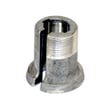
| Part ID | The specific replacement part listing | 285753A |
| Part name | What the part is | Coupling |
Why it matters
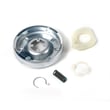
Kenmore model numbers often look similar, but small differences can change the correct fit for parts like a drive motor, inlet valve, or water pump. Using the exact model number helps us match the correct replacement, such as the coupling 285753A.
Last updated: February 2026
Is it worth repairing a Kenmore washing machine?
Yes, it’s usually worth repairing a Kenmore washer, especially a proven direct-drive model like Kenmore 11092581210, when the fix is a common wear part and the machine isn’t leaking badly or rusted through. Repairs such as a pump, coupling, or clutch replacement often restore normal washing and spinning for far less than replacing the washer.
Quick way we decide: repair vs. replace
- Repair when the washer still fills, agitates, and the tub is solid (no major rust or cracks)
- Repair when the problem points to a single failed part (drain pump, motor coupling, lid switch)
- Replace when the outer tub is damaged or the machine has repeated major failures
- Replace when repair cost approaches the price of a dependable replacement washer
- Repair when you want to keep a simple, serviceable design with widely available parts
Common repairs that are typically “worth it”
These are frequent, straightforward fixes on this style of Kenmore washer:
| Symptom | Likely part area | Example part for this model |
|---|---|---|
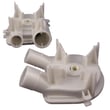
| Won’t drain, water left in tub | Drain system | Water pump WP3363394 |
| Motor runs but won’t agitate/spin | Drive connection | Coupling 285753A |
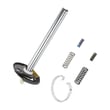
| Spins weakly or slips under load | Spin drive | Clutch 285785 |
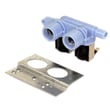
| Won’t fill or fills incorrectly | Water inlet | Inlet valve 285805 |
What to check before spending money
- Unplug the washer and confirm the outlet has power.
- Listen for drain pump sound during drain; a loud hum with no draining often points to a pump or blockage.
- If it drains but won’t spin, check for a lid/door safety switch issue (a common no-spin cause).
- Look underneath for oil leaks from the gear case; that can turn a “small repair” into a bigger one.
- If the tub bangs hard in spin, inspect suspension components such as the washer suspension spring WP63907.
Why it matters
A targeted repair keeps a reliable washer running, avoids the learning curve of a new machine, and often fixes the exact failure point (drain, spin, or agitation) without replacing the whole appliance.
Last updated: February 2026
What can cause a Kenmore washer not to spin?
A Kenmore washer model 11092581210 usually won’t spin because the lid switch isn’t proving the lid is closed, the drain system can’t pump water out, or the drive system can’t transfer motor power to the transmission. Start with simple checks, then move to the most common wear parts.
Quick checks (fastest fixes first)
- Make sure the lid is fully closed; press down on the lid near the switch area and try Spin again.
- Confirm the washer drains; if it won’t drain, it typically won’t spin.
- Check for an overloaded or badly unbalanced load; redistribute items and retry.
- Verify the drain hose isn’t kinked or shoved too far down the standpipe (can cause poor draining).
- Unplug the washer for 1 minute, then retry a Spin cycle (clears some control/timer hang-ups).
Most common part-related causes on this style of Kenmore top-load washer
| Symptom | Most likely area | What to look for | Part to consider |
|---|---|---|---|
| Won’t spin at all, but fills/agitate may work | Lid safety circuit | No “click” at lid close, intermittent spin | Switch 285671 |
| Hums, won’t drain, tub stays full | Drain pump or blockage | Coins/socks in pump, jammed impeller | Water pump WP3363394 |
| Agitates but won’t spin, or makes grinding/rattling | Motor-to-gearcase drive | Broken plastic/rubber coupler pieces | Coupling 285753A |
| Weak spin, burning smell, slow basket start | Clutch/drive train | Slipping during spin, black dust | Clutch 285785 |
How we recommend diagnosing it (in order)
- Drain first: If water remains in the tub, inspect the pump inlet and hoses for debris; a blocked pump commonly stops spin.
- Check the lid switch: A failed lid switch prevents spin for safety; test for consistent actuation when the lid closes.
- Inspect the motor coupling: If the motor runs but power isn’t reaching the gearcase, the coupling is a frequent failure point.
- Evaluate clutch and gearcase: If the washer drains but the basket won’t reach speed, the clutch or gearcase can be the cause.
Why it matters
Spin problems are often caused by a drain or safety interlock issue, not the motor itself. Fixing the correct root cause prevents repeat failures and avoids replacing high-cost parts like the gearcase unnecessarily.
Last updated: February 2026
What is the average lifespan of a Kenmore washer?
Most Kenmore washers, including model 11092581210, last 10 to 15 years with normal household use. Lifespan depends most on load size, how often you run it, and whether wear items (like the drive system and drain pump) are replaced when symptoms first show up.
What affects washer lifespan the most
- Load habits: frequent overloading strains the drive system and suspension
- Water quality: hard water speeds up valve and pump wear, and can leave buildup
- Drain performance: slow draining makes the pump work harder and can shorten its life
- Vibration and balance: repeated out-of-balance spinning stresses the tub support and springs
- Maintenance and timely repairs: replacing small wear parts early prevents bigger failures
Common “end-of-life” symptoms (and what they often point to)
| Symptom you notice | Common cause area | Example part for this model |
|---|---|---|
| Won’t spin or agitates poorly | Drive coupling or clutch | Coupling 285753A |
| Loud grinding or oil leak under washer | Gear case / transmission | Gear case 3360629 |
| Won’t drain or drains slowly | Drain pump or blockage | Water pump WP3363394 |
| Excessive shaking or banging | Suspension components | Washer suspension spring WP63907 |
How we recommend extending the life of your Kenmore washer
- Keep loads evenly distributed; wash bulky items (blankets, rugs) one at a time
- Use the right amount of detergent; too much can cause residue and odors
- Check pockets and use a garment bag for small items to reduce pump clogs
- If draining slows, inspect the drain path early; a struggling pump wears out faster
- Address new noises quickly; a worn coupling or clutch can lead to bigger drive damage
Why it matters
A washer that is maintained and repaired early typically reaches the upper end of the 10 to 15 year range. Catching issues like poor draining or slipping agitation early often prevents costly damage to major components.
Last updated: February 2026