Owner’s manual



How many hours does a Cub Cadet usually last?
Most Cub Cadet riding mowers like the Cub CADET 13AX11CH756 typically deliver about 500 to 1,000 operating hours with normal residential use and consistent maintenance. With excellent care (oil changes, clean cooling, and proper blade and brake upkeep), it’s common to push beyond that range.
Typical lifespan ranges (what we see most often)
Hours vary mainly by mowing conditions, maintenance habits, and how hard the tractor is worked.
- 500 to 1,000 hours: common for well-maintained residential riding mowers
- 1,000+ hours: achievable with strong maintenance and timely repairs
- Lower hours: more likely if the mower is run hot, run low on oil, or used on steep/rough terrain regularly
| Usage pattern | Typical outcome | What usually limits life first |
|---|---|---|
| Light, flat yard; regular service | Longer life | Belts, blades, battery, tires (normal wear) |
| Heavy grass, hills, dusty conditions | Shorter life | Engine wear, deck wear, driveline stress |
| Infrequent maintenance | Shorter life | Engine damage, poor braking, unsafe blade stopping |
Maintenance items that most affect hours
We recommend following the service intervals and checks in the owner's manual. Focus on these high-impact habits:
- Change engine oil and replace filters on schedule
- Keep the engine cooling fins and air intake areas clean
- Inspect blades often; replace bent, cracked, or heavily worn blades
- Check that blades stop within about 5 seconds after disengaging the blade control
- Check brake operation frequently; adjust/service as needed
- Keep mounting bolts, nuts, and fasteners tight (especially blade and engine mounting hardware)
Why it matters
Hour life is not just about “how long it runs”; it’s also about safe operation. The manual’s safety checks (blade stopping time, brake performance, and hardware tightness) help prevent damage and reduce the chance of a sudden failure while mowing.
Last updated: February 2026
Is it worth repairing a lawn mower engine?
Yes, it’s worth repairing the engine on your Cub Cadet 13AX11CH756 when the problem is external or service-related (fuel, ignition, wiring, or carburetion). If the engine has major internal damage (low compression, crankshaft or piston damage), replacement is the better value because labor and parts add up fast.
Quick way to decide
We use this checklist to separate “repair” from “replace” on a front-engine lawn tractor:
- Repair when it won’t start, runs rough, surges, or stalls but has normal compression and no heavy knocking.
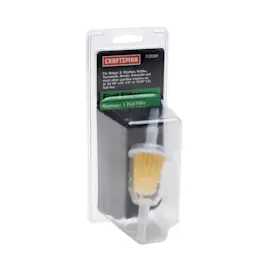
- Repair when the fix is a tune-up item (spark plug, air filter, fuel filter, fresh fuel).
- Repair when the issue is electrical (battery, safety switches, wiring connections).
- Replace when it smokes heavily after basic service, has metal-in-oil, or has persistent loud internal knocking.
- Replace when compression is low and doesn’t improve with basic diagnostics.
Typical cost and effort comparison
These ranges help set expectations for most riding mower engines.
| Scenario | What you’re usually fixing | Typical effort | Typical value call |
|---|---|---|---|
| No-start / hard-start | Fuel delivery, spark, safety interlocks | Low to medium | Repair |
| Runs but surges/stalls | Carburetor cleaning, fuel contamination | Medium | Repair |
| Charging or wiring issue | Stator/regulator, wiring, connections | Medium | Repair |
| Internal wear/damage | Compression loss, crank/piston damage | High | Replace |
Why it matters
A Cub Cadet tractor like the 13AX11CH756 is built to be serviceable, so fixing common engine problems often restores reliable mowing for a fraction of the cost of replacing the whole machine. Internal engine failures are different; they typically require teardown time that quickly exceeds the value of the repair.
Warranty note (helps your decision)
Your documentation includes emissions and limited warranty information; if your tractor is still within coverage and the issue involves an emissions-related component (such as fuel system parts), warranty coverage can change the repair-versus-replace math. We use the maintenance schedule and warranty sections in the owner's manual to confirm what applies.
Last updated: February 2026
Who makes the Cub Cadet 13AX11CH756 engine?
The Cub Cadet 13AX11CH756 front-engine lawn tractor uses a Kohler engine; the specifications in the 13AX11CH756 owner's manual list a Kohler Courage SV720 V-twin (23 HP class) for this tractor.
How to confirm the engine on your exact tractor
We recommend verifying the engine ID tag on the engine itself, then matching it to the tractor documentation. This is the fastest way to ensure you order the correct maintenance parts (air filter, oil filter, spark plugs).
- Lift the hood and locate the engine identification label (often on the blower housing or valve cover area).
- Record the Kohler model and spec numbers (for example, SV720 plus a spec code).
- Compare what you recorded to the engine section/specifications in the manual.
- Use the engine model and spec to match tune-up parts and service intervals.
- If the label is missing or unreadable, use the tractor model plate under the seat to confirm the tractor model number.
What the manual indicates for this model
The operator’s manual specifications for this Series 1000 tractor list the following engine family for the 13AX11CH756.
| Item | What you’ll typically see for this model |
|---|---|
| Engine manufacturer | Kohler |
| Engine line | Courage |
| Engine model | SV720 |
| Configuration | V-twin |
| Power class | 23 HP class |
Why it matters
Cub Cadet tractors can be sold with different engines across similar-looking models and years. Confirming the Kohler model and spec number prevents mismatched parts (especially air cleaner components and ignition parts) and helps you follow the correct maintenance schedule.
Last updated: February 2026